
Written By Gaurav Sharma
Affiliate Disclosure: As an Amazon Associate, we earn from qualifying purchases at no extra cost to you.
Independent consumer wellness guide referencing general fall-prevention guidance from the CDC and the National Institute on Aging (NIA) | Last updated: September 2026
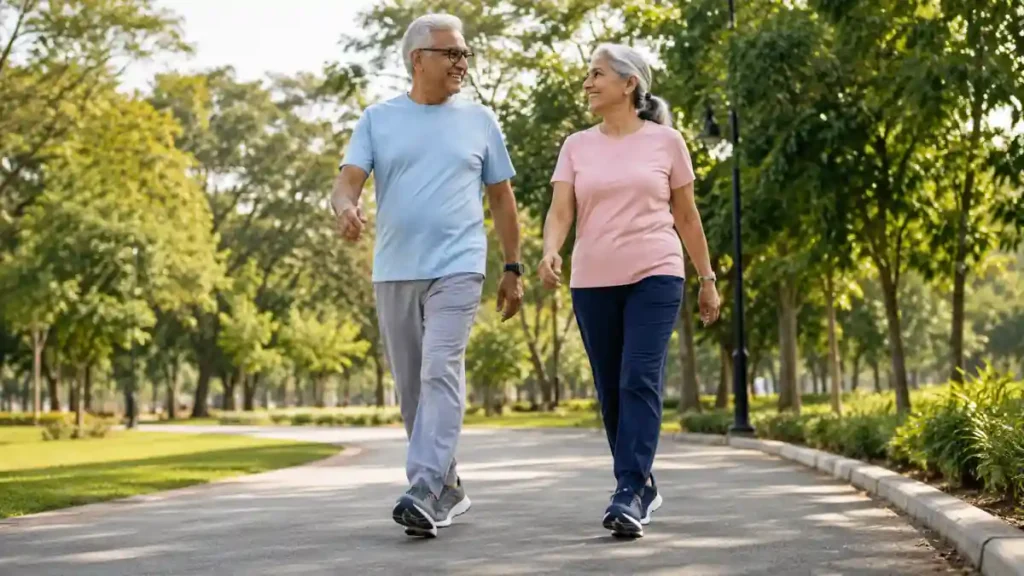
Maintaining daily independence starts from the ground up. Taking a daily walk around the neighborhood, running errands, or simply navigating hard tile floors at home requires confidence in your footing. However, for older adults experiencing mild unsteadiness, joint stiffness, or slower reflexes, standard athletic sneakers can sometimes feel unstable, overly cushioned, or difficult to put on. Finding the best walking shoes for seniors with balance problems is a practical way to support steady, confident mobility. Footwear designed with low heel profiles, broad outsoles, firm heel counters, and accessible closures helps provide a stable, grounded base underfoot.
While shoes alone cannot eliminate balance conditions or replace professional medical care, supportive footwear works alongside regular movement habits to make daily steps feel more secure.
Here is an editorial guide to finding stable walking shoes, what key safety features to prioritize, and 5 practical options designed for everyday comfort.
Tables of Content
Why Footwear Matters for Everyday Balance
Public health organizations such as the Centers for Disease Control and Prevention (CDC) and the National Institute on Aging (NIA) highlight appropriate footwear as an important element of general home and mobility safety.
Walking shoes act as your direct contact surface with the floor. As walking mechanics naturally change with age, footwear can impact daily stability in several distinct ways:
- Surface Sensory Feedback: Overly thick, pillow-soft soles can reduce your feet’s ability to sense changes in floor texture, making subtle balance adjustments harder.
- Base of Support: A wide, flare-shaped outsole creates a broader surface contact area, helping to reduce lateral ankle roll.
- Foot Containment: A loose, sloppy fit allows the foot to slide inside the shoe, which disrupts a steady, natural gait.
Prioritizing supportive construction over trend-focused designs helps keep your daily steps feeling grounded.
📖 ALSO READ:Bed Mobility Exercises for Seniors With Stiff Joints: 6 Morning Moves
Key Stability Features to Look For
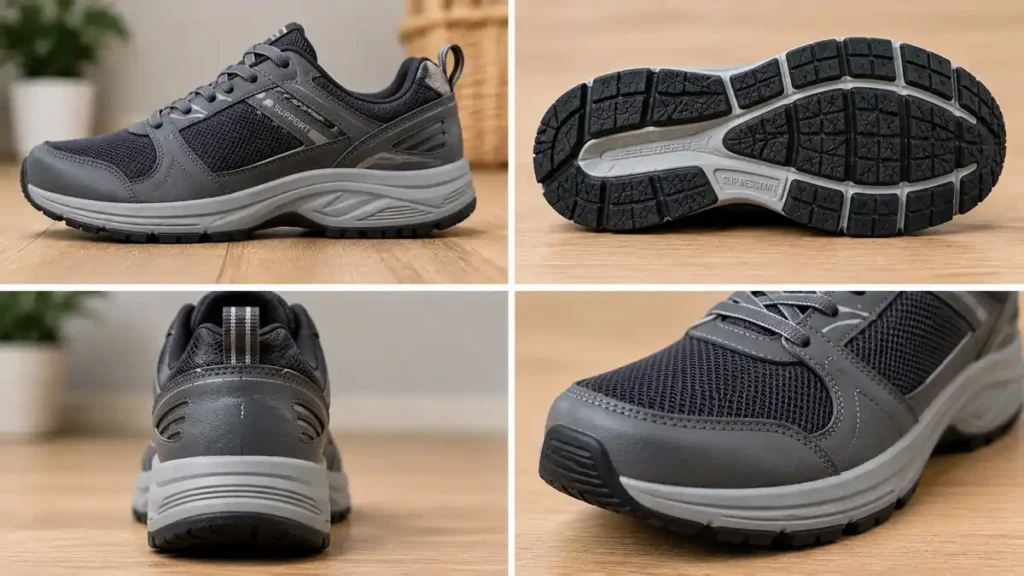
When evaluating walking shoes for daily stability, look for these practical design characteristics:
- Firm Heel Counter: Squeeze the back of the shoe around the heel cup. It should feel firm and resist collapsing inwards under thumb pressure to keep the heel centered.
- Low, Broad Heel: Flat or low-drop soles keep your center of gravity naturally balanced. Elevated running heels shift weight forward onto the toes.
- Wide, Textured Rubber Outsole: Non-skid patterned rubber provides traction across smooth surfaces like polished wood, vinyl, or concrete walkways.
- Spacious Toe Box: Shoes should allow your toes to splay comfortably without pinching, which supports natural foot stability.
- Adaptive Closures: Look for hook-and-loop (Velcro) straps, elastic bungee systems, or hands-free slip-in heels if tying traditional laces is challenging due to hand stiffness.
Footwear Red Flags to Avoid
Certain common shoe styles can introduce tripping or slipping hazards for older adults:
- Backless Slippers and Mules: Shoes without a secure heel strap can easily slide off the foot, leading to missteps.
- Smooth Leather or Plastic Soles: Dress shoes with smooth bottoms offer minimal traction on smooth or wet flooring.
- Overly Squishy Cushioning: Ultra-soft, plush foam may feel comfortable when sitting, but it compresses unevenly when walking, creating a sensation of walking on an unstable surface.
- Narrow, Pointed Toes: Cramping the toes limits their ability to grip and support your body weight smoothly.
📖 ALSO READ: Foot Care for Seniors: Simple Daily Routine for Comfort & Balance
5 Best Walking Shoes for Seniors With Balance Problems
1. Skechers Slip-ins Go Walk Arch Fit
Best for: Easy, hands-free entry and supportive arch comfort
For seniors who find bending over to tie laces difficult or experience dizziness when leaning down, the Skechers Slip-ins series offers a functional hands-free solution.
- Key Design Features: Molded heel cup that lets you step in without bending down or using a shoehorn; contoured arch support system; dual-density traction outsole.
- Why It Supports Stability: The firm heel counter holds its shape during entry and locks the rearfoot in place once your foot is inside, minimizing internal slipping.
- Considerations: Slip-in designs provide slightly less adjustable tightness across the midfoot compared to strap or lace models.
Check Price On Amazon-: Skechers Slip-ins Go Walk Arch Fit
2. Brooks Addiction Walker 2
Best for: Maximum motion control and heavy-duty stability
The Brooks Addiction Walker 2 is widely recognized for its rigid, supportive platform designed for walkers who need substantial structural support.
- Key Design Features: Built-in extended progressive diagonal rollbar (support guide system) that helps stabilize natural walking paths; slip-resistant certified rubber outsole; durable leather upper.
- Why It Supports Stability: The stiff, wide base resists torsional twisting, providing a sturdy, reliable surface across uneven outdoor terrain.
- Considerations: The structured leather construction makes this shoe heavier and stiffer out of the box, requiring a short break-in period.
Check Price On Amazon-: Brooks Addiction Walker 2
3. Orthofeet Coral Stretch Knit
Best for: Sensitive feet, bunions, and customizable width
Orthofeet designs footwear specifically around foot comfort, offering modular depth and seamless interiors that accommodate swollen feet or sensitive pressure points.
- Key Design Features: Stretchable fabric upper that contours around bunions or hammertoes; anatomical arch-support insoles with removable spacers; wide, stable rocker sole.
- Why It Supports Stability: The broad sole base combined with customizable interior spacing prevents foot sliding while eliminating painful friction points.
- Important Note: This style may be worth considering for people who need extra room and cushioning, but footwear should always be selected with guidance from a healthcare professional when foot sensation is reduced.
Check Price On Amazon-: Orthofeet Coral Stretch Knit
4. Propet Stability Walker
Best for: Adjustable strap closures and broad sizing options
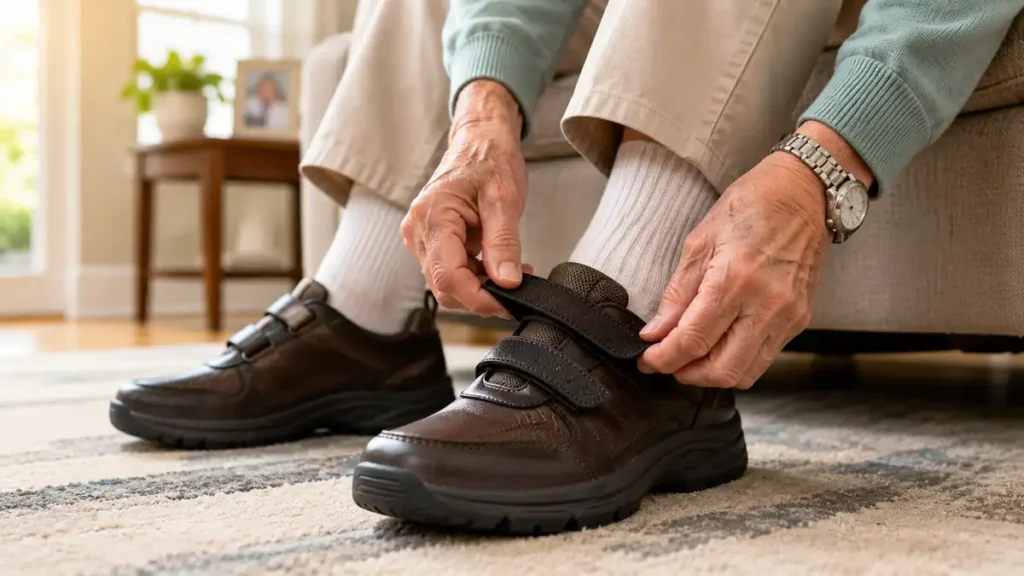
The Propet Stability Walker is an approachable, practical walking shoe available in a wide range of widths (from Narrow up to Extra-Wide) with hook-and-loop strap options.
- Key Design Features: Two wide adjustable Velcro straps; rigid heel counter; broad rubber outsole with multi-directional tread; removable footbed.
- Why It Supports Stability: The dual-strap closure allows seniors to adjust the fit throughout the day if feet tend to swell in the afternoon, keeping the shoe securely fastened without fussing with laces.
- Considerations: Classic utilitarian aesthetic that prioritizes pure function over modern athletic styling.
Check Price On Amazon-: Propet Stability Walker
5. New Balance 928v3
Best for: Structured athletic walking and all-day standing
The New Balance 928 series has long been a benchmark for walkers requiring motion control, offering both lace-up and dual-strap variations.
- Key Design Features: Rollbar stability technology to manage rear-foot movement; durable rubber outsole; padded collar and tongue for ankle cushioning.
- Why It Supports Stability: The integrated rollbar framework provides strong lateral resistance, helping prevent ankles from rolling inward or outward on uneven pavement.
- Considerations: Fits noticeably firm and structured; some walkers may prefer a lighter-weight fabric shoe for hot weather.
📖 ALSO READ:Tai Chi Walking for Seniors: A Beginner’s Guide to Better Balance and Mobility
Check Price On Amazon-: New Balance 928v3
Quick Comparison: Best Walking Shoes for Balance Support
Skechers Slip-ins Go Walk
- Closure: Hands-Free Step-In
- Highlight: Cushioned arch support
- Best Suited For: Seniors who cannot bend over to tie laces
Brooks Addiction Walker 2
- Closure: Traditional Lace-Up
- Highlight: Motion-control rollbar
- Best Suited For: Maximum outdoor walking stability
Orthofeet Coral Stretch
- Closure: Tie / Bungee Lacing
- Highlight: Non-binding stretch upper
- Best Suited For: Swollen feet, bunions, and pressure relief
Propet Stability Walker
- Closure: Dual Velcro Straps
- Highlight: Broad base & multiple width options
- Best Suited For: Quick adjustability and easy one-hand fastening
New Balance 928v3
- Closure: Lace or Dual Velcro
- Highlight: Reinforced rearfoot rollbar
- Best Suited For: All-day structural support and ankle alignment
Simple Tips for Trying on Shoes at Home
Even the most supportive shoe will not perform well if the fit is incorrect. Follow these simple steps when trying on new walking shoes:
- Try Them on in the Afternoon: Feet naturally expand slightly over the course of the day. Trying on footwear later in the afternoon ensures you do not buy a pair that feels tight by evening.
- Wear Your Regular Socks: Test new shoes with the exact thickness of socks you plan to wear during everyday walks.
- Check the Toe Clearance: Ensure there is about a thumb’s width of space between your longest toe and the end of the shoe box.
- Walk on Indoor Hard Surfaces: Test the shoes on hard indoor surfaces (like tile or wood) rather than deep carpet to get an accurate feel for sole grip and stability.
📖 ALSO READ:Vita Solitaire for Seniors: Is It Really Worth Playing?
Frequently Asked Questions
Can supportive walking shoes prevent falls in seniors?
No shoe can guarantee complete fall prevention. However, wearing stable, well-fitted footwear with textured non-skid rubber soles and firm heel support may help reduce slipping and tripping risks compared to walking barefoot, in socks, or in loose backless slippers.
Are memory foam shoes good for seniors with unsteadiness?
While soft memory foam feels plush upon initial step-in, thick and squishy foam can compress unevenly underfoot. For individuals with balance concerns, a firmer, responsive midsole generally provides clearer sensory feedback and a more predictable walking base.
What should I do if my feet swell during the day?
Look for shoes featuring adjustable hook-and-loop (Velcro) straps or flexible stretch-knit uppers. These styles allow you to loosen the fit comfortably without compromising heel containment.
Official Resources
- Centers for Disease Control and Prevention (CDC): STEADI: Older Adult Fall Prevention Strategies
- National Institute on Aging (NIA): Falls and Falls Prevention: Causes and Prevention
- National Institute on Aging (NIA): Older Adults and Balance Problems
Disclaimer: This article is intended strictly for informational and educational purposes and does not substitute for personalized medical, podiatric, or physical therapy evaluation. If you experience chronic instability, persistent foot pain, or numbness from peripheral neuropathy, consult a qualified healthcare provider for individualized footwear and orthotic recommendations.
Educational only — not medical, legal, or financial advice. Talk to a qualified professional before changing exercise, diet, medication, or making a major purchase. After60Guide is not a medical practice.



Gaurav Sharma is the founder and lead writer of After60Guide. He writes practical, source-cited guides on movement, nutrition, home safety, and everyday living after 60. He is not a doctor, physical therapist, or financial adviser. Health and money articles are general education, checked against official public sources where relevant — not personal advice. Corrections: contact@after60guide.com