

By Gaurav Sharma | Founder & Lead Writer
Updated: October 2026. Educational only — not a meal plan or diabetes treatment.
If you’re past 60, chances are someone — a doctor, a friend, maybe your own last blood test — has brought up blood sugar. Finding good blood sugar friendly foods for seniors doesn’t have to mean a bland, restrictive diet. It’s one of those things that quietly becomes a bigger deal with age, even for people who’ve never been told they have diabetes.
Here’s a number worth sitting with: according to the CDC’s latest National Diabetes Statistics Report, an estimated 52.1% of U.S. adults 65 and older have prediabetes — that’s about 31.3 million people, many of whom feel completely fine and only find out from a routine lab panel.
The reassuring part is that none of this requires giving up the foods you enjoy or eating from a strict, limited list. It’s mostly about a handful of habits and food pairings you can actually stick with.
Medical Disclaimer: This article is for general informational and educational purposes only and does not constitute formal medical advice. Always consult your primary care physician or a registered dietitian before making significant changes to your diet, especially if you have diagnosed diabetes, kidney disease, or take glucose-lowering medications.
Why Blood Sugar Gets Trickier After 60
A few things shift in the body as we age, and they all nudge blood sugar in the same direction:
You naturally lose some muscle mass over time (doctors call this sarcopenia), and muscle happens to be one of the main places your body pulls glucose out of the bloodstream — so less muscle can mean less efficient glucose uptake. Daily activity levels often change too, which affects how much energy you’re burning and how forgiving your body is about portion sizes. And over the years, steadier blood sugar pays off in places you might not immediately connect it to — your heart, your kidneys, your eyesight, even nerve function in your hands and feet.
None of this means depriving yourself. It’s really about understanding how carbs, protein, and fat work together so your energy stays level through the day instead of spiking and crashing.
The Plate Method: An Easier Way to Think About Meals
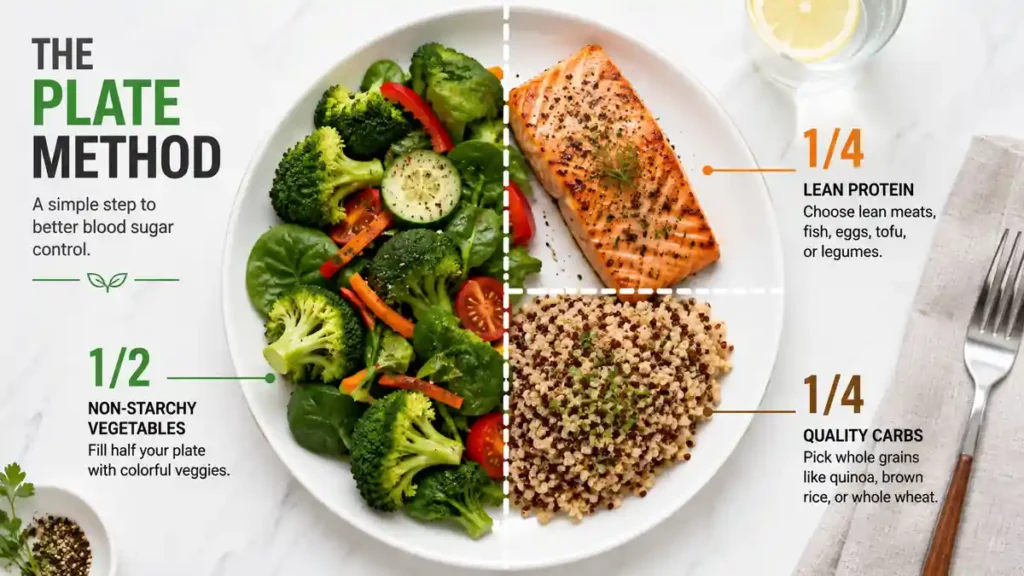
Counting carbs down to the gram gets old fast. The American Diabetes Association has a simpler visual instead — the Diabetes Plate Method. Picture a standard 9-inch dinner plate divided like this:
- Half the plate — non-starchy vegetables: spinach, broccoli, cauliflower, green beans, cucumbers, bell peppers. Big on vitamins, minerals, and fiber, light on carbs.
- A quarter of the plate — lean protein: tofu, beans, lentils, eggs, poultry, or fish. Protein digests slowly, which helps take the edge off a post-meal glucose spike.
- A quarter of the plate — high-fiber carbs: steel-cut oats, quinoa, brown rice, barley, or sweet potatoes. The fiber that’s still intact in these slows down how fast the sugar hits your bloodstream.
Foods Worth Building Meals Around
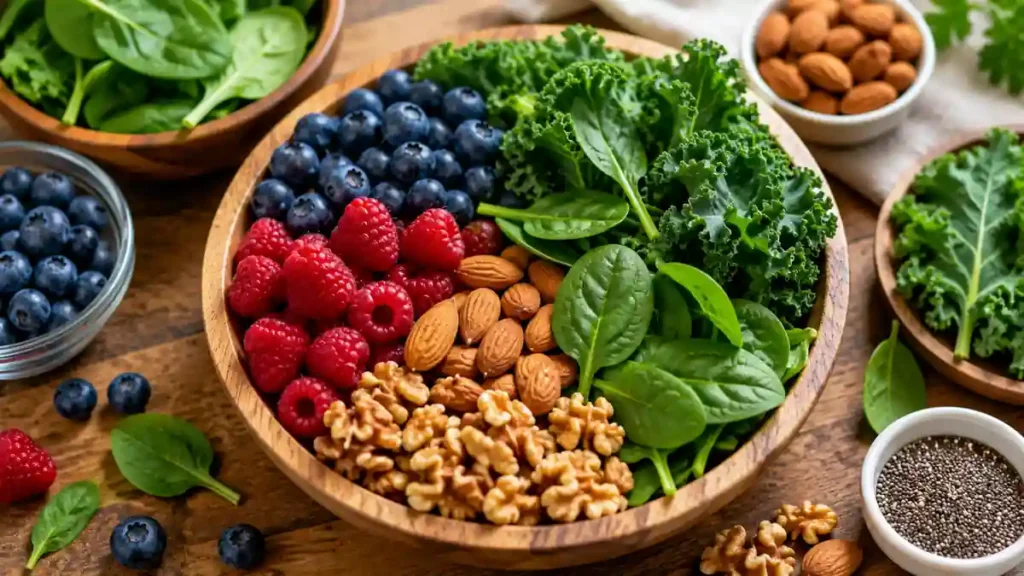
A few ingredients do a lot of the heavy lifting here — and most of them are things you probably already have in your kitchen. (Several also help with joint stiffness, which we cover in our guide to [ 12 Best Anti-Inflammatory Foods for Seniors].)
Leafy greens and cruciferous vegetables —spinach, kale, Swiss chard, broccoli, Brussels sprouts, cabbage. These barely move the needle on blood glucose but bring plenty of magnesium, vitamin C, and fiber to the table. A quick note if you take a blood thinner like warfarin: these greens are high in vitamin K, which can affect how the medication works — talk to your doctor before making a big increase to your intake.
High-fiber whole grains — rolled or steel-cut oats, quinoa, barley, brown rice, wild rice, farro. Unlike refined grains, these keep their bran and germ intact, which slows digestion down and stretches your energy out over hours instead of minutes.
Legumes and pulses — lentils, chickpeas, black beans, edamame, kidney beans. They pair plant protein with soluble fiber, which forms a gel-like texture in digestion that slows nutrient absorption.
Cold-water fatty fish — salmon, sardines, mackerel, trout, tuna. Zero carbs, plus omega-3s that are genuinely good for your heart — a real consideration when you’re managing blood sugar long-term.
Fresh berries — blueberries, blackberries, strawberries, raspberries. Lower in sugar than most fruits, and they scratch the sweet-craving itch without a big carb hit.
Nuts, seeds, and healthy fats — almonds, walnuts, chia seeds, flaxseeds, olive oil, avocados. The fat in these can slow gastric emptying, which takes some of the sharpness off a carb-heavy meal.
A Sample 3-Day Meal Plan
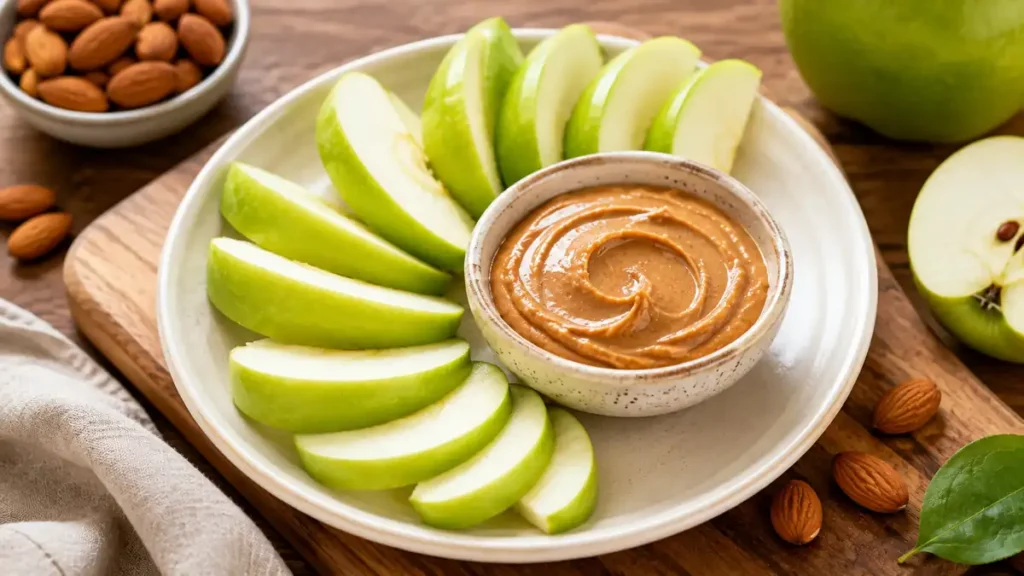
Here’s what putting all this into practice actually looks like on a plate:
Day 1
- Breakfast: Scrambled eggs with baby spinach and cherry tomatoes, one slice of whole-grain toast.
- Lunch: Mixed green salad with grilled salmon, chickpeas, cucumber, olive oil-lemon dressing.
- Snack: Sliced green apple with a tablespoon of unsweetened almond butter.
- Dinner: Baked herb chicken breast, steamed broccoli with garlic, 1/2 cup cooked quinoa.
Day 2
- Breakfast: Rolled oats topped with 1/2 cup blueberries and a sprinkle of chia seeds.
- Lunch: Vegetable lentil soup with a crisp garden salad.
- Snack: 1/2 cup plain Greek yogurt with crushed walnuts.
- Dinner: Stir-fried tofu with bell peppers, snap peas, and mushrooms over 1/2 cup steamed brown rice.
Day 3
- Breakfast: Two soft-boiled eggs, sliced avocado, a small side of raspberries.
- Lunch: Whole-wheat wrap with tuna, romaine, tomatoes, cucumber.
- Snack: A small handful of roasted almonds with celery sticks.
- Dinner: Baked cod or trout, roasted asparagus, small baked sweet potato.
Note: several foods in this meal plan — avocado, sweet potato, spinach, tomatoes — are higher in potassium, which can be a concern for anyone with kidney disease or on dialysis. If that applies to you, check with your doctor or dietitian before adopting this plan as written.
Also Read-:Taking a GLP-1 After 60? 5 Ways to Protect Muscle and Stay Strong
Foods to Watch — Not Ban, Just Watch
You don’t need to swear off anything for life. Keeping the fast-digesting stuff to sensible portions makes the bigger difference:
| Food Category | Why It Matters | Easy Swap |
|---|---|---|
| Sugary beverages | Sodas and sweet tea spike glucose fast | Water with lemon or cucumber — see our [7 Easy Hydration Tips for Seniors] |
| Refined grains | White bread, pastries digest quickly once fiber’s stripped out | Whole-grain bread, barley, farro, brown rice |
| Fruit juice | Concentrated sugar without the fiber of whole fruit | Whole oranges, grapefruit, sliced apple |
| Ultra-processed snacks | Often stack refined starch, added sugar, and sodium | Roasted chickpeas, unsalted nuts, air-popped popcorn |
Habits That Do Half the Work

Pair carbs with protein or fat. A carb eaten alone digests fast. The same carb next to some protein or healthy fat — think apple with almonds — digests slower and blunts the glucose spike.
Take a short walk after eating. Even 10-15 minutes gets your muscles pulling glucose out of the bloodstream for fuel. Community programs like SilverSneakers make this easier to build into a routine.
Keep meal timing consistent. Long gaps between meals tend to set up overeating later and rockier energy in between.
At the Grocery Store and Eating Out
Flip the package over and look specifically for “Includes Xg Added Sugars” on the nutrition label — that’s the number that matters more than “total sugars.” Frozen produce is genuinely useful here too: unsweetened frozen berries and plain frozen vegetables hold onto their nutrients and cut down on waste. Eating out, ask for vegetables instead of fries, get dressing on the side, and don’t feel weird about boxing up half your plate before you even start.
When It’s Time to Talk to a Professional
If you already have a diagnosed condition, don’t try to figure this out alone — a registered dietitian can tailor this to your actual labs and medications.
Medicare note: Part B covers Diabetes Self-Management Training (DSMT) for eligible beneficiaries diagnosed with diabetes, and Medical Nutrition Therapy (MNT) is covered for diabetes or renal disease with a physician referral.
Frequently Asked Questions
Are eggs okay if I’m watching my blood sugar? Yes. Eggs have zero carbs and solid protein. Eating them alongside vegetables and whole grains fits comfortably within standard dietary guidance.
Do I have to give up potatoes completely? No. White potatoes digest fast, but keeping portions moderate, leaving the skin on, or choosing sweet potatoes instead helps. Pairing them with protein and vegetables slows things down further.
Is honey or agave a better choice than white sugar? Not really — both are still concentrated sugar and affect blood glucose similarly. Whole fruit is the better way to satisfy a sweet craving.
Sources
- CDC — National Diabetes Statistics
- American Diabetes Association — Diabetes Plate method
- Medicare — Diabetes self-management training
Food ideas here are general. If you use insulin or other glucose-lowering medicine, a change in meals can change your blood sugar. Check with your clinician or a registered dietitian before you change what you eat.
Educational only — not medical, legal, or financial advice. Talk to a qualified professional before changing exercise, diet, medication, or making a major purchase. After60Guide is not a medical practice.



Gaurav Sharma is the founder and lead writer of After60Guide. He writes practical, source-cited guides on movement, nutrition, home safety, and everyday living after 60. He is not a doctor, physical therapist, or financial adviser. Health and money articles are general education, checked against official public sources where relevant — not personal advice. Corrections: contact@after60guide.com