
By Gaurav Sharma | Founder & Lead Writer
Last Updated: October 2, 2026
Dietary Notice: This guide shares general educational information about common kitchen foods and home cooking methods. It isn’t medical advice and doesn’t replace personal guidance from your doctor. If you have a chronic digestive condition, take medications that affect bowel movement, or have been told to follow a low-residue diet, please talk to your doctor or a registered dietitian before changing how much fiber you eat.
Staying regular is one of those everyday health goals that gets a lot more noticeable after 60. Less daily activity, regular medications, and a naturally slower digestive system can all leave things feeling a little sluggish.
When that happens, many of us head straight to the pharmacy for powders, gummies, or over-the-counter laxatives. They have their place when a doctor recommends them, but they aren’t the only way to get back into a comfortable rhythm.
Most of the time, the easiest solution starts right in your grocery cart.
Everyday high fiber foods for seniors add natural bulk and moisture to your meals. If you pick softer foods and cook them until tender, you can get the fiber you need without sore jaws, dental discomfort, or complicated recipes.
Understanding Dietary Fiber
Dietary fiber is the part of plant foods that your body can’t fully break down. Instead of being digested like fats or sugars, it travels through your system and does two important jobs:
- Soluble Fiber: Dissolves in water and turns into a soft, gel-like texture. It helps keep stools softer and easier to pass, and it slows digestion slightly, which can mean steadier energy after meals.
- Insoluble Fiber: Doesn’t dissolve in water. It adds bulk, giving your digestive tract something to gently push along.
According to the Dietary Guidelines for Americans and the National Institute of Diabetes and Digestive and Kidney Diseases (NIDDK), adults over 50 generally need about 22 to 28 grams of fiber a day, depending on sex. Many of us fall short of that.
Reaching that number doesn’t mean forcing down bowls of raw, stringy vegetables. It’s about keeping a few reliable, versatile staples in your kitchen.
Also Read-: 7 Easy Hydration Tips for Seniors: Simple Ways to Drink More
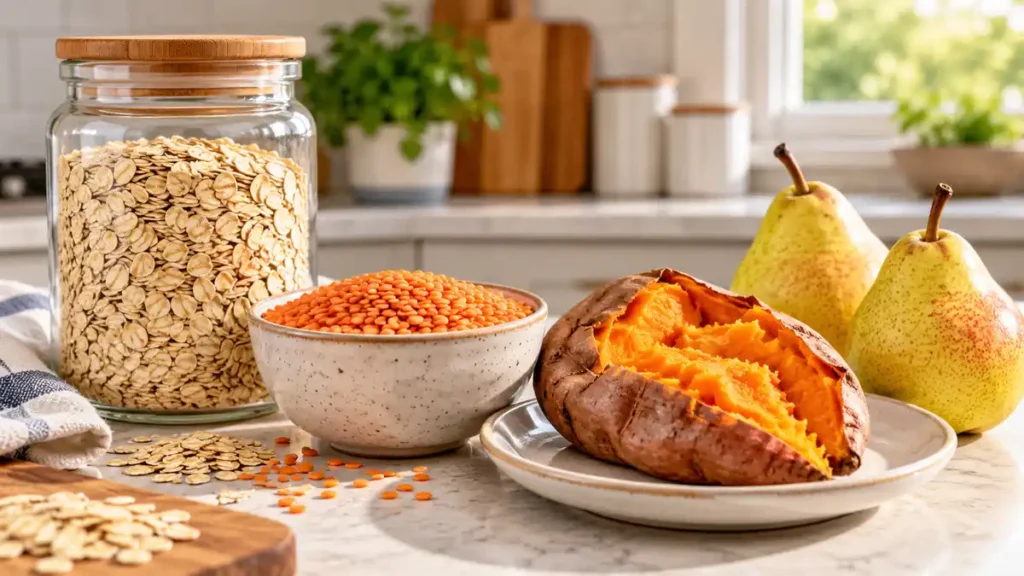
6 Everyday High-Fiber Kitchen Staples
1. Warm Rolled Oatmeal
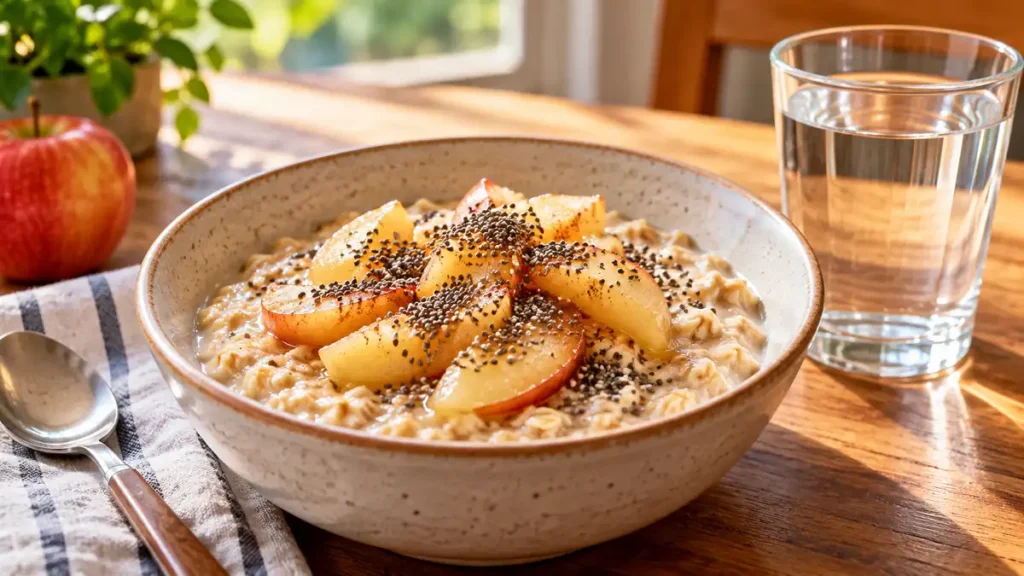
Oats are one of the most dependable whole grains you can keep in your cupboard. They’re a classic source of soluble fiber, especially a type called beta-glucan.
- Why It Works: Cooked oatmeal is soft and warm and takes almost no effort to chew, which makes it a great breakfast if you have sensitive teeth or wear dentures.
- Simple Preparation: Simmer rolled or quick oats in water or milk until completely tender. You’ll get a smooth porridge that’s easy on the stomach.
- Easy Idea: Stir in a pinch of cinnamon or a splash of low-fat milk for flavor without reaching for the sugar bowl.
2. Stewed Apples and Prunes
Raw fruit with thick skin can be tough to chew. Simmering it on the stove softens it and brings out its natural sweetness.
- Why It Works: Apples contain pectin, a gentle soluble fiber. Prunes (dried plums) offer fiber along with natural sorbitol, a fruit sugar that helps hold moisture in the digestive tract.
- Simple Preparation: Slice an apple into thin wedges (peel it if the skin bothers you) and simmer in a small saucepan with a splash of water for 8 to 10 minutes, until fork-tender. For prunes, soak them in warm water for about 15 minutes until soft.
- Easy Idea: Spoon warm stewed apples or chopped prunes over your oatmeal or a bowl of plain yogurt.
3. Chia Seeds
Chia seeds are tiny, but they pack a surprising amount of soluble fiber and healthy plant fats.
- Why It Works: Mixed with liquid, chia seeds form a soft gel that’s easy to eat.
- Simple Preparation: Never eat dry chia seeds straight from the bag, because they can swell and cling in your mouth or throat. Stir a tablespoon into a cup of milk, plant-based milk, or yogurt and let it sit in the fridge for about 20 minutes to thicken. If you have any trouble swallowing, check with your doctor before adding chia seeds.
- Easy Idea: Stir a spoonful of soaked chia into warm soups or hot cereal. It blends right in without changing the taste.
4. Cooked Red or Brown Lentils
Bigger legumes like kidney beans or chickpeas can feel heavy and take forever to cook. Split red and brown lentils are smaller, cook faster, and soften easily.
- Why It Works: Just half a cup of cooked lentils gives you plenty of fiber plus plant-based protein for steady daily energy.
- Simple Preparation: Simmer lentils in water or low-sodium broth until soft rather than chewy. Red lentils break down into a creamy texture, which makes them a lovely soup base.
- Easy Idea: Stir a few spoonfuls of cooked lentils into canned vegetable soup for extra fiber without extra chewing.
5. Baked or Steamed Sweet Potatoes
Sweet potatoes are affordable, simple to make, and offer fiber and beta-carotene in a naturally sweet package.
- Why It Works: The inside of a baked sweet potato is soft, moist, and easy to chew, with a mix of soluble and insoluble fiber.
- Simple Preparation: Prick a sweet potato with a fork and bake at 400°F (200°C) for 40 to 45 minutes, until tender all the way through. Mash the flesh with a drizzle of olive oil and a little salt. The skin has extra fiber, so keep it on if you can chew it comfortably.
- Easy Idea: If peeling and chopping is hard on arthritic hands, buy frozen cubed sweet potatoes and steam them in the microwave for a quick, soft side dish.
6. Ripe Pears
Left to soften on the counter, pears turn sweet, tender, and juicy.
- Why It Works: Pears offer fiber along with a lot of water, which helps with your daily fluid intake.
- Simple Preparation: Choose Bartlett or Bosc and let them ripen at room temperature until the area near the stem gives slightly under gentle thumb pressure. If the skin feels tough, peel it and cut the fruit into soft, bite-sized pieces.
- Easy Idea: Out of season, or the fresh ones are too hard? Canned pears packed in water or 100% juice make a good pantry backup. Just drain the extra liquid to avoid added sugar.
Also Read-: High-Protein Foods for Seniors: 7 Easy Options
Fiber Content at a Glance
Approximate values. Fiber varies by variety, serving size, and preparation. Peeling fruit and potatoes lowers the fiber a bit, so the figures below are for peeled versions.
| Kitchen Staple | Typical Serving | Approximate Fiber | Notable Characteristic |
|---|---|---|---|
| Rolled Oatmeal (Cooked) | 1 cup | 4 grams | Soluble fiber; soft texture |
| Stewed Apple (Peeled) | 1 medium apple | 2.5–3 grams | Contains pectin; tender when cooked |
| Chia Seeds (Soaked) | 1 tablespoon | 4 grams | Forms a gel in liquids |
| Cooked Lentils | 1/2 cup | 7–8 grams | Fiber plus plant protein |
| Baked Sweet Potato (Peeled) | 1 medium potato | 3 grams | Soft, mashable texture |
| Ripe Pear (Peeled) | 1 medium fruit | 3–4 grams | Fiber plus natural moisture |
How to Increase Fiber Comfortably
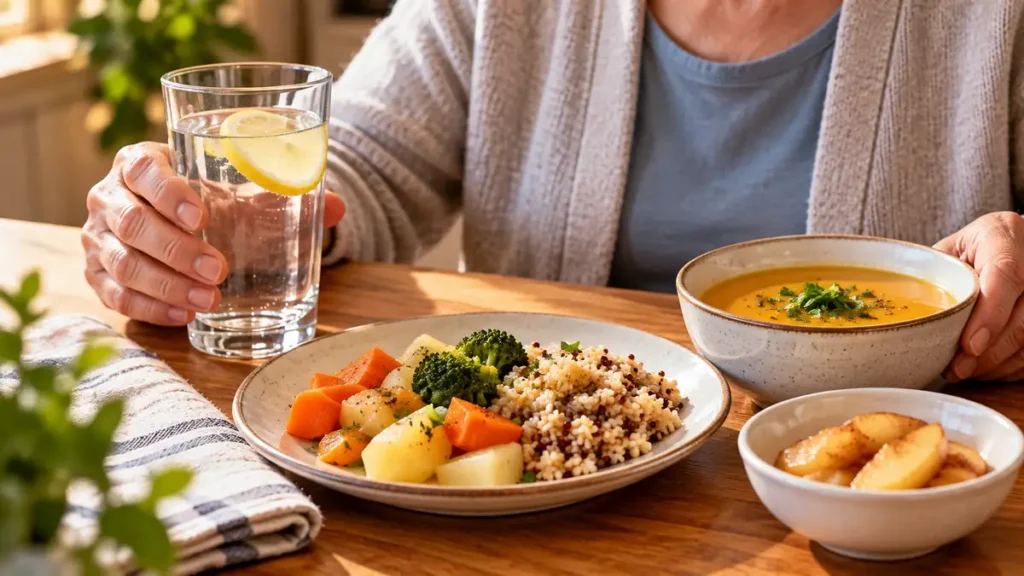
Adding fiber too fast can backfire with temporary gas, bloating, or mild cramps. Two simple habits, which the NIDDK also recommends, make the change much smoother:
- Go One Step at a Time: Add one new fiber-rich food every few days instead of overhauling your diet in an afternoon. Swap white toast for oatmeal for a few days before adding lentils or seeds to dinner. This gives your digestive system time to adjust.
- Drink Enough Fluids: Fiber needs liquid to do its job. Without enough water, extra fiber can actually make stools harder to pass. Keep a glass of water, herbal tea, or broth nearby through the day. If your doctor has limited your fluids because of a heart or kidney condition, follow their advice instead.
Also Read: 7 Easy Daily Habits to Keep Your Brain Sharp After 60 (Our guide to morning routines and steady daily hydration)
Kitchen Tips for Easier Eating
How you prepare food makes a big difference in how comfortable it is to eat and digest:
- Cook Until Fork-Tender: Crunchy raw vegetables take a lot of jaw work. Steaming, boiling, or roasting until fork-tender makes them easy to chew.
- Peel Tough Skins When Needed: Skins hold fiber, but they can be hard to chew. Peeling apples, cucumbers, or sweet potatoes lets you enjoy the soft inside, though you’ll get a little less fiber.
- Mash and Puree: A fork, masher, or blender is your friend. Mashed sweet potato or blended lentil soup gives you the fiber in a smooth, easy-to-swallow dish.
Frequently Asked Questions
Can I get enough fiber from everyday foods without supplements?
Many older adults can raise their fiber intake through oats, lentils, fruits, and vegetables, though the right amount depends on your individual health. Whole foods also bring vitamins and minerals that processed powders don’t.
Why does more fiber sometimes cause gas?
When fiber reaches your large intestine, the bacteria there break it down through fermentation, which produces a bit of gas. Adding fiber slowly over a few weeks and drinking plenty of water gives your body time to adapt.
What are good high-fiber options if I wear dentures?
Soft, cooked foods like warm oatmeal, mashed sweet potato, and pureed lentil soup give you plenty of fiber without heavy chewing or hard bits that slip under dental appliances.
When should I see a doctor about digestive discomfort?
Occasional sluggishness is normal, but check in with your doctor if bowel changes last longer than two weeks, or if you notice severe stomach pain, unexpected weight loss, or blood in your stool.
Sources & References
- National Institute of Diabetes and Digestive and Kidney Diseases (NIDDK): Eating, Diet, & Nutrition for Constipation. Consumer guidance on raising fiber gradually and staying hydrated.
- U.S. Department of Agriculture (USDA) & HHS: Dietary Guidelines for Americans. Daily nutrition targets, including fiber, for older adults.
- National Institute on Aging (NIA): Smart Food Choices for Healthy Aging. Guidance on whole grains, fruits, and vegetables for older adults.
- Tufts University HNRCA: MyPlate for Older Adults. A dietary resource focused on soft textures, fiber balance, and hydration.
This article is for educational purposes and doesn’t replace personalized advice from your physician or a registered dietitian.
Educational only — not medical, legal, or financial advice. Talk to a qualified professional before changing exercise, diet, medication, or making a major purchase. After60Guide is not a medical practice.




Gaurav Sharma is the founder and lead writer of After60Guide. He writes practical, source-cited guides on movement, nutrition, home safety, and everyday living after 60. He is not a doctor, physical therapist, or financial adviser. Health and money articles are general education, checked against official public sources where relevant — not personal advice. Corrections: contact@after60guide.com