
By Gaurav Sharma | Founder & Lead Writer
Updated: October 2026. Educational only — not medical advice.
Pouring a cold glass of cow’s milk has long been considered the classic way to protect bone health, but for many older adults, a simple bowl of cereal now triggers uncomfortable bloating or stomach cramps within an hour. When dairy starts causing digestive distress, discovering reliable calcium rich foods for seniors who cannot drink milk becomes essential for staying active, steady, and independent.
Developing dairy sensitivity in your 60s or beyond is remarkably common. Aging digestive systems naturally produce less lactase, the enzyme responsible for breaking down milk sugars smoothly. The real dilemma is that our skeletal systems need steady mineral support more than ever during these years to keep joints stable and walking confident.
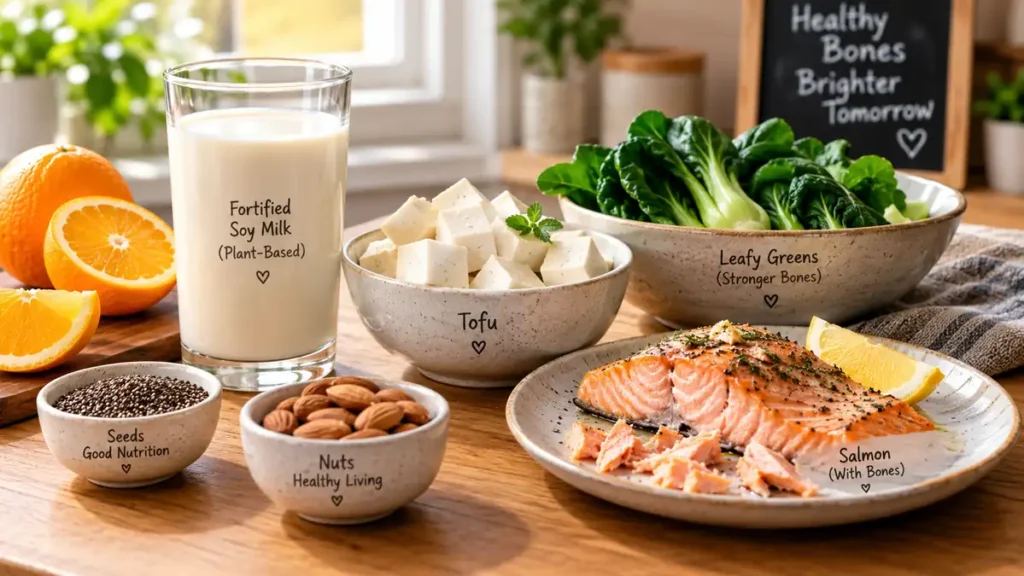
Giving up dairy does not mean accepting fragile bones. You do not need expensive specialty powders or chalky pills to meet your daily targets. From creamy fortified plant milks and tender flaked fish to mineral-set tofu and gentle braised greens, plenty of everyday pantry staples deliver the bone-supporting nourishment you need without the stomach ache.
Here is a practical, gentle guide to getting your daily dietary calcium without traditional dairy—complete with easy kitchen preparation ideas, honest label-reading tips, and simple ways to maximize mineral absorption.
Table of Contents
- Why Calcium Becomes Especially Important With Age
- How Much Calcium Do Older Adults Need Daily?
- 7 Calcium-Rich Foods for Seniors Who Cannot Drink Milk
- Quick Calcium and Serving Comparison
- Vitamin D: The Missing Key to Calcium Absorption
- Simple One-Day High-Calcium Sample Menu
- Common Foods and Habits That Interfere With Absorption
- When to Speak With a Doctor or Dietitian
- Frequently Asked Questions
- Official Resources
Why Calcium Becomes Especially Important With Age
Bone tissue is not static; it is living, growing tissue that is continuously being broken down and rebuilt throughout your lifetime. During youth, bone formation outpaces breakdown. However, starting around age 50 in women and age 60 in men, bone remodeling naturally shifts toward a gradual loss of mineral density.
Calcium provides the structural framework that gives bones their rigidity. When your daily diet does not provide sufficient calcium, your body maintains critical blood calcium levels (essential for heart rhythm and nerve signaling) by drawing the mineral directly out of your bones. Over decades, this gradual depletion can leave skeletal structures more fragile.
Consistently consuming calcium-dense whole foods helps maintain that essential skeletal bank account, supporting natural balance, joint alignment, and everyday walking confidence.
📖 ALSO READ: High-Protein Foods for Seniors: 7 Easy Options
How Much Calcium Do Older Adults Need Daily?
According to dietary recommendations from the National Institutes of Health (NIH) and the Food and Nutrition Board:
- Women aged 51 and older: Need approximately 1,200 mg of calcium daily.
- Men aged 51 to 70: Need approximately 1,000 mg daily.
- Men aged 71 and older: Need approximately 1,200 mg daily.
Reaching 1,200 mg without relying on regular cow’s milk might sound daunting, but spacing mineral-rich choices across your breakfast, lunch, and dinner makes this daily goal manageable without high-dose supplement pills.
7 Calcium-Rich Foods for Seniors Who Cannot Drink Milk
1. Calcium-Fortified Soy Milk

Among all plant-based milk alternatives on modern grocery shelves, fortified soy milk stands out as the most nutritionally complete substitute for traditional cow’s milk.
- Approximate Calcium: ~300 to 350 mg per 1-cup (8 fl oz) serving (providing roughly 25% to 30% of daily value).
- Why It Helps: Beyond delivering significant calcium, soy milk provides about 7 to 8 grams of complete plant-based protein per cup. For older adults experiencing low appetite or muscle loss, it supports both skeletal maintenance and muscular tone simultaneously.
- How to Serve It: Shake the container thoroughly before pouring, as added minerals naturally settle to the bottom. Use it warm over morning oatmeal, blend it with banana into a smooth shake, or splash it into decaf coffee.
- What to Check on the Label: Look for “Calcium Carbonate” or “Tricalcium Phosphate” in the ingredients list. Choose unsweetened varieties to keep added sugars near zero grams.
2. Canned Salmon With Soft Bones
Traditional canned salmon is one of the most reliable pantry staples for older adults seeking high mineral density.
- Approximate Calcium: ~180 to 220 mg per 3-ounce serving.
- Why It Helps: The commercial canning process subjects whole wild salmon to high-pressure steam, making the small vertebrae and delicate pin bones completely soft and crumbly. These edible bones deliver natural calcium-phosphate matrices directly. Additionally, wild salmon provides anti-inflammatory omega-3 fatty acids and natural vitamin D.
- Easy Way to Enjoy It: Flake the fish directly into a bowl using a fork, mashing the soft bones into the meat where they blend seamlessly. Mix with a spoonful of olive oil mayonnaise, a dash of lemon juice, and chopped soft herbs to make a tender salmon salad for whole-grain toast.
- What to Check on the Label: Verify that the can specifies “Wild Alaskan Salmon” and indicates traditional style with skin and bones (avoid boneless skinless fillets if your goal is maximum calcium).
3. Calcium-Set Firm Tofu
Tofu is a versatile soybean curd that transforms into a mineral powerhouse depending on the coagulant used during production.
- Approximate Calcium: ~250 to 400 mg per 1/2-cup serving (firm varieties).
- Why It Helps: Soybean curd set using calcium sulfate absorbs high concentrations of bioavailable calcium. Because tofu has a delicate, sponge-like consistency, it requires virtually zero heavy chewing, making it ideal for those with dental bridges, crowns, or sensitive gums.
- Kitchen Tip: Cut firm or medium-firm tofu into small bite-sized cubes and simmer them gently in warm chicken or vegetable broth, or crumble it into a skillet with mild olive oil and a dash of turmeric for a warm breakfast scramble.
- What to Check on the Label: Look specifically at the ingredients list for Calcium Sulfate (or gypsum). Tofu coagulated solely with magnesium chloride (nigari) contains far less calcium per serving.
4. Canned Sardines in Olive Oil
Small ocean fish packed whole in olive oil provide concentrated nourishment in a shelf-stable tin.
- Approximate Calcium: ~250 to 325 mg per 3-ounce can.
- Why It Helps: Like canned salmon, sardines are eaten with their tiny, pressure-softened bones intact. Because sardines feed on plankton at the base of the marine food web, they accumulate virtually no heavy metals or mercury compared to larger predatory fish.
- Make It Work at Meals: If the flavor feels strong on its own, mash sardines with ripe avocado and a pinch of black pepper onto soft crackers, or stir them into warm marinara sauce over pasta where their savory notes melt into the sauce.
- What to Check on the Label: Choose sardines packed in extra-virgin olive oil or water rather than heavy soybean or cottonseed oils, and check the sodium level to stay aligned with your cardiovascular goals.
5. Cooked Collard Greens & Low-Oxalate Leafy Greens

While raw salads can be tough to chew and digest, gentle cooking makes leafy greens both tender and mineral-rich.
- Approximate Calcium: ~130 to 180 mg per 1/2-cup cooked (collard greens); ~80 to 100 mg per 1/2-cup cooked (bok choy).
- Why It Helps: Not all leafy greens are suitable calcium sources. Spinach and Swiss chard contain high levels of oxalates—compounds that bind tightly to calcium in the digestive tract and prevent absorption. Collard greens, turnip greens, kale, and bok choy are low in oxalates, meaning your digestive tract absorbs over 50% of the calcium present.
- How to Serve It: Avoid tough, raw salads. Instead, gently braise chopped collard greens or bok choy in warm vegetable broth with a drop of olive oil for 15 to 20 minutes until completely tender and easy to chew.
- What to Check on the Label: When buying bagged greens, look for pre-washed, chopped varieties to eliminate tedious knife work in the kitchen.
6. Calcium-Fortified 100% Orange Juice
For mornings when solid food does not look appealing, fortified fruit juice provides an accessible liquid option.
- Approximate Calcium: ~300 to 350 mg per 8 fl oz glass (or ~200 to 250 mg per modest 6 fl oz serving).
- Why It Helps: Most fortified juices use calcium citrate-malate, an organic mineral form that dissolves readily in liquid and absorbs efficiently. The natural citric acid and vitamin C in the juice also aid mineral uptake in the small intestine.
- Easy Way to Enjoy It: Pour a modest 4-to-6-ounce portion alongside breakfast rather than a giant tumbler to keep natural fruit sugar intake moderate. Shake the carton vigorously before every pour.
- What to Check on the Label: Confirm the front carton says “Calcium + Vitamin D Fortified,” and ensure the nutrition facts show 100% juice with “0g Added Sugars.”
7. Calcium-Fortified Almond Milk (What to Check on the Label)
Almond milk has become a household favorite due to its light texture and mild nutty flavor, making it an easy companion for cereal and coffee.
- Approximate Calcium: ~300 to 450 mg per 1-cup serving (when fortified).
- Why It Helps: Plain almonds naturally contain calcium, but the liquid milk alternative is predominantly water. Almost all the calcium in commercial almond milk comes from added mineral fortification, which often meets or exceeds the calcium content of cow’s milk.
- Kitchen Tip: Pour over warm cooked daliya (cracked wheat) or rolled oats, or use it as a smooth liquid base for fruit smoothies.
- What to Check on the Label: Do not assume almond milk has calcium automatically. Unfortified or organic artisan brands may contain less than 20 mg of calcium per cup. Check the nutrition panel to verify at least 25% to 30% Daily Value of calcium, and choose unsweetened varieties containing less than 1 gram of total sugar.
📖 ALSO READ: Blood Sugar-Friendly Foods for Seniors: A Practical Everyday Guide
Quick Calcium and Serving Comparison
| Food Source | Standard Serving Size | Approx. Calcium | Primary Texture | Best Preparation / Use |
|---|---|---|---|---|
| Fortified Soy Milk | 1 Cup (8 fl oz) | 300 – 350 mg | Smooth liquid | Warmed with oatmeal or in decaf coffee |
| Canned Salmon (with bones) | 3 oz | 180 – 220 mg | Flaky / Tender | Fork-mashed into spreads or salads |
| Calcium-Set Firm Tofu | 1/2 Cup | 250 – 400 mg | Soft sponge | Cubed into soups or scrambled with turmeric |
| Canned Sardines | 1 Can (3 oz) | 250 – 325 mg | Delicate / Flaky | Mashed on avocado toast or stirred into pasta |
| Cooked Collard Greens | 1/2 Cup Cooked | 130 – 180 mg | Tender / Braised | Simmered in broth with olive oil until soft |
| Fortified Orange Juice | 6 fl oz Glass | 200 – 250 mg | Crisp liquid | Poured with breakfast (shake carton well) |
| Fortified Almond Milk | 1 Cup (8 fl oz) | 300 – 450 mg | Light liquid | Poured over cereal or blended in smoothies |
Vitamin D: The Missing Key to Calcium Absorption
Consuming enough calcium is only half of the equation; your gut must also absorb it into the bloodstream.
- How Vitamin D Works: Vitamin D functions like a molecular key that unlocks intestinal receptors for calcium absorption. Without adequate vitamin D, your body can absorb as little as 10% to 15% of the dietary calcium you eat.
- Why Seniors Run Low: Aging skin produces significantly less vitamin D from direct sunlight, and indoor living during colder months reduces synthesis further.
- Practical Dietary Sources: Fatty fish (wild salmon, sardines, mackerel), egg yolks, and fortified plant beverages supply dietary vitamin D. Ask your primary care doctor at your annual wellness visit to check your 25-hydroxy vitamin D level with a simple routine blood test.
Simple One-Day High-Calcium Sample Menu
Reaching your 1,200 mg target without drinking cow’s milk can look like this:
- Breakfast: 1 cup of warm oatmeal prepared with 1 cup of calcium-fortified soy milk (~320 mg) and topped with sliced ripe banana.
- Mid-Morning Refreshment: A 5-ounce glass of calcium-fortified 100% orange juice (~220 mg).
- Lunch: A sandwich or salad bowl made with 3 oz of fork-mashed canned wild salmon with soft bones (~200 mg), olive oil, and herbs on whole-wheat bread.
- Afternoon Snack: A light smoothie made with 1 cup of fortified almond milk (~350 mg) and 1/2 cup of frozen blueberries.
- Dinner: 1/2 cup of pan-simmered calcium-set tofu cubes (~280 mg) served with 1/2 cup of braised collard greens (~150 mg) and brown rice.
- Estimated Daily Total: ~1,520 mg of dietary calcium (Zero cow’s milk consumed).
Common Foods and Habits That Interfere With Absorption
Getting the most from your meals means steering clear of common absorption pitfalls:
- High Sodium Meals: Excess dietary salt causes the kidneys to excrete higher amounts of calcium in the urine. Use garlic, black pepper, and citrus juices instead of the salt shaker to season dishes.
- Drinking Strong Coffee With Calcium Foods: Caffeine has a mild diuretic effect and can slightly decrease mineral absorption in the gut. Enjoy your morning coffee 30 to 60 minutes before or after your primary calcium-rich meal.
- Taking Massive Doses All at Once: The human digestive tract absorbs calcium most efficiently in moderate increments of 400 to 500 mg at one time. Spreading your food choices across three small meals and one snack yields far better absorption than trying to eat your entire daily requirement at dinner.
When to Speak With a Doctor or Dietitian
While dietary adjustments through whole foods are widely considered safe and supportive for everyday wellness, you should consult your healthcare provider or a registered dietitian if:
- You have received a formal diagnosis of osteopenia or osteoporosis and need an individualized medical treatment plan.
- You manage chronic kidney disease (CKD), as high-mineral foods (especially those containing potassium and phosphorus like soy, greens, and fish) may require specific monitoring.
- You take thyroid medications (such as levothyroxine) or certain antibiotics, which must be taken 4 hours apart from calcium-fortified foods to avoid binding interactions.
Frequently Asked Questions
Why is eating calcium foods better than taking a single 1,200 mg calcium pill?
Major health organizations like the NIA emphasize a “food first” approach. High-dose calcium pills (particularly calcium carbonate in 1,000 mg doses) can cause hard stools, constipation, and stomach upset. Whole foods supply calcium in balanced, naturally bioavailable forms accompanied by water, healthy fats, and trace minerals.
Is almond milk just as good as soy milk for older adults?
For calcium, fortified almond milk is excellent and often contains slightly more added calcium than soy milk. However, almond milk naturally contains only 1 to 2 grams of protein per cup, whereas soy milk supplies 7 to 8 grams of complete protein. For older adults who also want to protect muscle mass, soy milk is generally the more complete choice.
Does cooking leafy greens destroy their calcium content?
No. Calcium is an inorganic mineral that is unaffected by cooking heat. In fact, gently steaming or braising greens wilts down the bulky plant fibers, allowing you to comfortably consume far more calcium per cup than you could reasonably chew in raw leaves.
Official Resources
- National Institute on Aging (NIA): Vitamins and Minerals for Older Adults
- National Institutes of Health (NIH) Office of Dietary Supplements: Calcium Fact Sheet for Health Professionals
- Bone Health and Osteoporosis Foundation (BHOF): Calcium and Vitamin D: What You Need to Know
Disclaimer: This article is provided strictly for educational and dietary informational purposes and does not constitute medical advice or clinical nutrition therapy. Individuals with diagnosed osteoporosis, chronic kidney disease, hypercalcemia, or those taking specific medications should consult their physician or a registered dietitian before significantly altering their mineral intake.




Gaurav Sharma is the founder and lead writer of After60Guide. He writes practical, source-cited guides on movement, nutrition, home safety, and everyday living after 60. He is not a doctor, physical therapist, or financial adviser. Health and money articles are general education, checked against official public sources where relevant — not personal advice. Corrections: contact@after60guide.com