
By Gaurav Sharma | Founder & Lead Writer
Updated: November 2026. This is not medical advice and not a home assessment.
Disclosure: As an Amazon Associate, I earn from qualifying purchases. This means I may earn a small commission if you buy through my links, at no extra cost to you.
Please note: This article is for general information only. It is not medical advice. If you feel dizzy, feel weak on one side, or have already had a fall, please talk to your doctor or an occupational therapist before you choose a bar and start to rely on it.
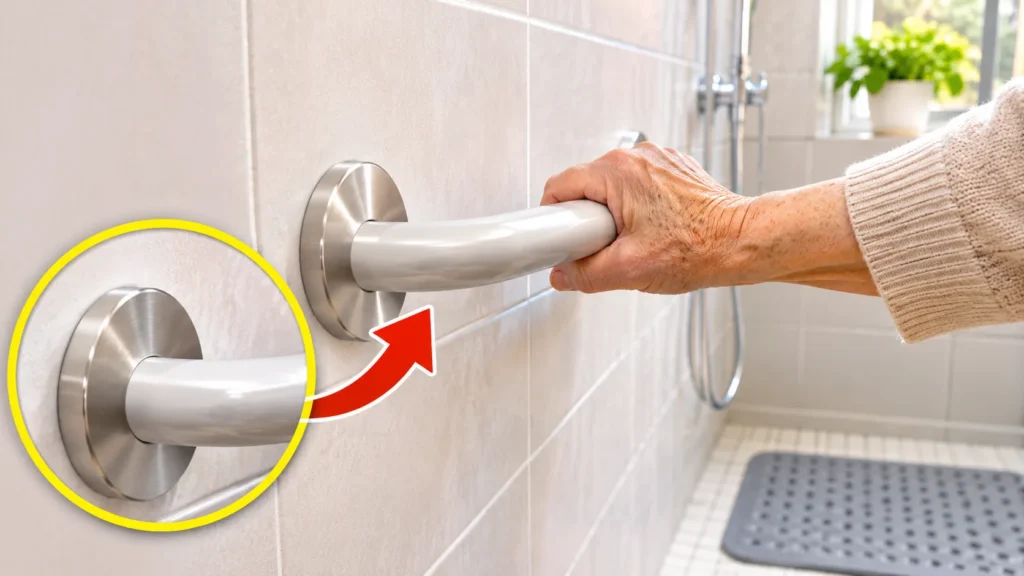
Grab bars for seniors are a small thing. They can also be the difference between a scary slip and a safe step.
The CDC says more than one in four older adults fall every year. The bathroom, with its wet floors and hard surfaces, is a place where a small slip can turn into a big one fast. A good bar gives your hand something solid to hold. A bad bar gives you false comfort, and that is worse than having nothing.
In this guide I will keep it simple. You will learn what makes a bar safe, where to put it, and which one to look at first.
The short answer
Use a screw-in bar that goes into a wall stud. Skip suction-cup bars for anything that matters. If you want one bar to start with, the Moen R8918W is a common, well-reviewed choice, and I explain why below.
The wall matters more than the bar
Most people look at the bar first. The wall is what really holds you.
A bar that is screwed into bare drywall can pull out the moment someone leans on it hard. The screws need to bite into a wooden stud behind the wall, or into a proper grab-bar anchor made for hollow walls.
Here is how to check:
- Use a stud finder. A magnetic one that finds the screws in the wall works well too.
- Try the tap test. A hollow sound means empty wall. A duller, solid sound usually means a stud.
- If you cannot find a stud where the bar needs to go, stop there. A handyman can open the wall and add wood backing. That costs more than the bar, but it costs far less than a fall.
Also read the box. When a bar says it “supports 500 pounds,” that number usually means it was tested when installed the right way, into a stud, following the maker’s steps. It does not mean it will hold that much if you stick it anywhere.
For comparison, the ADA says grab bars in public places must handle at least 250 pounds of force. Home bars do not have to follow the ADA, but it is a helpful yardstick.
Where to put it
Put the bar where your hand already goes. Do not copy the layout from a photo of someone else’s bathroom.
- Toilet: Sit down and see where your hand lands when you push up. The ADA range for public bathrooms is 33 to 36 inches above the floor, measured to the top of the bar. That is a good starting point, but your own reach comes first.
- Shower or tub: Many people want one bar to hold while stepping in. Some also like a vertical or slanted bar to pull up on, because a flat bar can be hard to use when you are standing up from a seat. An occupational therapist can tell you which shape suits your body.
- Length: A 12-inch bar is a short helper. An 18-inch bar covers more of a step. Longer is not always safer if both ends miss the stud.
If you have to lean out of the shower to reach it, it is in the wrong place. Move it.
One screw-in bar to start with: Moen R8918W
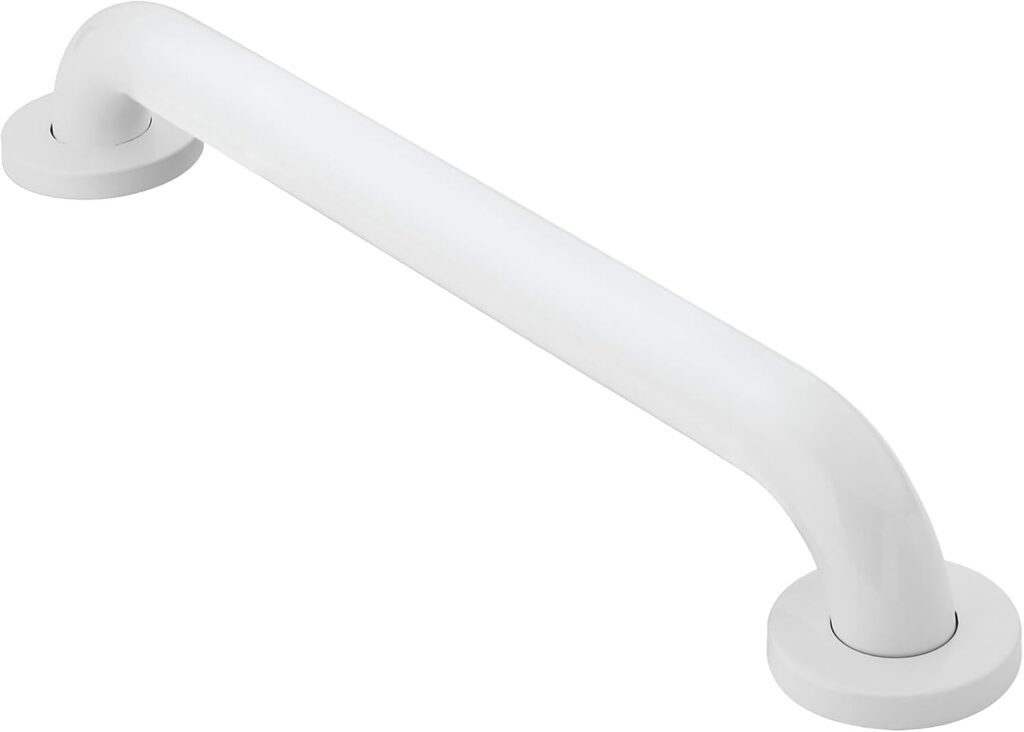
The Moen R8918W is an 18-inch white (“Glacier”) bar with concealed screws, so you do not see the fasteners. Here is what Moen and its sellers list:
- Stainless steel, 18-inch bar, 1.5-inch grip
- Rated to hold up to 500 pounds when installed correctly
- Meets ADA specifications
- Covered by a limited lifetime warranty
- The wide mounting plate is made so you can screw into a stud at any angle
The 1.5-inch grip is a common size, and it falls inside the ADA range of 1¼ to 2 inches. If you have smaller hands, Moen also makes a 1¼-inch version of this style, so check before you buy.
One honest limit: if your wall has no stud where you need the bar, this bar alone will not do the job. Moen sells separate SecureMount anchors for hollow walls, and they are not in the box. Retailers list them at up to 300 pounds each. They also need space behind the wall, and they involve cutting a hole, so most people will want a handyman for that.
Moen 18-inch concealed-screw grab bar on Amazon
If this exact model is sold out when you look, search for “Moen 18 inch grab bar concealed screws.” Please do not swap in a suction bar just because it costs less.
Suction bars: limited use only
Suction bars have one fair use. They can be a light steadying handhold on a smooth wall, like in a hotel bathroom while you travel.
- Do not use one next to the toilet to stand up.
- Do not use one as the only bar for someone who is unsteady.
- Tug it firmly every time before you shower.
- If the cups look cloudy, or the bar shifts even a little, take it down.
I am not linking a suction model in this article. For a home bathroom, a screw-in bar is the honest choice.
What to do on the day it goes up
- Pull on the bar hard before anyone depends on it. It should not click, twist or move.
- Once a month, pull on it again. Look at the screws and the caulk.
- Keep soap off the grip.
- If you use a suction bar, give it a pull every week. Any slip means it comes off the wall that day.
Quick answers
Can a suction bar hold a person? Do not count on it. Use it only as a light steady on a smooth wall, never to stop a fall.
Is a screw-in bar safe on any wall? No. It has to go into a stud, or into an anchor made for grab bars. Drywall alone is not enough.
What if I rent? Ask your landlord in writing before you drill. A floor-to-ceiling tension pole is a different product that does not need drilling, so read its weight limit carefully.
Related on this site
A bar is only one piece of a safe bathroom. A shower chair or a non-slip mat still matters if standing is the hard part. See bathroom safety upgrades for seniors and walk-in shower for seniors.
Sources
- CDC STEADI: Patient and caregiver resources for preventing falls
- National Institute on Aging: Falls and fall prevention
- U.S. Access Board / 2010 ADA Standards, Section 609: Grab bars
- Moen Home Care R8918W product page
- Moen SecureMount anchors
These pages are about falls and grab-bar rules. They do not review the Moen bar for you, so please read the maker’s instructions in the box.
Educational only. Not medical, legal or financial advice. Talk to a qualified professional before making a major change to your home or a major purchase. After60Guide is not a medical practice.




Gaurav Sharma is the founder and lead writer of After60Guide. He writes practical, source-cited guides on movement, nutrition, home safety, and everyday living after 60. He is not a doctor, physical therapist, or financial adviser. Health and money articles are general education, checked against official public sources where relevant — not personal advice. Corrections: contact@after60guide.com