
Written By Gaurav Sharma
Reviewed against published public guidance from the Arthritis Foundation and the National Institute on Aging (NIA) | Last updated: August 2026
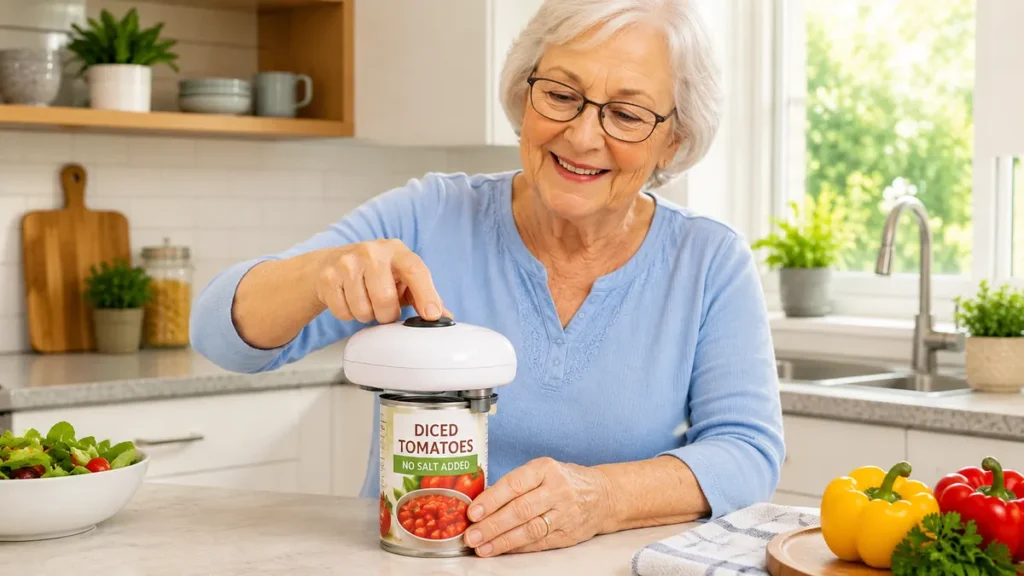
Preparing a simple home-cooked meal is an enjoyable part of daily life, but opening a standard can of soup, tuna, or beans can quickly become a frustrating chore if you experience joint stiffness or reduced grip strength. Finding the best electric can openers for seniors with weak hands is one of the simplest ways to help reduce daily kitchen strain and make everyday meal prep much easier.
As we age, natural physical changes like hand stiffness, joint sensitivity, or carpal tunnel can make twisting a traditional manual opener uncomfortable. Squeezing rigid metal handles and forcing a cutting wheel through steel lids requires significant pinch force and wrist leverage.
Modern electric can openers take the physical effort out of this daily routine. From automatic hands-free models that walk around the lid on their own to sturdy countertop machines, there are reliable options designed to make kitchen work smooth and comfortable.
Based on design specifications, ease of use, and accessibility features, here are our top recommended picks for electric can openers tailored for limited hand strength.
Table of Content
Quick Comparison: Top Electric Can Openers
| Model | Best For | Key Advantage |
|---|---|---|
| Kitchen Mama Auto | Hands-Free (Handheld, 4 AA Batteries) | Single-button 360° auto-stop, smooth edge |
| Hamilton Beach Smooth Touch | Overall Countertop (Corded Electric) | Side-cutting lever, opens almost any can size |
| Cuisinart CCO-50N Deluxe | Heavy-Duty (Countertop, Corded Electric) | Stable wide base, strong magnetic lid holder |
| Bartelli Soft Edge | Smooth-Edge (Handheld, 4 AA Batteries) | True side-cut design, zero sharp rim edges |
| Black+Decker EasyCut | Budget Countertop (Corded Electric) | Extra-tall design fits large family cans |
| Zyliss EasiCan | Compact (Handheld, 2 AA Batteries) | One-touch start/stop, lightweight profile |
| Proctor Silex Plus | Simple Operation (Countertop, Corded Electric) | Removable washable lever, lightweight |
7 Best Electric Can Openers for Seniors with Weak Hands
1. Kitchen Mama Auto Electric Can Opener (Best Overall Hands-Free)
The Kitchen Mama Auto is a widely popular choice for older adults looking for true, unassisted operation. You position the unit on top of the can and press the large, prominent start button. The device moves around the perimeter automatically and shuts off once the full 360-degree cut is completed.
- Why it suits weak hands: Requires zero squeezing, twisting, or continuous holding.
- Pros: Leaves smooth, touch-friendly lid edges; compact enough to store easily in a shallow kitchen drawer.
- Cons: Requires 4 AA batteries (alkaline recommended).
📖 ALSO READ:Vita Solitaire for Seniors: Is It Really Worth Playing?
2. Hamilton Beach Smooth Touch Electric Can Opener (Best Countertop)
The Hamilton Beach Smooth Touch is an exceptional freestanding countertop machine. Instead of cutting down into the lid, it unseals along the side seam of the can, leaving smooth edges on both the lid and the container.
- Why it suits weak hands: The large ergonomic top lever requires minimal downward palm pressure to activate the motor.
- Pros: Side-cutting mechanism prevents metal shavings from touching food; tall profile accommodates large family-sized cans; built-in cord storage.
- Cons: Takes up permanent counter space.
3. Cuisinart CCO-50N Deluxe Can Opener (Best Heavy-Duty Countertop)
Built with a weighted base and solid metal accents, the Cuisinart CCO-50N is designed for maximum countertop stability. It uses a precision Power Cut blade and a strong magnetic lid holder that catches the severed lid cleanly.
- Why it suits weak hands: The wide, slip-resistant base prevents tipping when locking in heavier industrial or tall cans.
- Pros: Strong motor handles standard and tall cans effortlessly; easy one-touch lever press.
- Cons: Uses a top-cut mechanism, so severed lids retain a slight edge.
4. Bartelli Soft Edge Automatic Can Opener (Best Smooth-Edge)
The Bartelli Soft Edge is a compact, battery-powered opener that unseals cans horizontally from the side seam. It lifts the top off cleanly like a cap, allowing you to temporarily cover leftover food.
- Why it suits weak hands: Extremely lightweight body with an elevated start/stop button that requires light finger contact.
- Pros: Leaves no jagged edges; hygienic side-cut keeps the cutting gear away from food contents.
- Cons: Moves slightly slower on thick-rimmed specialty cans.
5. Black+Decker EasyCut Extra-Tall Can Opener (Best Budget Countertop)
The Black+Decker EasyCut provides dependable countertop performance at an accessible price point. Its extra-tall design makes it easy to position tall cans of soup, broth, or canned vegetables underneath the blade assembly.
- Why it suits weak hands: The easy-push lever locks onto the rim smoothly without needing forceful grip strength.
- Pros: Budget-friendly; includes a built-in bottle opener on the rear; removable cutting assembly for easy washing.
- Cons: Lightweight plastic housing may require steadying with a hand when opening very heavy family cans.
6. Zyliss EasiCan Electronic Can Opener (Best Compact)
For older adults with limited drawer space or smaller kitchens, the Zyliss EasiCan provides an ultra-compact footprint. It operates on 2 AA batteries and uses a simple two-stage push button to start and stop the cutting cycle.
- Why it suits weak hands: Weighs well under 6 ounces, making it very easy to pick up, position, and store.
- Pros: Compact size; energy-efficient 2-battery operation; simple top-mount alignment.
- Cons: Requires pressing the button a second time to stop once the rotation finishes.
7. Proctor Silex Plus Power Opener (Best Simple Operation)
The Proctor Silex Plus is a dependable countertop staple designed for straightforward, reliable use. It features a detachable cutting lever that twists off easily for quick cleaning under running water.
- Why it suits weak hands: The magnetic lid catcher holds the lid firmly, reducing the need to reach in with your fingers.
- Pros: Very simple mechanism; dishwasher-safe removable cutting lever; affordable.
- Cons: Traditional top-cut blade means the lid retains a sharp edge.
📖 ALSO READ: Assisted Living Options for Seniors: A Complete Guide to Care Levels & Costs
Key Features to Look for Before Buying
- Operation Style (Hands-Free vs. Lever-Press): If you experience significant hand fatigue, tremors, or severe arthritis, a hands-free battery model that rotates independently is typically the easiest option. If you prefer not to manage batteries, a corded countertop model with an easy-palm lever is ideal.
- Cutting Mechanism: Side-cutting (smooth-edge) models eliminate sharp metal burrs, making the separated lid safer to handle during disposal.
- Lid Retention: Ensure the model includes a built-in magnet to capture the lid so you do not have to retrieve it manually from inside the food.
- Weight and Profile: Countertop models should have a wide, non-skid base for stability, while handheld models should be lightweight and easy to lift.
Smooth-Edge vs. Traditional Top-Cut Blades
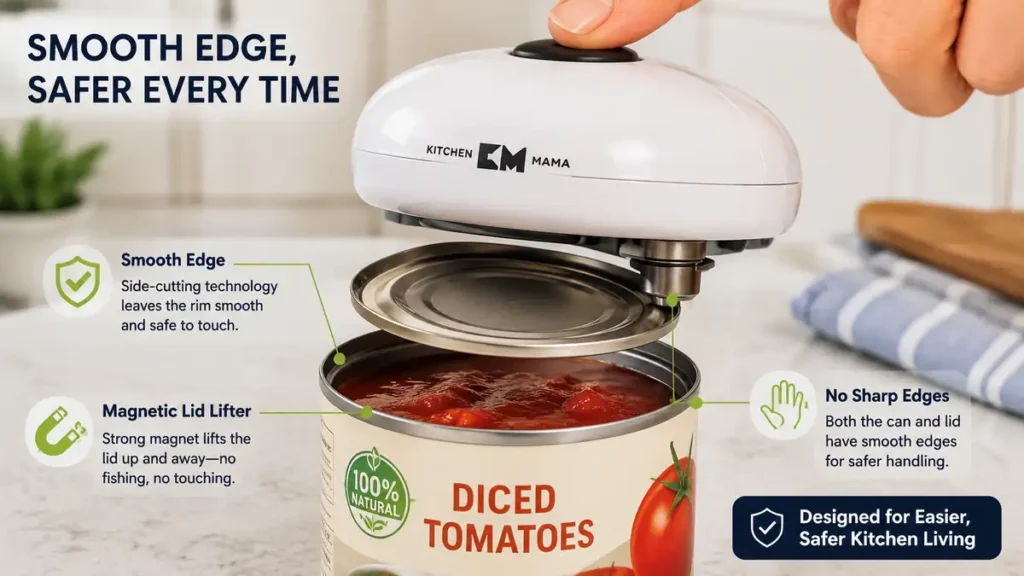
Understanding the cutting mechanism helps you select the right balance of convenience and handling ease:
- Traditional Top-Cut Openers: These punch downward through the top lid surface. While reliable and fast, the severed lid can occasionally dip into the food, and the exposed metal rim remains sharp.
- Smooth-Edge (Side-Cut) Openers: These cut through the outer seam of the can rim. The lid lifts off cleanly without sharp burrs, making handling and disposal much safer for delicate skin.
📖 ALSO READ: Tai Chi for Seniors 60+: Seated & Standing Moves
Helpful Kitchen Adaptations for Limited Grip Strength
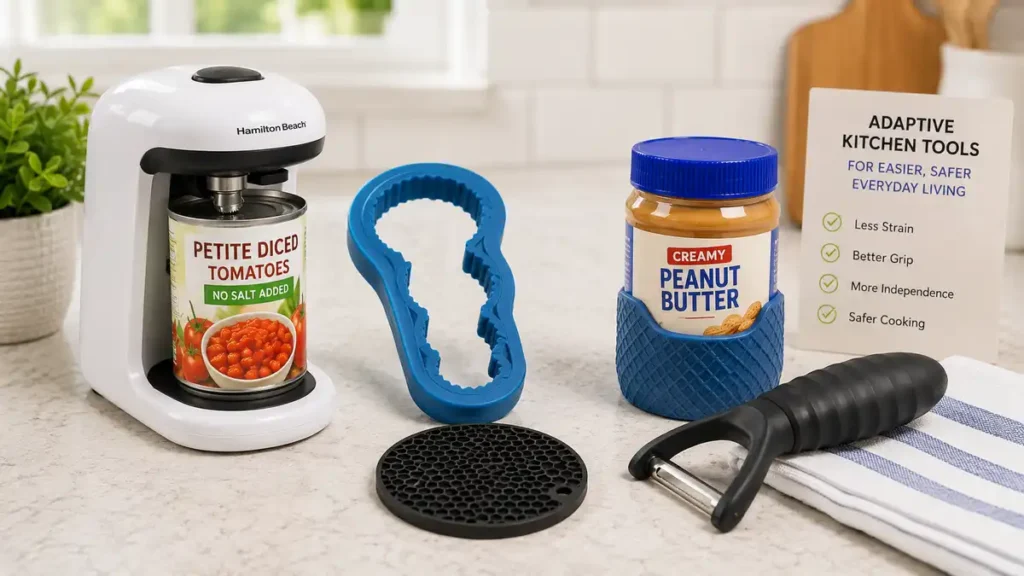
An electric can opener is just one part of an accessible, joint-friendly kitchen setup. A few simple additions can further reduce daily wrist and finger strain:
- Silicone Jar Gripper Pads: Soft rubber pads provide immediate traction, allowing you to open vacuum-sealed glass jars with far less twisting pressure.
- Under-Cabinet Jar Openers: Mounted V-grip tools let you use both hands to turn jars with minimal wrist torque.
- Ergonomic Wide-Grip Cutlery: Kitchen tools and peelers with thick, cushioned handles reduce finger fatigue during food prep.
- Ring-Pull Can Openers: Small J-shaped plastic hooks slide underneath pop-tab soup and beverage cans, giving you the leverage to lift tabs without stressing fingertips or fingernails.
📖 ALSO READ: High-Protein Foods for Seniors: 7 Easy Options
Frequently Asked Questions
Which electric can opener is easiest for seniors with arthritis?
Hands-free automatic models like the Kitchen Mama Auto or side-cutting countertop models like the Hamilton Beach Smooth Touch are generally the most accessible because they eliminate continuous manual twisting and pinching.
How often do battery-operated can openers need new batteries?
Under normal daily household use (opening 1 to 2 cans per day), a fresh set of quality alkaline AA batteries typically lasts between 6 to 12 months.
Are electric can openers difficult to keep clean?
Side-cutting models rarely touch the food inside the can, so they usually only need a quick wipe with a damp cloth. For top-cut countertop models, look for units with removable, washable cutting assemblies.
Final Verdict
Maintaining kitchen independence should not come with painful joints or frustrating meal prep.
- If you want a completely hands-free, compact option that stores in a drawer, the Kitchen Mama Auto is our top overall recommendation.
- If you want a permanent countertop appliance that handles all can sizes and leaves smooth edges, the Hamilton Beach Smooth Touch provides outstanding reliability.
Choosing an electric opener with smooth-edge cutting and easy-touch controls lets you prepare your favorite home-cooked meals safely, comfortably, and with confidence.
Official Resources
- Arthritis Foundation: Arthritis-Friendly Kitchen Tools
- National Institute on Aging (NIA): Aging in Place: Growing Older at Home
- American Occupational Therapy Association (AOTA): What is Occupational Therapy?
Disclaimer: This article is intended strictly for educational and informational purposes and does not constitute formal occupational therapy or medical advice. Mention of specific product brands does not constitute an exclusive medical endorsement.
Educational only — not medical, legal, or financial advice. Talk to a qualified professional before changing exercise, diet, medication, or making a major purchase. After60Guide is not a medical practice.




Gaurav Sharma is the founder and lead writer of After60Guide. He writes practical, source-cited guides on movement, nutrition, home safety, and everyday living after 60. He is not a doctor, physical therapist, or financial adviser. Health and money articles are general education, checked against official public sources where relevant — not personal advice. Corrections: contact@after60guide.com