
Written By Gaurav Sharma
Practical home safety guide referencing general fall-prevention recommendations from the CDC and the National Institute on Aging (NIA) | Last updated: September 2026
You step into the shower, reach for your favorite soap, and suddenly feel your bare foot slide just a fraction of an inch across the wet porcelain. That momentary jolt of panic is all too familiar for older adults. The combination of hard ceramic tile, warm water, and slick soap film can quickly turn a routine morning wash into a stressful experience.
Maintaining complete confidence at home shouldn’t feel like navigating a danger zone. For older adults choosing to age in place, keeping daily bathing safe and dignified is essential. Yet, many people delay making simple home improvements because they assume preventing falls requires spending thousands of dollars on full contractor renovations or walk-in tubs.
You do not need a major remodel to secure your space. Choosing the right bathroom safety upgrades for seniors offers a practical, budget-friendly way to eliminate slippery hazards, improve stability underfoot, and restore everyday peace of mind.
Here is an actionable guide to five inexpensive safety upgrades for older adults living independently, along with essential setup advice to keep your bathroom safe and functional.
Table of Contents
Why Bathroom Slips for Seniors Are a Common Concern
Public safety guidance from the Centers for Disease Control and Prevention (CDC) frequently highlights the bathroom as a high-priority area when assessing home safety for older adults. Several overlapping factors explain why this space requires extra attention:
- Slick, Non-Porous Surfaces: Wet acrylic, fiberglass, and polished glazed tile have minimal natural traction when soapy water covers them.
- Awkward Threshold Transitions: Stepping over a 14-to-18-inch bathtub rim requires balancing on one foot while shifting weight across a slick boundary.
- Unstable Handholds: When losing balance, people instinctively grab the nearest fixture—often towel bars, sliding glass doors, or plastic soap dishes that are not designed to hold human weight.
- Dim Nighttime Navigation: Trips to the bathroom in the dark increase the chance of catching a toe on a bath mat or misjudging a step before reaching the light switch.
Addressing these specific physical friction points with targeted hardware upgrades makes daily routines noticeably safer.
📖 ALSO READ:Best Walking Shoes for Seniors With Balance Problems: 5 Stable Picks
5 Inexpensive Bathroom Safety Upgrades
1. Wall-Mounted Grab Bars (Why Suction Cups Aren’t Enough)
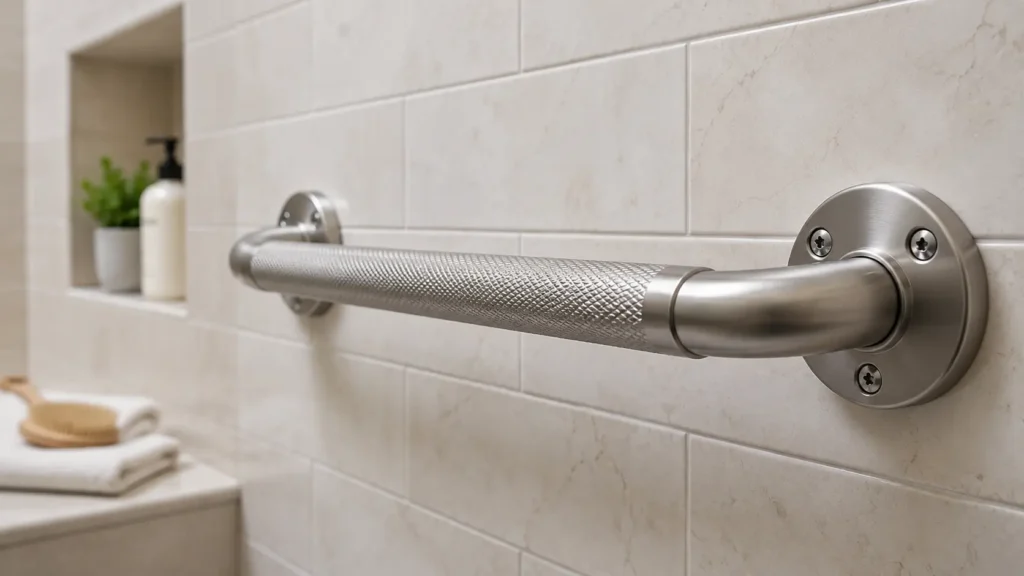
If you only make one upgrade to your bathroom, install permanently mounted metal grab bars inside the shower stall and right beside the toilet.
- Strategic Placement: Mount one vertical bar near the entry point of the tub or shower to assist with stepping in and out. Place a horizontal or angled bar along the interior side wall at roughly waist height (typically 33 to 36 inches above the floor) to hold onto while standing.
- Proper Installation: Secure grab bars directly into wall studs using corrosion-resistant stainless steel screws. If studs aren’t aligned where you need them, use certified hollow-wall anchor systems rated for structural support.
- The Suction Cup Risk: While temporary suction-cup grab bars seem convenient, temperature swings, moisture, and slight tile textures can cause their vacuum seal to degrade over time. Relying on an unanchored handle when stumbling is risky; choose permanently mounted bars rated for at least 250 pounds.
📖 ALSO READ: Assisted Living Options for Seniors: A Complete Guide to Care Levels & Costs
2. High-Traction Rubber Bath & Shower Mats
Stepping into a wet tub without built-in traction creates an immediate slip risk. Adding a quality mat creates an instant non-skid surface underfoot.
- Choose Natural Rubber Over Vinyl: Textured natural rubber typically offers a firmer, tactile grip under wet bare feet than slick synthetic vinyl.
- Ensure Adequate Drainage: Choose mats with plenty of integrated drainage holes so soapy water flows freely to the drain instead of pooling underfoot.
- Outside the Tub: Replace loose, plush rugs with flat, non-skid bath mats backed with genuine slip-resistant vulcanized rubber that stays planted against dry tile.
3. Stable Shower Chairs or Transfer Benches
Standing on a slick surface with your eyes closed to rinse your hair requires significant stability. A dedicated shower seat lets you bathe comfortably without fatigue.
- Standard Shower Stools: A compact, four-legged medical stool with broad non-slip rubber feet fits neatly inside small walk-in showers, offering a solid resting spot.
- Sliding Transfer Benches: For standard bathtubs with high walls, a transfer bench sits with two legs inside the tub and two legs outside. You sit down safely on the dry outside bench and swing your legs over the tub rim without ever balancing on one foot.
- Key Features: Look for adjustable aluminum legs so your feet stay flat on the floor, drainage holes in the molded seat, and built-in side handles to push up from easily.
4. Handheld Showerhead Extension
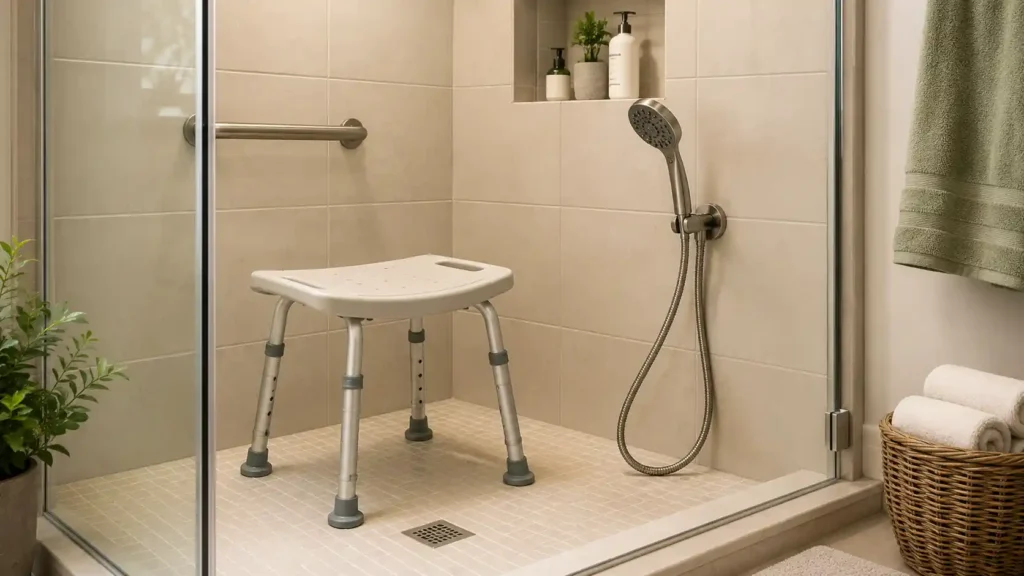
A fixed overhead showerhead forces you to bend, stretch, and turn around under running water. Replacing it with a flexible handheld wand is a straightforward 15-minute DIY project.
- Extended Hose Length: Choose a model with a 6-foot to 8-foot flexible hose that easily reaches you while seated on a shower chair.
- Thumb-Operated Pause Switch: Many models feature a convenient flow-control button right on the handle to pause the water stream while lathering, keeping warm water ready without twisting around to reach the faucet valves.
- Dual-Bracket Setup: Install an adjustable secondary wall bracket at seated height so the sprayer stays within easy reach at all times.
5. Motion-Activated LED Night Lights
Getting up to use the bathroom during the night is normal, but walking down dark hallways while half-asleep invites missteps.
- Hands-Free Pathway Lighting: Inexpensive plug-in motion-sensor lights illuminate the floor automatically as soon as your feet touch the bedroom floor or approach the bathroom doorway.
- Warm Amber Tones: Choose warm white or amber LEDs instead of harsh blue-white lights. Amber tones provide clear ground illumination without disturbing your eyes or disrupting your sleep cycle.
- Placement: Position one sensor light low on the wall along the hallway baseboard and another inside the bathroom near the floor beside the toilet.
📖 ALSO READ: How to Sleep Cooler at Night for Seniors: 7 Practical Tips
Quick Cost & Feature Comparison
| Safety Upgrade | Estimated Cost (USD) | Installation Difficulty | Primary Safety Benefit |
| Mounted Grab Bars | $15 – $35 each | Moderate (Requires drill/studs) | Solid physical leverage entering and exiting |
| Rubber Non-Slip Mats | $12 – $25 | Very Easy (Drop-in) | Instant surface traction inside/outside |
| Adjustable Shower Stool | $25 – $45 | Easy (Hand assembly) | Restful seated bathing without balance strain |
| Handheld Showerhead | $20 – $40 | Easy (Hand-tighten with wrench) | Controls water stream without twisting |
| Motion-Sensor Nightlights | $10 – $20 (2-Pack) | Very Easy (Plug-and-play) | Clear floor visibility for nighttime visits |
3 Dangerous Bathroom Hazards to Remove Today
Improving bathroom safety is not just about what you install—it is also about what you take away:
- Unbacked Throw Rugs: Decorative cloth mats without non-skid rubber backing slide easily across dry tile. Replace them with non-skid runners or anchor them with heavy-duty double-sided rug tape.
- Clutter on Tub Ledges: Stacking shampoo bottles and soaps along the edge of the tub forces awkward stretching. Use a simple hanging caddy to keep essentials at comfortable waist height.
- Slick Floor Cleaner Residue: Avoid using high-gloss floor waxes or oil-based spray cleaners on bathroom tile, as they leave invisible slippery films behind.
📖 ALSO READ:High-Protein Foods for Seniors: 7 Easy Options
Frequently Asked Questions
Can I install grab bars if I live in a rental home or apartment?
Tenants should consult their landlord or property manager before drilling into tile. Under the U.S. Fair Housing Act, housing providers are generally required to allow reasonable home modifications for accessibility at the tenant’s expense. Floor-to-ceiling tension poles with padded grips are also available as non-drilling alternatives.
Why are suction-cup grab bars not recommended for permanent support?
Suction handles depend on an airtight vacuum against smooth tile. Over time, steam, cleaning chemicals, and microscopic grout imperfections cause the vacuum seal to weaken without visible warning. If full body weight is applied during a slip, an unanchored suction bar can pull completely free.
How high should grab bars be placed inside a shower?
For horizontal support bars along a side wall, standard accessibility guidelines recommend mounting them approximately 33 to 36 inches above the finished shower floor. Vertical entry bars are typically placed near the door frame starting around 32 inches from the floor for a comfortable grip.
Official Resources
- Centers for Disease Control and Prevention (CDC): Check for Safety: A Home Fall Prevention Checklist for Older Adults
- National Institute on Aging (NIA): Preventing Falls at Home: Room by Room
- Administration for Community Living (ACL): Promoting Aging in Place by Enhancing Access to Home Modifications
Disclaimer: This article is intended strictly for educational and home safety guidance and does not substitute for personalized medical evaluation or professional architectural advice. If you experience chronic balance disorders, dizziness, or recurring falls, consult an occupational therapist or your primary healthcare provider for an individualized home safety assessment.
Educational only — not medical, legal, or financial advice. Talk to a qualified professional before changing exercise, diet, medication, or making a major purchase. After60Guide is not a medical practice.



Gaurav Sharma is the founder and lead writer of After60Guide. He writes practical, source-cited guides on movement, nutrition, home safety, and everyday living after 60. He is not a doctor, physical therapist, or financial adviser. Health and money articles are general education, checked against official public sources where relevant — not personal advice. Corrections: contact@after60guide.com