

Written By Gaurav Sharma
Based on public guidance from the National Institute on Aging (NIA) and reputable health organizations | Last updated: August 2026
Waking up in the morning should feel refreshing, but for many older adults, the first few minutes out of bed come with noticeable stiffness in the knees, tight hips, or an aching lower back. Staying in one position for several hours during sleep can naturally make muscles and joints feel stiff when you first wake up. Practicing gentle bed mobility exercises for seniors with stiff joints before your feet touch the floor is one of the easiest, most comfortable ways to get your body moving smoothly each morning.
Stepping straight onto a hard floor when your body is cold can feel abrupt and jarring. Your mattress provides a cushioned, supportive surface that stabilizes your spine while you wake up your body. Spending just 5 to 7 minutes on gentle, flowing movements while lying down helps you gently warm up, loosen tight areas, and transition into your day with greater ease and comfort.
Here is a practical, step-by-step morning mobility routine designed for seniors, complete with safety cues, a quick movement table, and tips for rising comfortably from bed.
Tables of Content
- Why Joints Feel Stiff in the Morning
- Safety Guidelines Before You Begin
- 6 Gentle In-Bed Exercises for Stiff Joints
- Quick Reference: Morning Bed Mobility Guide
- The Side-Lying Method: Getting Out of Bed Comfortably
- Everyday Habits to Support Morning Comfort
- Frequently Asked Questions
- Final Thoughts
- Official Resources
Why Joints Feel Stiff in the Morning
Morning stiffness is a common experience that often stems from overnight rest:
- Extended Stillness: Staying in stationary positions for hours causes resting muscles and tendons to feel temporarily tight upon waking.
- Lack of Continuous Movement: Regular daytime activity keeps your body active. Without movement during the night, muscles and connective tissues feel tighter when you first try to stand.
- Cold Muscles: Moving right away after waking can feel sudden if muscles have not had a brief chance to warm up.
Gentle, non-weight-bearing exercises act as an easy morning warm-up, encouraging flexibility and ease before your lower body is asked to carry your full weight.
📖 ALSO READ:Tai Chi Walking for Seniors: A Beginner’s Guide to Better Balance and Mobility
Safety Guidelines Before You Begin
Keep these practical rules in mind before starting your morning routine:
- Stay in a Comfortable Range: Every movement should feel like an easy, relaxing stretch. Stretching should never be pushed to the point of pain or sharp pinching.
- Breathe Steadily: Inhale slowly through your nose and exhale smoothly through your mouth to keep your body relaxed. Avoid holding your breath.
- Pace Yourself: Perform each movement at a calm, controlled rhythm without bouncing or jerky motions.
- Mattress Setup: If your bed is particularly soft, consider moving your pillow aside during back-lying exercises to keep your neck in a neutral, flat alignment.
📖 ALSO READ: SilverSneakers Locations 2026: Find Free Medicare Gyms Near You
6 Gentle In-Bed Exercises for Stiff Joints

1. Ankle Pumps and Circles
Ankle pumps engage the lower leg muscles and gently loosen the ankle tendons.
- Starting Position: Lie flat on your back with your legs extended comfortably.
- How to Do It:
- Point your toes forward toward the foot of your bed.
- Pull your toes back upward toward your shins as far as comfortably possible.
- Perform 10 smooth up-and-down pumps.
- Follow with 5 slow, controlled ankle circles in each direction.
- Why It Helps: Prepares the feet and ankles for stable placement once you stand.
2. Gentle Heel Slides
Heel slides warm up the knees and engage the hip flexors in a zero-impact position.
- Starting Position: Lie comfortably on your back with legs straight.
- How to Do It:
- Slowly slide your right heel along the mattress toward your hips, bending your knee smoothly.
- Pause for 1 to 2 seconds at the top of the bend.
- Slide your heel back down to the starting position.
- Complete 8 to 10 repetitions per leg.
- Why It Helps: Encourages knee and hip movement without the pressure of bearing body weight.
3. Single Knee-to-Chest Hug
This gentle stretch releases tension along the lower back, glutes, and hips after a night of rest.
- Starting Position: Lie on your back with both knees bent and feet resting flat on the mattress.
- How to Do It:
- Slowly lift your right knee toward your torso.
- Clasp your hands behind your thigh (rather than over the kneecap) to avoid compressing the knee joint.
- Gently draw the thigh toward your chest until you feel a mild, pleasant stretch in your lower back.
- Hold for 10 to 15 seconds, then lower your foot slowly.
- Repeat with the left leg (3 repetitions per side).
- Why It Helps: Eases lower back tightness and promotes gentle hip flexibility.
4. Gentle Knee Sways (Windshield Wipers)
Knee sways encourage comfortable rotation through the lower lumbar region and hips.
- Starting Position: Lie on your back with both knees bent, feet flat, and arms relaxed out to the sides for balance.
- How to Do It:
- Keeping your upper back resting flat against the mattress, slowly lower both knees toward the right side within a pain-free range.
- Pause briefly, then return your knees to the center.
- Lower both knees gently toward the left side.
- Alternate smoothly for 8 to 10 total repetitions.
- Why It Helps: Loosens rotational tension in the pelvis and lower spine.
5. Full-Body Overhead Morning Reach
This full-body stretch extends the spine, opens the chest, and promotes deeper breathing.
- Starting Position: Lie flat on your back with legs extended straight.
- How to Do It:
- Inhale deeply through your nose while extending both arms upward over your head toward the headboard.
- Point your fingertips upward and your toes gently downward, lengthening your body comfortably.
- Hold for 5 seconds while taking a smooth breath.
- Exhale and return your arms to your sides. Repeat 3 times.
- Why It Helps: Counteracts resting posture and opens up your upper torso for fresh morning airflow.
6. Seated Edge-of-Bed Shoulder and Neck Rolls
Moving from lying down to an upright seated position allows your body and equilibrium to settle naturally before standing.
- Starting Position: Sit upright on the edge of your bed with your feet resting flat on the floor and hands resting on your thighs.
- How to Do It:
- Roll your shoulders up toward your ears, then backward and down in a fluid circle (5 times).
- Reverse the motion for 5 forward circles.
- Gently tilt your right ear toward your right shoulder for a 5-second stretch, return to center, and repeat on the left side.
- Why It Helps: Releases upper shoulder tension and supports balanced transitions.
📖 ALSO READ:7 Daily Habits That Help Seniors Maintain Independent Living After 60
Quick Reference: Morning Bed Mobility Guide
| Exercise & Target | Reps & Primary Focus |
| 1. Ankle Pumps & Circles Ankles, calves, feet | 10 pumps + 5 circles Prepares feet and ankles for walking |
| 2. Gentle Heel Slides Knees, hips, thighs | 8–10 reps per leg Warms up knees without weight-bearing pressure |
| 3. Single Knee-to-Chest Lower back, glutes | 3 holds (10–15 sec) Eases lower spine and hip tightness |
| 4. Knee Sways Pelvis, hips, lower spine | 8–10 total sways Promotes gentle rotational flexibility |
| 5. Overhead Reach Full spine, chest, shoulders | 3 reaches (5 sec hold) Lengthens posture and deepens breathing |
| 6. Edge-of-Bed Rolls Neck, upper back, shoulders | 5 rolls each direction Releases upper-body tension before standing |
The Side-Lying Method: Getting Out of Bed Comfortably
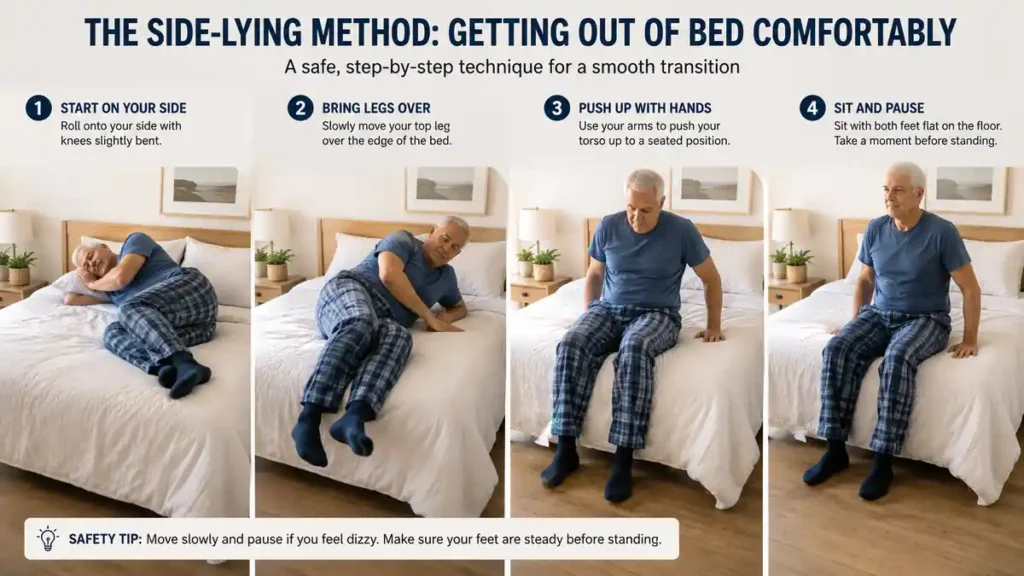
Attempting to sit straight up from a flat back position can place unnecessary strain on the neck and lower back muscles. Using a side-lying transition offers a comfortable, ergonomic way to sit up:
- Turn to Your Side: Bend your knees slightly and roll your shoulders and hips together onto your side facing the edge of the mattress.
- Lower Your Legs: Gently guide your lower legs over the side of the bed.
- Use Your Arms for Support: Press your upper palm and lower elbow into the mattress to push your torso upright.
- Pause Before Standing: Rest in the seated position for 30 to 60 seconds with your feet grounded flat to let your body adjust and prevent any lightheadedness before taking your first steps.
Everyday Habits to Support Morning Comfort
A few supportive daily habits can help reduce how stiff your body feels upon waking:
- Stay Consistently Hydrated: Drinking water throughout the day supports overall muscle and tissue comfort. Keeping a fresh glass of water nearby in the morning helps you start the day refreshed.
- Maintain Room Comfort: Cooler room temperatures can cause muscles to instinctively tense during the night. A light, warm blanket helps keep your body comfortable.
- Incorporate Light Evening Movement: A short, relaxing walk or light stretches after dinner can keep your body more supple leading into bedtime.
📖 ALSO READ: 7 Best Electric Can Openers for Seniors With Weak Hands
Frequently Asked Questions
When should seniors talk to a doctor about morning stiffness?
You should consult a healthcare provider if your morning stiffness lasts for more than an hour, is accompanied by visible joint swelling or warmth, causes severe sharp pain, or begins interfering with your ability to perform everyday activities. According to diagnostic guidance from the Arthritis Foundation, prolonged morning stiffness lasting over an hour is a recognized sign that warrants professional evaluation.
Can I do these bed exercises if I have had a joint replacement?
Many older adults with joint replacements can safely perform gentle ankle pumps and seated shoulder rolls. However, if you have specific postoperative movement precautions (such as avoiding deep hip flexion), check with your physical therapist or orthopedic specialist before attempting knee-to-chest stretches.
How long does this morning bed routine take?
The entire sequence takes approximately 5 to 7 minutes. It is designed to be gentle, relaxing, and unhurried.
Why do these stretches before getting out of bed?
Performing gentle movements while still in bed allows your joints and muscles to warm up in a supportive, non-weight-bearing position before you ask your lower body to support your full body weight.
Final Thoughts
Waking up with joint stiffness is common, but it does not have to slow down your morning routine.
Taking just five minutes to move through these gentle, bed-based stretches helps warm up your muscles, promote joint ease, and prepare your body for the day ahead. Make these simple movements part of your daily routine to enjoy a calmer, more comfortable start to every morning.
Official Resources
- National Institute on Aging (NIA):Three Types of Exercise Can Improve Your Health and Physical Ability
- Arthritis Foundation:Do I Have Arthritis? Common Warning Signs & Symptoms
- Centers for Disease Control and Prevention (CDC):Physical Activity Guidelines for Americans
Disclaimer: This article is intended strictly for educational and informational purposes and does not replace personalized medical or physical therapy advice. If you experience persistent pain, joint swelling, or sudden dizziness, consult your healthcare provider for an individualized evaluation.
Educational only — not medical, legal, or financial advice. Talk to a qualified professional before changing exercise, diet, medication, or making a major purchase. After60Guide is not a medical practice.




Gaurav Sharma is the founder and lead writer of After60Guide. He writes practical, source-cited guides on movement, nutrition, home safety, and everyday living after 60. He is not a doctor, physical therapist, or financial adviser. Health and money articles are general education, checked against official public sources where relevant — not personal advice. Corrections: contact@after60guide.com