

By Gaurav Sharma | Updated September 2026
Based on public guidance from the National Institute on Aging (NIA), the National Institutes of Health (NIH), and the National Council on Aging (NCOA)
Daily routines for seniors can look small on paper, but they are often what keeps life running on your own terms. Maybe that means staying in the house where you raised your family, or simply keeping your own morning routine going. Independence after 60 rarely depends on one big change. It’s built from small, steady habits: how you start your morning, how you set up your living room, and how you keep your body moving.
If you or someone you love wants to age in place with confidence, here are seven simple routines worth trying. Pick one or two to start. You don’t need to change everything at once.
Table of Contents
1. Build a Gentle Hydration Habit
Thirst signals can change with age, so waiting until you feel thirsty doesn’t always work as well as it used to. Both NCOA and NIH-funded research point to regular, steady drinking as a better plan.
An easy way to start is with warmth. Have a mug of warm lemon water or decaf herbal tea alongside your breakfast. Keep a lightweight cup with a handle and a straw beside your favorite chair, so a sip never requires getting up. And lean on juicy foods like melon, oranges, and cucumber through the afternoon.
If your doctor has limited how much fluid you can drink, follow their advice instead. For more ideas, see our guide to 7 easy hydration tips for seniors.
2. Move a Little Every Day
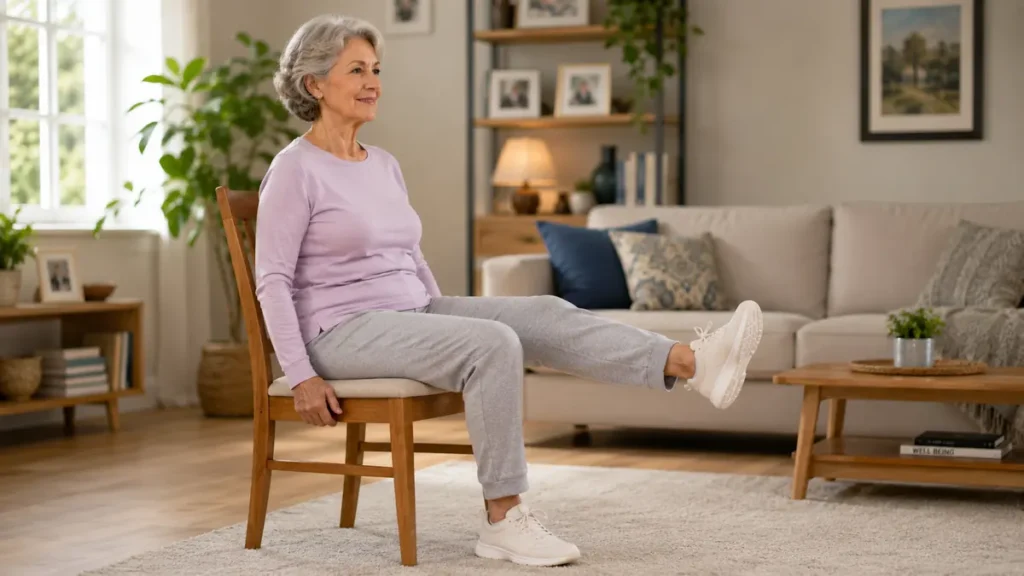
Being able to stand up from a deep couch, climb porch steps, or pick something off the floor depends on basic leg strength and balance. You don’t need a gym for that. The NIA describes four types of exercise for older adults: endurance, strength, balance, and flexibility. Small amounts of the last three, done regularly at home, go a long way.
A few gentle options:
- Chair stands. Sit tall on a sturdy chair and practice standing up smoothly, then sitting back down. Mayo Clinic notes that standing from a seat without using your hands is a simple balance exercise, and it’s the same movement you use every day.
- Supported balance. Stand next to a solid kitchen counter and hold the position with one foot slightly in front of the other. Standing on one foot while brushing your teeth, with a counter nearby for support, is another easy way to fit it in.
- Seated leg lifts. During the morning news, straighten one leg at a time to keep your thigh muscles working.
Safety first: Use a stable counter or a sturdy, non-folding chair for support. Stop if you feel pain, lightheadedness, or shortness of breath. If you have balance problems or a health condition, check with your doctor before starting. Want more ideas? Try our 10 easy chair yoga exercises for seniors or 7 easy exercises for seniors.
3. Keep Easy Protein on Hand
Muscle mass naturally declines gradually with age, and it affects everyday things like carrying laundry, lifting groceries, and using stairs. Getting enough protein supports the muscle you have. Smaller appetites are common later in life, so soft, easy-to-prepare protein foods make this much simpler.
| Food | Serving | Approximate protein |
|---|---|---|
| Plain Greek yogurt | 6 oz container | ~17 g |
| Eggs, scrambled or soft-boiled | 2 large | ~12 g |
| Cottage cheese | ½ cup | ~12 g |
| Lentil or soft bean soup | 1 bowl | Varies by recipe |
Protein varies by brand and preparation, so check the label.
How much protein is right for you depends on your health. If you have kidney disease or another condition, ask your doctor or a dietitian before making changes. If you’re taking a GLP-1 medication, our guide on protecting muscle after 60 may help.
4. Do a Two-Minute Evening Walkthrough
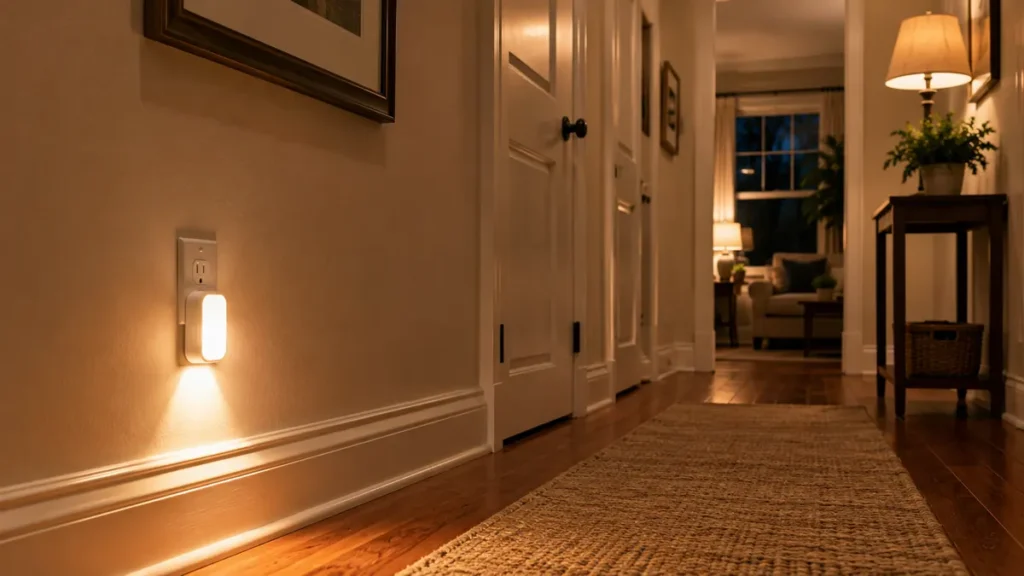
Most falls at home come from small, fixable things: a loose rug edge, a dark hallway, a cord across the floor. The NIA lists falls prevention as a core part of staying safe at home, and you don’t need a renovation to start.
Before bed, take two minutes to:
- Clear the main paths. Move shoes, chargers, and footstools out of walkways.
- Check your nightlights. Make sure the hallway and bathroom lights work.
- Wipe up spills. Keep a dish towel by the sink so water never lingers on the floor.
For a full room-by-room list, use our Complete Home Safety Tips for Seniors.
5. Stay Connected With People
Independence isn’t only about physical strength. Regular contact with friends, family, and neighbors is linked to better mood and overall well-being, and it gives you people who will notice if something’s off.
Small ways to stay connected:
- A daily call. Even five minutes with a friend, a child, or a neighbor counts.
- Hobbies you enjoy. Gardening, puzzles, music, or reading all keep the days full.
- Getting out. Try a walking group, a senior center gathering, or a weekly coffee meetup.
If you often feel low or lonely, it’s worth mentioning to your doctor. It’s more common than people admit, and help is available.
6. Simplify Your Schedule and Medication Tracking
Keeping track of appointments and prescriptions should feel calm, not stressful. A few simple systems remove a lot of mental effort:
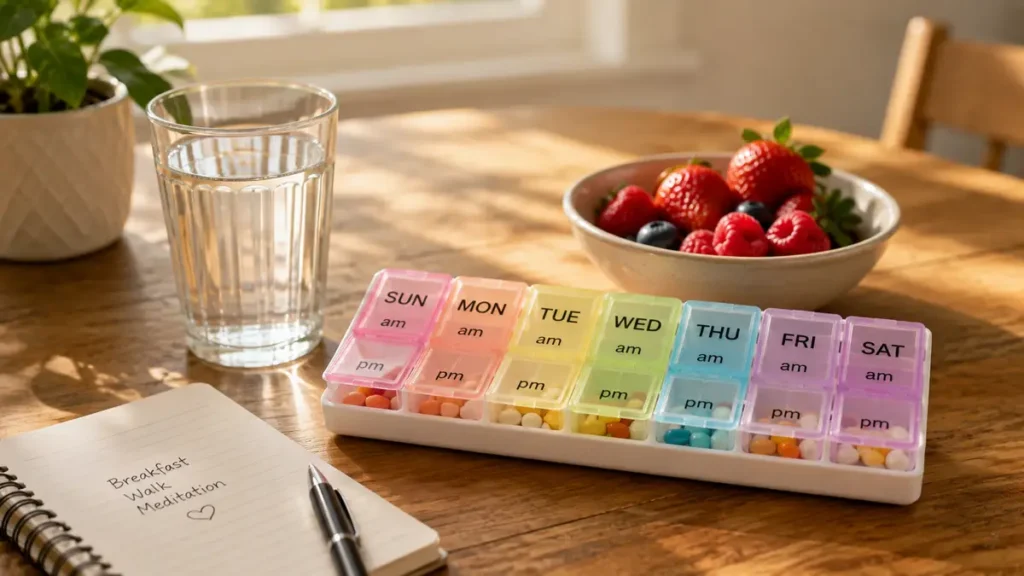
- Use a weekly pill organizer. Fill it once a weekend so daily doses are easy to follow.
- Pair it with something you never forget, like your breakfast plate or morning tea.
- Post key information on the fridge. A printed list of emergency contacts, doctors, and current medications helps you and anyone who comes to help.
It’s also worth asking your pharmacist to review your medications once a year, especially if several doctors prescribe them.
7. Protect Your Sleep
Good sleep supports alertness, mood, and reaction time. According to the NIA, older adults need about the same amount of sleep as other adults, roughly 7 to 9 hours a night. Poor sleep can also raise the risk of falls and accidents.
A few habits from NIA’s sleep guidance:
- Keep a regular schedule. Go to bed and get up at about the same time each day.
- Build a calm evening routine. Read, listen to soft music, or take a warm bath, and try to keep TVs and screens out of the bedroom.
- Limit late-day naps if they keep you up at night.
- Light the way. Keep a lamp within reach and a nightlight on the path to the bathroom, and clear that path of clutter.
If poor sleep continues for weeks, talk to your doctor. Sleep problems are common and often treatable.
A Gentle Note for Family Members
If you’re supporting a parent who values living on their own, your approach matters as much as your help:
- Ask before stepping in. Try “How can we make this easier for you?” instead of taking over tasks they still enjoy.
- Offer simple tools. Lightweight cups, jar openers, and non-slip bath mats add safety without feeling intrusive.
- Respect their rhythm. Small changes that build on existing routines are easier to accept than sweeping ones.
If more help is becoming necessary, our guide on how to choose an in-home caregiver for seniors can help you plan the next step.
Final Thoughts
Living on your own terms after 60 is about finding a comfortable rhythm. A warm drink in the morning, a few minutes of movement, a clear hallway at night: none of it is dramatic, but together these habits protect your strength, safety, and confidence.
Pick just one habit to try this week, and let the rest build naturally.
Sources
- National Institute on Aging: Aging in Place, Growing Older at Home
- National Institute on Aging: Four Types of Exercise Can Improve Your Health and Physical Ability
- National Institute on Aging: Sleep and Older Adults
- National Institute on Aging: Prevent Falls and Fractures
- National Heart, Lung, and Blood Institute (NIH): Good Hydration Linked to Healthy Aging
- National Council on Aging: How to Stay Hydrated for Better Health
- Mayo Clinic: Balance Exercises
Disclaimer: This article is for general education only and is not medical advice. Please talk with a qualified healthcare provider about any health condition, mobility concern, or personal routine.



Gaurav Sharma is the founder and lead writer of After60Guide. He writes practical, source-cited guides on movement, nutrition, home safety, and everyday living after 60. He is not a doctor, physical therapist, or financial adviser. Health and money articles are general education, checked against official public sources where relevant — not personal advice. Corrections: contact@after60guide.com