
By Gaurav Sharma | Founder & Lead Writer
Updated: October 2026. Educational only — not podiatry advice.
When we think about staying active and independent after 60, we usually think about leg strength, hip flexibility, or daily balance exercises. But our feet—the foundation for every step we take—are often forgotten until dry cracks, sore spots, or thick nails make walking uncomfortable.
Feet naturally change as we age. The soft padding on the soles becomes thinner, skin dries out faster, and blood flow to the lower legs can slow down. If stiff joints or back tightness make it hard to bend down, caring for your feet can easily slip down the to-do list.
Setting aside just 5 minutes a day for a simple foot routine is one of the easiest ways to keep your feet feeling good, protect your skin, and stay steady on your feet.
You do not need expensive foot spas, special lotions, or complex routines. Just a few simple, daily habits can keep you walking comfortably and safely around your home and community.
Tables of Content
Why Daily Foot Care Matters for Balance
Your feet are lined with sensors and nerves that tell your brain how your body is positioned, what the ground feels like, and how much pressure you are putting down.
When simple issues like thick calluses, dry heel cracks, or nail irritation develop, your stride changes without you even realizing it. You might limp slightly or lean to one side to avoid tender spots. Over time, that uneven stride puts extra strain on your knees and hips, making it harder to stay balanced.
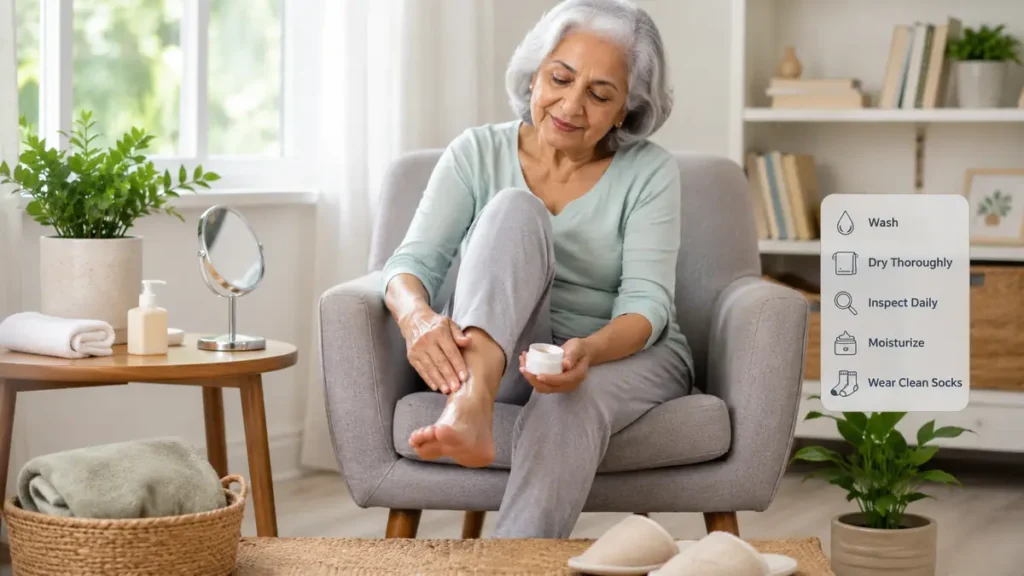
Spending a couple of minutes each day to wash, dry, moisturize, and inspect your feet helps protect your skin barrier and supports a natural, steady walking pace.
📖 ALSO READ:Tai Chi Walking for Seniors: A Beginner’s Guide to Better Balance and Mobility
5-Minute Daily Foot Care Routine
This gentle 5-minute routine fits easily into your morning start or your evening wind-down:
1. Wash with Warm Water
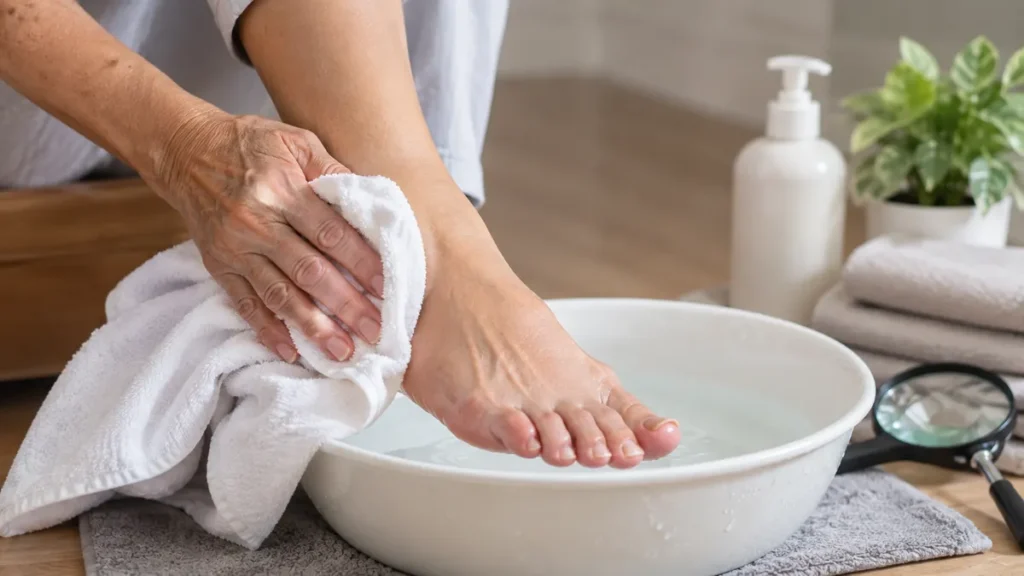
Wash your feet daily with warm water and a mild, unscented soap. Avoid long soaks in very hot water, as hot water strips away the skin’s natural oils and makes dry skin worse.
2. Pat Dry (Especially Between Toes)
Gently pat your feet dry with a soft towel instead of rubbing hard. Make sure the narrow spaces between your toes are completely dry. Leaving moisture between toes creates a damp space where skin can soften and irritate easily.
3. Check Your Feet with a Mirror
Take 60 seconds to look at the tops, soles, heels, and sides of both feet. Look for red spots, blisters, peeling areas, or small cuts. If bending down is difficult, set an unbreakable hand mirror on the floor to check underneath, or ask a loved one to take a quick look.
4. Moisturize Dry Areas (Skip Between the Toes)
Gently rub a simple, fragrance-free lotion or petroleum jelly onto your heels, arches, and the tops of your feet to keep the skin soft.
- Quick rule: Do not put lotion in the narrow spaces between your toes to avoid trapping excess moisture.
5. Put on Clean, Soft Socks
Slide on a fresh pair of clean, comfortable socks made from breathable materials to protect your skin and keep your feet warm.
📖 ALSO READ:Free Apple Classes for Seniors: How to Master Your iPhone and iPad (2026 Guide)
Quick Reference: Daily Foot Care Steps
| Routine Step | What to Do | What to Avoid |
| 1. Washing | Use warm water and mild, gentle soap | Avoid long soaks in hot water |
| 2. Drying | Pat dry gently; dry between every toe | Do not leave wet moisture between toes |
| 3. Inspecting | Use a hand or floor mirror to check soles daily | Do not ignore small cuts or red spots |
| 4. Moisturizing | Rub lotion on heels, soles, and tops | Do not put lotion between toes |
| 5. Socks | Wear clean, breathable, non-tight socks | Avoid worn-out or overly tight pairs |
Safe Tips for Trimming Toenails and Skin Care
Toenails tend to thicken naturally over time. Taking things slow ensures your feet stay comfortable:
- Cut Straight Across: Trim nails straight across rather than rounding down the corners. Rounding the edges into the skin can raise the risk of painful ingrown toenails.
- Smooth with an Emery Board: Use a gentle nail file or emery board to smooth any sharp edges after clipping.
- Trim After Bathing: Nails are softer and much easier to trim right after a warm wash.
- Use Easy-Grip Clippers: If hand strength or grip is limited, wide-handled or long-reach clippers give better control.
- Leave Calluses to the Pros: Never use razor blades, scissors, or sharp pins to cut off corns or calluses at home. Over-the-counter medicated corn pads often contain strong acids that can irritate fragile, mature skin.
📖 ALSO READ:7 Easy Hydration Tips for Seniors (Backed by NIH & NCOA)
Common Habits to Reconsider
- Walking Barefoot Indoors: If you have reduced sensation, balance challenges, or fragile skin, consider wearing supportive, non-slip indoor footwear rather than walking barefoot to help guard against stray objects, stubbed toes, and cold floors.
- Using Heating Pads Directly on Feet: If your feet feel chilly at night, wear a pair of soft bed socks. Avoid resting electric heating pads or hot water bottles directly on your feet, as reduced skin sensitivity can keep you from feeling excessive heat in time to prevent burns.
- Ignoring Shoe Rubbing: If a shoe rubs your heel or toe, do not try to “break it in” with bare skin. Switch shoes or apply a protective cushion before a blister forms.
Choosing the Right Shoes and Socks

Everyday shoes and socks play a major role in keeping your feet comfortable and steady:
- Non-Binding Socks: Pick socks with gentle tops that do not leave deep elastic bands around your calves, allowing healthy circulation.
- Roomy Toe Space: Choose walking shoes with plenty of space in the toe box so your toes can spread out without pinching.
- Non-Slip Soles: Look for shoes with flat or low heels and textured rubber soles that grip hardwood, tile, and outdoor walkways securely.
When to Consult a Podiatrist
Most daily hygiene is easy to manage at home, but certain changes need professional attention:
- Tingling, burning, numbness, or loss of feeling in your toes.
- Thick, discolored, or curled toenails that are hard to trim safely on your own.
- Any cut, blister, or sore that does not start healing within a few days.
- Noticeable changes in the shape of your feet, such as bunions or hammertoes, that cause walking pain.
- Important Note: People with diabetes, significant neuropathy, poor circulation, or a history of foot complications may benefit from routine professional foot examinations and nail care.
📖 ALSO READ:7 Simple Home Safety Fixes Every Senior Should Make
Final Thoughts
Taking care of your feet is an investment in your everyday freedom of movement. When your feet feel comfortable, staying active, running errands, and enjoying daily walks feels much more enjoyable.
Keep your foot lotion and a small inspection mirror in a handy, reachable spot in your bedroom or bathroom. Spending just 5 minutes on gentle foot care each day helps ensure your foundation remains healthy, comfortable, and supportive for years to come.
Official Resources
- National Institute on Aging (NIA): Foot Care Tips for Older Adults
- American Podiatric Medical Association (APMA): Senior Foot Health and Aging Guidance
- Centers for Disease Control and Prevention (CDC): Healthy Habits for Feet and Diabetes Management
Disclaimer: This article is intended strictly for educational and informational purposes and does not substitute for individualized medical or podiatric advice. If you have chronic conditions such as diabetes, neuropathy, poor circulation, or non-healing skin changes, consult a licensed podiatrist or qualified healthcare provider for personal guidance.
Educational only — not medical, legal, or financial advice. Talk to a qualified professional before changing exercise, diet, medication, or making a major purchase. After60Guide is not a medical practice.



Gaurav Sharma is the founder and lead writer of After60Guide. He writes practical, source-cited guides on movement, nutrition, home safety, and everyday living after 60. He is not a doctor, physical therapist, or financial adviser. Health and money articles are general education, checked against official public sources where relevant — not personal advice. Corrections: contact@after60guide.com