
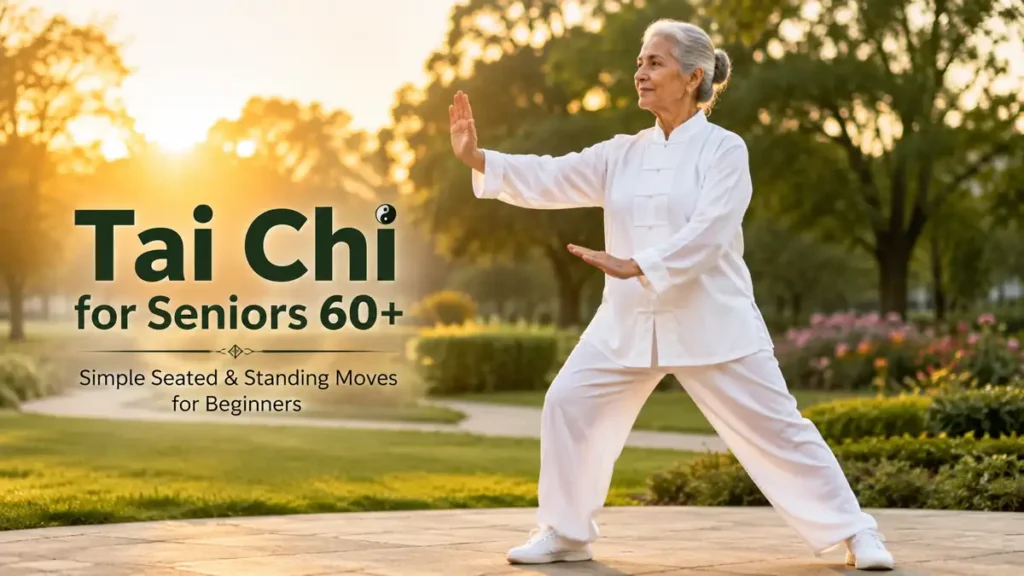
Staying physically active as we age does not require intense gym workouts, heavy weights, or complex routines — this is where Tai Chi for seniors offers a gentle, accessible starting point. In fact, high-impact exercises can often place unnecessary strain on aging knees, hips, and lower back muscles.
Tai Chi—often called “meditation in motion”—is a gentle, mindful practice that pairs slow, flowing body movements with calm, deep breathing. Because it is naturally low-impact and easy to modify, it is a practical exercise option that can be adapted for older adults at almost any fitness level.
Whether you are fully mobile, working around stiff joints, or looking for practical chair yoga and gentle stretches for seniors to pair with your daily routine, this guide breaks down simple, step-by-step Tai Chi movements you can practice safely at home.
Why Tai Chi Works Well for Older Adults
As our bodies change over time, natural shifts in muscle strength, joint flexibility, and coordination can make everyday movement feel less steady. Tai Chi addresses these changes directly through calm, controlled motions.
1. Balance and Stability Support
Falls are a common concern among older adults, often leading to a loss of independence or confidence. Tai Chi focuses heavily on steady foot placement and smooth weight shifting. According to the CDC STEADI Fall Prevention Guidelines, balance-focused exercise programs are effective, practical strategies to help older adults maintain stability and reduce slip-and-fall risks.
2. Gentle on Sensitive Joints
Tai Chi relies on continuous, soft circular motions rather than sudden stops, twists, or jumps. These smooth movements encourage gentle joint mobility without placing heavy weight-bearing loads on arthritic knees, hips, or wrists.
3. Calming Stress Relief
Focusing on slow physical patterns alongside rhythmic breathing helps quiet a busy mind. As highlighted by the National Center for Complementary and Integrative Health (NCCIH), mind-body practices like Tai Chi can help reduce everyday stress and encourage a calm, grounded mood.
4. Mental Focus and Coordination
Learning simple movement sequences and coordinating your arms and legs simultaneously provides gentle mental stimulation, supporting everyday coordination and focus.
📖 Also Read:7 Daily Habits That Help Seniors Maintain Independent Living After 60
Safety Checklist: Setting Up Your Practice Area
Before trying any new movement routine, setting up a safe, uncluttered space is your most important first step:
- Clear the Floor: Remove loose rugs, electrical cords, and low coffee tables from your movement area.
- Supportive Footwear: Wear flat shoes with non-slip rubber soles. Avoid loose slippers, slick socks, or bulky running shoes that can catch on floor edges.
- A Solid Chair: If you are practicing seated moves, pick a sturdy, armless wooden or metal chair with a flat seat. Avoid rolling desk chairs, swivel chairs, or soft couches.
- Stay Hydrated: Keep a glass of water nearby and take resting sips when you feel thirsty.
- Respect Your Limits: Gentle physical activity should feel relaxing, never painful. If a motion feels uncomfortable, make the movement smaller or stop and take a break.
Part 1: Seated Tai Chi for Older Adults (Low-Impact Routine)
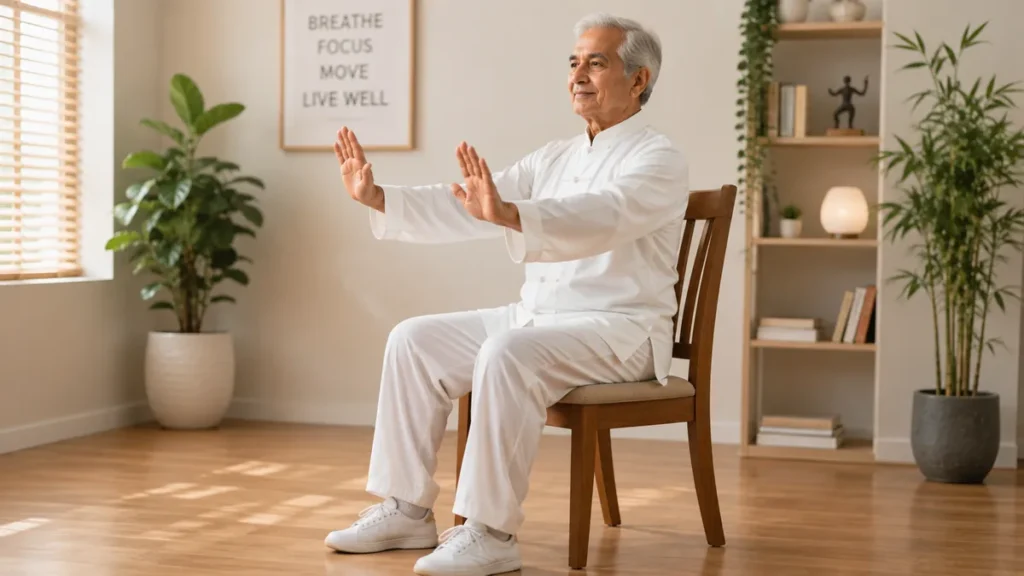
Seated Tai Chi offers the breathing benefits, core stability, and upper-body mobility of traditional Tai Chi without requiring prolonged standing. It is widely used in home routines as well as daily wellness programs within assisted living options for seniors to help adults stay active safely.
Sit tall toward the front of your chair with both feet flat on the floor, roughly shoulder-width apart. Rest your hands on your lap, let your shoulders drop away from your ears, and lengthen your spine comfortably.
                    SEATED TAI CHI: MOVEMENT FLOW
  ┌─────────────────┐     ┌──────────────────┐     ┌──────────────────┐
  │ 1. Mindful Open │ ──> │ 2. Cloud Hands   │ ──> │ 3. Push Mountain │
  │ (Breath/Posture)│     │ (Torso Rotation) │     │ (Upper Mobility) │
  └─────────────────┘     └──────────────────┘     └──────────────────┘
                                                            │
  ┌─────────────────┐     ┌──────────────────┐              │
  │ 5. Seated Close │ <── │ 4. Ankle Taps    │ <────────────┘
  │ (Center Energy) │     │ (Lower Mobility) │
  └─────────────────┘     └──────────────────┘
1. The Mindful Opening (Breathing and Posture)
- How to do it: Rest your hands gently on your knees, palms facing down. Inhale slowly through your nose while floating both hands upward to chest level, keeping your elbows soft. Exhale smoothly as you lower your palms back down toward your lap.
- Repetitions: 5 to 6 slow, calm breath cycles.
2. Wave Hands Like Clouds (Seated Variation)
- How to do it: Bring your right hand up toward chest level with your palm facing inward toward your body. Slowly turn your upper torso slightly to the right, sweeping your hand gently across the room. Lower the right hand, raise the left hand, and slowly rotate your torso back to the left.
- Repetitions: 6 to 8 alternating sweeps.
3. Pushing the Mountain (Chest & Upper Body Stretch)
- How to do it: Bring both hands close to your chest with your palms facing forward. Inhale softly, and as you exhale, gently push both palms forward at chest height. Inhale again as you draw your hands back toward your chest in a smooth, circular loop.
- Repetitions: 6 to 8 slow repetitions.
4. Seated Ankle Taps (Lower-Leg Mobility)
- How to do it: Keep your hands resting comfortably in your lap. Extend your right foot slightly forward and tap the floor with your heel, then draw it back and lightly tap with your toes. Switch to the left leg and repeat.
- Repetitions: 8 to 10 alternating taps per side.
📖 Also Read: 7 Easy Exercises for Seniors: Simple Ways to Stay Active at Home
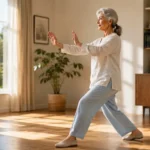
Part 2: Standing Beginner Tai Chi Moves for 60+
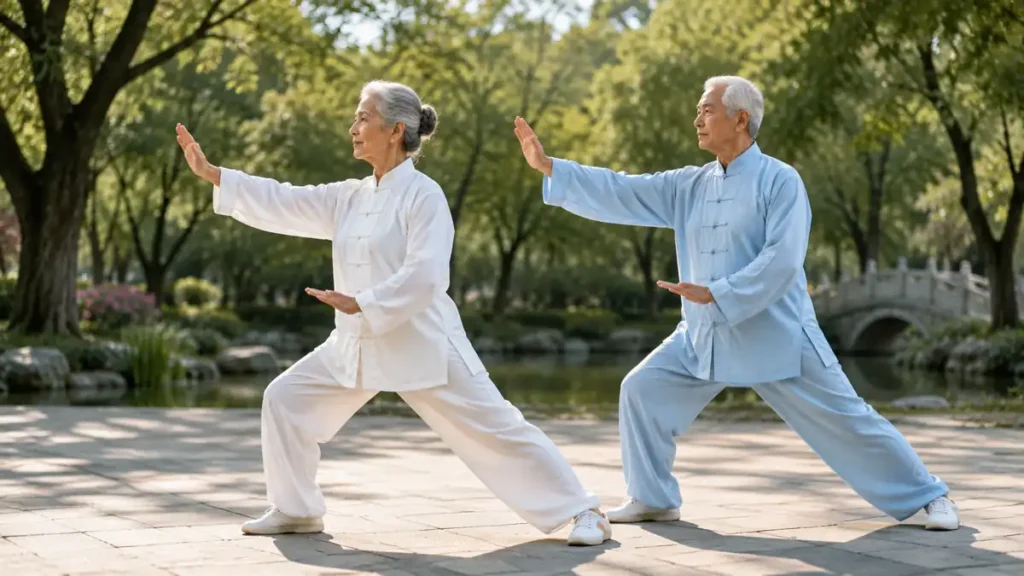
If you feel steady on your feet, these standing movements help build lower-body awareness and foot coordination. Keep a sturdy chair or a clear wall within arm’s reach for light balance support whenever needed.
1. The Rooted Stance (Wu Chi)
Stand with your feet shoulder-width apart, pointing straight ahead. Keep your knees soft rather than locked. Let your arms hang loosely at your sides and feel your weight resting evenly across both feet. Take 4 to 5 calm, deep breaths while holding this grounded posture.
2. Parting the Wild Horse’s Mane
Hold your hands in front of your stomach as if holding a large, lightweight ball (right hand on top, left hand underneath). Shift some of your body weight gently onto your right leg. Step your left foot slightly forward, extending your left arm forward at a soft angle while guiding your right hand down by your hip. Reverse hand positions and repeat on the other side.
3. Gathering the Energy (The Closing Form)
Stand with feet parallel and relaxed. Turn your palms upward and slowly float both arms outward and up to shoulder height. Turn your palms downward and guide your hands slowly down your centerline, resting both palms flat over your lower abdomen. Take 3 deep, quiet breaths to conclude your practice.
📖 Also Read: SilverSneakers Locations 2026: Find Free Medicare Gyms Near You
How Long Should Seniors Practice Tai Chi?
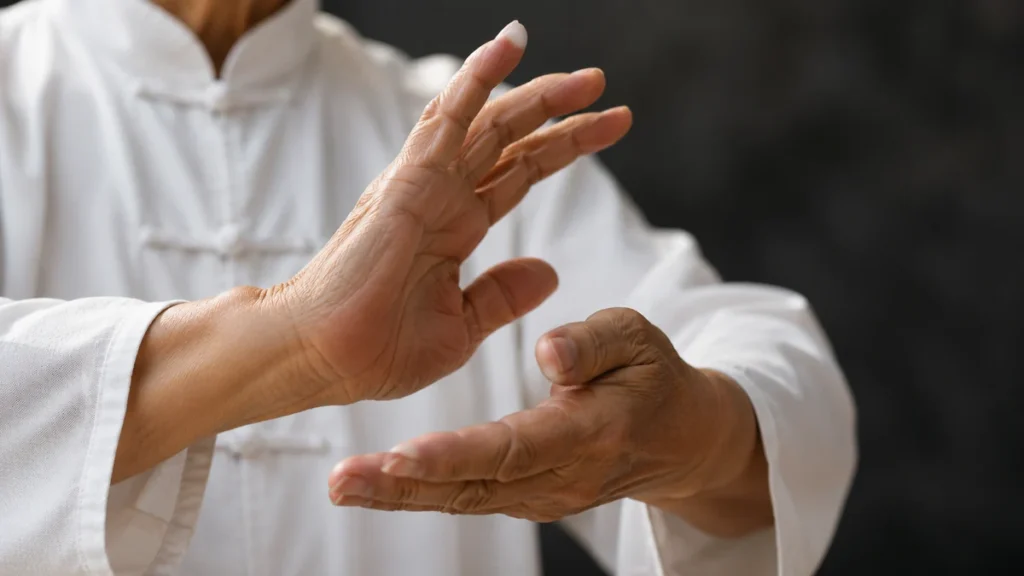
You do not need long practice sessions to build a healthy routine. Consistent, short practices work best:
- Absolute Beginners: Start with 5 to 10 minutes per day, focusing on getting comfortable with just 1 or 2 movements.
- Building a Habit: Gradually build up to 10 to 20 minutes per session, 3 to 4 days each week.
- Flexible Pacing: If you feel tired or unsteady on a particular day, switch to the seated routine rather than skipping movement altogether.
- Quality Over Speed: Always focus on smooth, calm transitions rather than rushing through the movements.
Comparing Seated vs. Standing Tai Chi
| Feature | Seated Tai Chi | Standing Tai Chi |
| Best For | Limited mobility, low energy, joint pain | Active seniors working on balance and foot strength |
| Main Focus | Breathing, trunk mobility, upper body coordination | Leg stability, weight shifting, posture |
| Joint Load | Very gentle, minimal weight-bearing pressure | Low-impact, gentle standing balance |
| Setup Needed | One sturdy, armless chair | Flat floor (chair nearby for balance support) |
| Typical Duration | 5–15 minutes daily | 10–20 minutes, 3–4 times per week |
When to Stop and Seek Medical Advice
Safety is the foundation of every physical routine. Stop exercising right away and consult a medical professional if you notice any of the following warning signs:
- Chest pain, tightness, or pressure
- Sudden or unusual shortness of breath
- Dizziness, lightheadedness, or feeling faint
- Sudden loss of balance or unsteadiness
- Sharp, severe, or worsening joint pain
Helpful Resources & Evidence
- Harvard Health Publishing: The Health Benefits of Tai Chi for Balance and Mobility
- National Center for Complementary and Integrative Health (NCCIH): Tai Chi and Qi Gong: Research and Overview
- Centers for Disease Control and Prevention (CDC): STEADI – Older Adult Fall Prevention Strategies
Disclaimer: This article is provided for educational and informational purposes only and does not serve as professional medical advice. Always consult your doctor, physical therapist, or qualified healthcare provider before starting any new exercise routine, especially if you have pre-existing cardiovascular, spinal, or joint conditions.
Educational only — not medical, legal, or financial advice. Talk to a qualified professional before changing exercise, diet, medication, or making a major purchase. After60Guide is not a medical practice.



Gaurav Sharma is the founder and lead writer of After60Guide. He writes practical, source-cited guides on movement, nutrition, home safety, and everyday living after 60. He is not a doctor, physical therapist, or financial adviser. Health and money articles are general education, checked against official public sources where relevant — not personal advice. Corrections: contact@after60guide.com