
By Gaurav Sharma | Founder & Lead Writer
Updated: October 2026. Educational only — not a home assessment or medical advice.
This guide focuses on practical, non-medical home safety changes — simple fixes to flooring, lighting, and everyday layout that help older adults live independently and confidently at home.
Your home should feel like the safest place on earth, and with a few simple home safety tips for seniors, it can. As we get older, a few things shift quietly in the background. Eyes need a little more light to see clearly, balance isn’t quite what it used to be, and joints can feel stiff, especially first thing in the morning.
Most of this is a normal part of aging, but it does change how everyday things around the house behave. A loose rug, a dim hallway, or a damp bath mat can turn into a real hazard before you even notice it. The good news is that small changes made now can prevent a serious fall later.
Fixing this doesn’t take a renovation. Most of these changes take an afternoon and cost very little, so let’s walk through them room by room.
Table of Contents
- Why Home Safety Matters After 60
- 1. Fix Flooring and Remove Rug Hazards
- 2. Brighten Lighting in Every Room
- 3. Clear Walkways and Remove Clutter
- 4. Make Your Bathroom Slip-Proof
- 5. Secure Staircases and Steps
- 6. Organize Kitchens and Closets for Easy Reach
- 7. Choose the Right Indoor Footwear
- Quick Safety Checklist for Your Home
- Frequently Asked Questions
- Medical and General Safety Disclaimer
- Sources
Quick Summary: The 7 most important home safety tips for seniors are: remove loose rugs, improve lighting, clear walkways, install grab bars, secure stairs, organize frequently used items within easy reach, and wear non-slip footwear.
Why Home Safety Matters After 60
Falls are one of the most common reasons older adults lose their independence, and most of them happen at home — not outside on the street. The CDC tracks falls as a leading cause of injury among adults 65 and older, and the National Institute on Aging (NIA) identifies the same everyday culprits again and again: loose rugs, dim lighting, cluttered floors, and slippery bathrooms
The reassuring part is that these are also the easiest things to fix. You don’t need expensive home repairs or a team of builders. A little attention to each room can make a real difference to how confidently you move around your own house.
1. Fix Flooring and Remove Rug Hazards
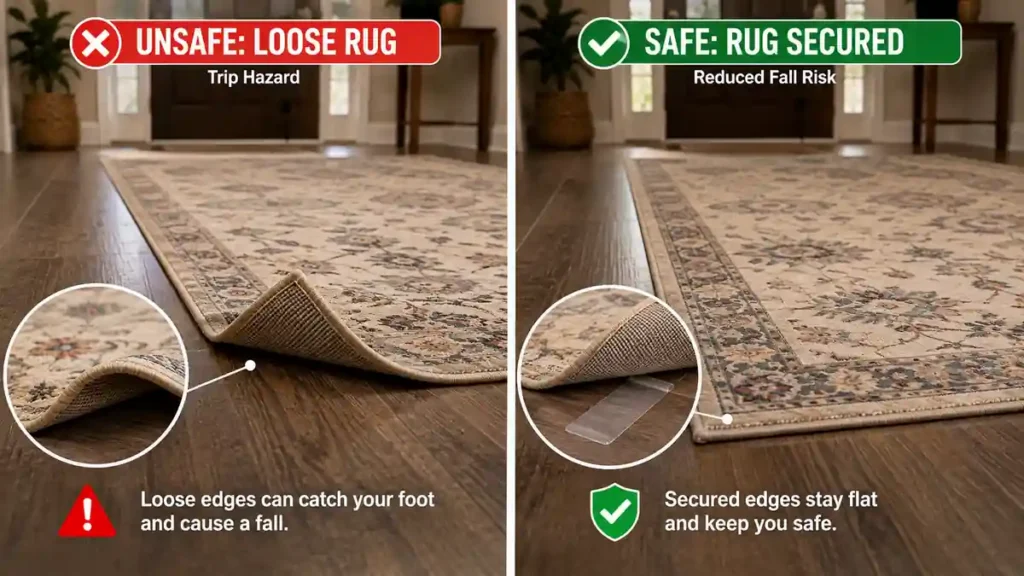
Loose rugs are one of the top causes of slips at home. They bunch up under your feet without warning, especially near doorways.
What to do:
- Remove loose throw rugs, especially in hallways and other high-traffic spots.
- Tape down any rugs you want to keep using heavy-duty double-sided tape on all four corners.
- Check your carpet edges and glue down any corners that have started to curl.
- Fix uneven transition strips — the metal or plastic strips between rooms should sit completely flat.
2. Brighten Lighting in Every Room
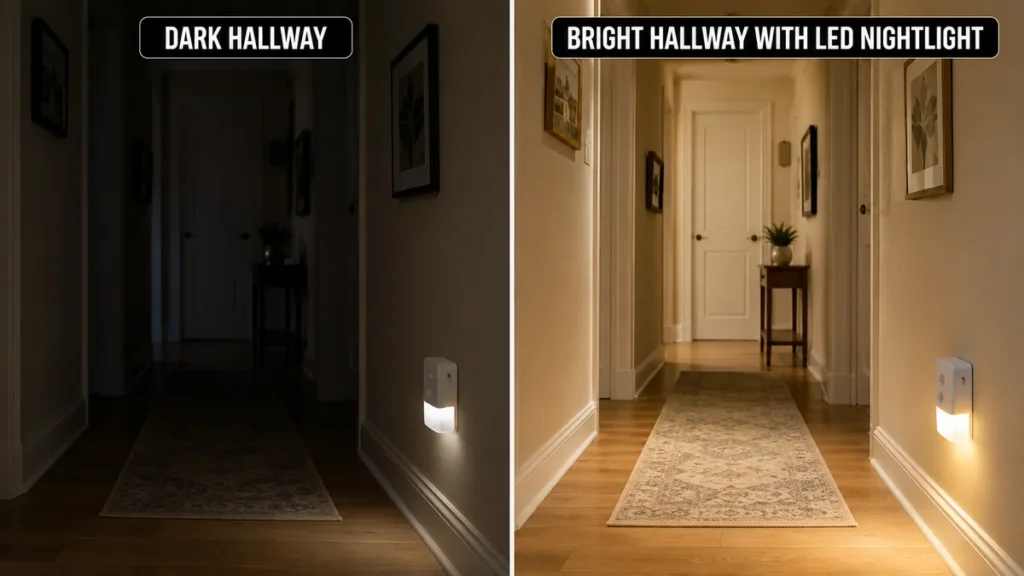
Dim rooms hide things — a shoe left on the floor, a pet underfoot, a low table. Better lighting helps you move with more confidence, especially at night.
What to do:
- Add motion-sensor nightlights in hallways, bathrooms, and along the path from your bed to the door. They switch on by themselves the moment you get up.
- Switch to brighter LED bulbs. Warm white bulbs in the 800–1100 lumen range light up corners well without feeling harsh.
- Keep a lamp within reach of your bed, so you never have to walk across a dark room to turn on the light.
3. Clear Walkways and Remove Clutter
A cluttered floor forces you into awkward, uneven steps. Keeping your main walking paths open is one of the simplest safety upgrades you can make.
| Guideline | Why it helps |
|---|---|
| Keep at least 36 inches (3 feet) of clear space in walking paths | Gives you room to walk naturally, without sidestepping furniture |
| Move cords away from foot traffic | Cords are a hidden tripping hazard, especially in dim light |
| Keep shoes and bags out of entryways | Entryways are where most people rush in and out without looking down |
What to do:
- Clip loose electrical cords along the baseboards. Never run a cord under a rug — it hides the bump and adds a fire risk.
- Move small furniture like plant stands, magazine racks, and side tables away from your main walking routes.
- Store shoes in a basket by the door so the entryway stays clear.
4. Make Your Bathroom Slip-Proof
Wet tile and porcelain make bathrooms one of the highest-risk rooms in the house. A few additions make a big difference here.
What to do:
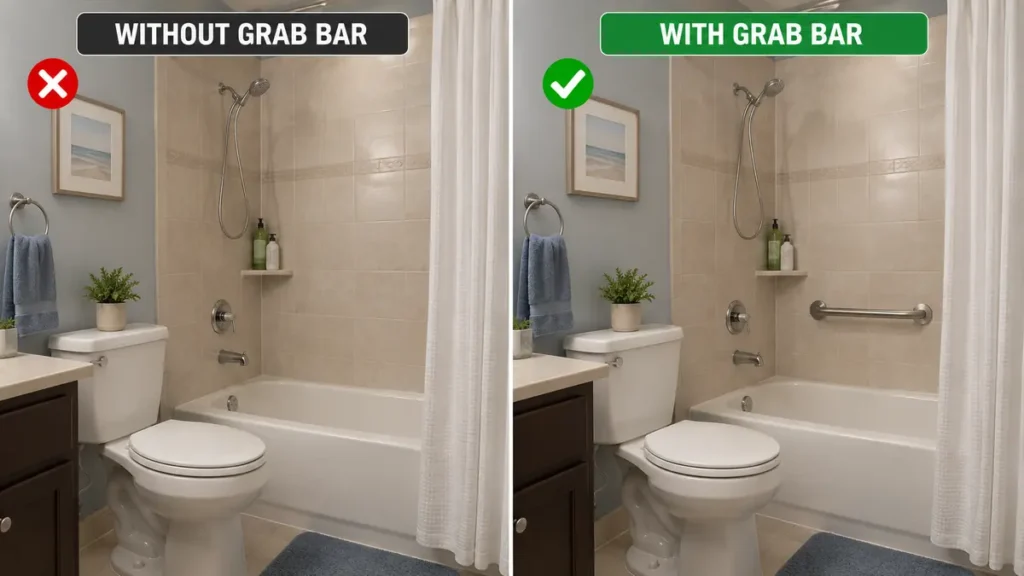
- Install grab bars inside the shower and next to the toilet. Make sure they’re anchored into the wall studs — not just stuck on with adhesive, which can pull away under real weight.
- Use a full-length rubber suction mat inside the shower or tub for a firmer grip underfoot.
- Consider a sturdy shower chair. Sitting while you wash saves energy and takes pressure off your balance.
Building strength alongside these home changes helps too — a simple daily exercise routine can improve the balance and leg strength that keep you steady on wet floors.
5. Secure Staircases and Steps
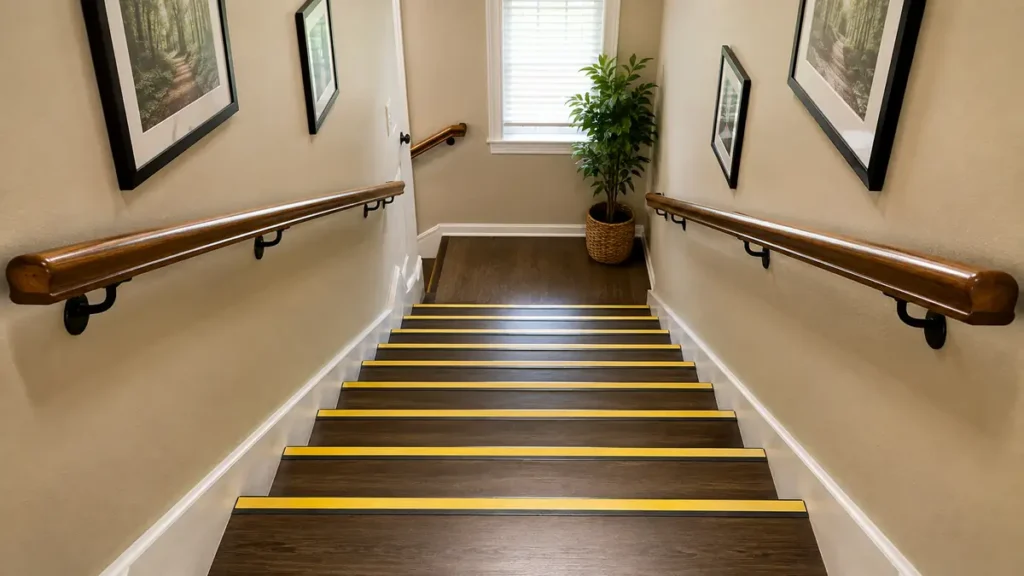
Stairs need extra focus and steady footing. Every step should feel solid and predictable.
What to do:
- Add handrails on both sides of the staircase, running the full length without any gaps.
- Mark the edge of each step with high-contrast, non-slip tape. This helps your eyes judge depth, especially on wooden or tiled stairs.
- Never leave items on the stairs “to carry up later” — even one forgotten pair of shoes is enough to cause a fall.
6. Organize Kitchens and Closets for Easy Reach
Reaching up on your toes, or bending down low, can throw off your balance and even make you feel a little dizzy. Keeping everyday items within easy reach solves this.
What to do:
- Store heavy items — pots, pans, canned food — between waist and chest height.
- Never stand on a dining chair to reach something high. If you need a step stool, use a sturdy, wide-base one with a handle to hold onto.
- Keep lighter items, like cereal boxes and paper towels, on the higher shelves instead.
If you’re already reorganizing the kitchen, it’s a good moment to stock up on foods that support joint health — our guide to anti-inflammatory foods for seniors has some simple ideas.
7. Choose the Right Indoor Footwear
Walking around in smooth socks or backless slides is riskier than it looks, especially on hardwood or tile floors.
| Unsafe indoors | Safer choice |
|---|---|
| Smooth cotton socks | Non-skid grip socks |
| Backless flip-flops or slides | Closed-back slippers |
| High-heeled shoes | Rubber-soled supportive shoes |
What to do:
- Wear closed-back slippers so your heel stays locked in place.
- Choose rubber soles with a bit of tread — they grip tile and wood floors far better than smooth soles.
- Try treaded grip socks if you prefer going without shoes at home.
Quick Safety Checklist for Your Home
Set aside an afternoon and work through this list, room by room:
- [ ] Removed or taped down all loose throw rugs
- [ ] Added motion-sensor nightlights in dark hallways and bathrooms
- [ ] Cleared a 36-inch walking path through every room
- [ ] Installed grab bars anchored into the wall studs in the shower
- [ ] Added high-contrast tape to dark stair edges
- [ ] Moved heavy kitchen items to waist-height shelves
- [ ] Swapped smooth socks for non-skid, rubber-soled slippers
Tip: Print this checklist and stick it on your fridge, or check it off room by room over a weekend.
Frequently Asked Questions
Q: What’s the most common cause of trips inside a senior’s home? Loose throw rugs, cluttered walkways, dim hallways, and wet bathroom floors cause the majority of indoor slips.
Q: How can I make my bathroom safer without remodeling? Add a full-length rubber suction mat in the shower, install wall-anchored grab bars, and consider a simple shower seat. None of these require construction work.
Q: Are motion-sensor nightlights expensive to run? No. LED nightlights use very little electricity, and they only turn on when they sense movement in the dark.
Q: Can I use a towel rack for support in the bathroom? No. Towel racks are built to hold the weight of a towel, not a person, and they can pull straight out of the wall. Always use a grab bar that’s anchored into a wall stud.
For families weighing extra support alongside these home changes, our guide to the cost of in-home care walks through what to expect.
Take five minutes today to walk through this checklist with your home in mind — or better yet, share it with a parent or grandparent who could use it.
Medical and General Safety Disclaimer
This article offers general home safety suggestions for independent living and is meant for educational purposes. It isn’t a substitute for a personal healthcare assessment or a professional occupational therapy evaluation. If you’re managing a balance condition, recovering from surgery, or dealing with mobility limitations, it’s worth having a certified physical therapist or occupational therapist assess your home setup directly.
Sources
- CDC STEADI — Patient resources on falls
- National Institute on Aging — Falls and fractures in older adults
These are general home ideas, not a personal safety plan. If you have already fallen, feel unsteady, or take medicines that make you dizzy, talk to a clinician.
Educational only — not medical, legal, or financial advice. Talk to a qualified professional before changing exercise, diet, medication, or making a major purchase. After60Guide is not a medical practice.



Gaurav Sharma is the founder and lead writer of After60Guide. He writes practical, source-cited guides on movement, nutrition, home safety, and everyday living after 60. He is not a doctor, physical therapist, or financial adviser. Health and money articles are general education, checked against official public sources where relevant — not personal advice. Corrections: contact@after60guide.com