
By Gaurav Sharma | Founder & Lead Writer
Updated: October 2026. Educational only — not a treatment for a skin disease.
This guide is for general education, not medical advice. See the note near the end for when to check in with a doctor.
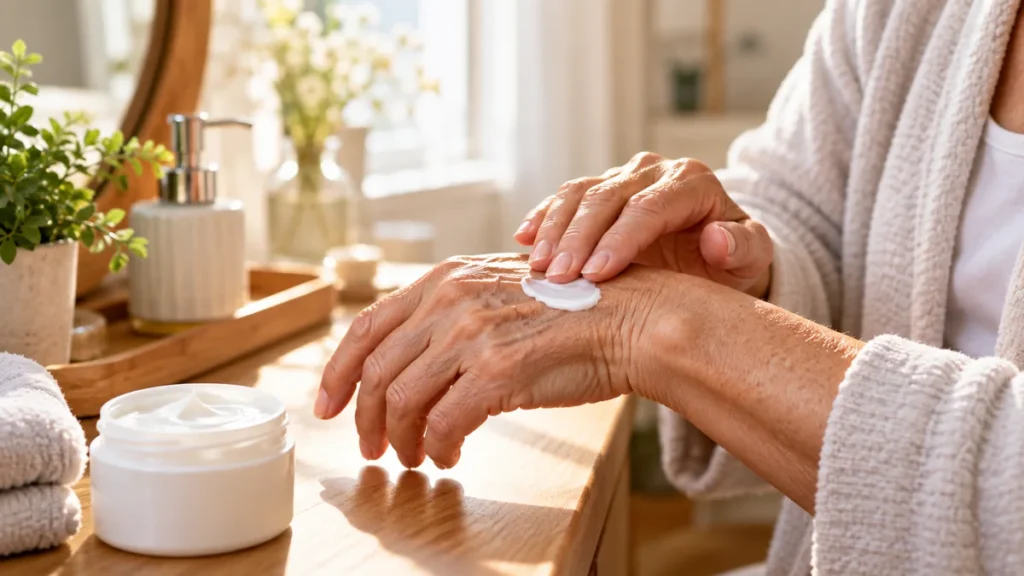
Dry skin care for seniors doesn’t have to be complicated. If your arms and shins feel tight, flaky, or itchy, you’re in good company. Dry skin is one of the most common complaints after 60, and it often flares up when the weather changes.
There’s a reason for it. The American Academy of Dermatology (AAD) explains that skin gets thinner with age and loses water more easily. The National Institute on Aging (NIA) adds that the outer layer also becomes less stretchy. Moisture leaves your skin faster than it used to, and you feel it.
The good news is that you don’t need a spa budget or a complicated routine. A few low-cost changes to how you bathe, what you put on your skin, and even what you wash your sheets in can make a real difference.
Why Skin Dries Out After 60
When you were younger, your skin held onto water much better. Now it needs some help. Medications and certain health conditions can play a role too, which is worth remembering if dryness seems out of proportion.
Some everyday things make it worse:
- Hot showers and baths: Hot water strips away the natural oils your skin still makes.
- Harsh soaps: Strong cleansers can leave skin dry and tight.
- Dry indoor air: Winter heating and air conditioning both pull moisture out of the air, and out of you.
- Fragrance: Perfumed lotions and body washes can irritate dry skin. The AAD recommends going fragrance-free.
Small swaps go a long way here. Let’s start with the shower.
6 Everyday Habits to Soothe Dry, Fragile Skin
1. Turn the Water Down to Lukewarm
A hot shower feels wonderful on stiff morning joints. It’s also one of the fastest ways to dry your skin out.
- Go warm, not hot. Lukewarm water lets your skin keep more of its natural oils.
- Keep it short. The AAD suggests 5 to 10 minutes. You may also find you don’t need to bathe every single day.
- Close the bathroom door. It keeps the steam in the room, so you dry off in slightly more humid air.
2. Switch to a Gentle, Fragrance-Free Cleanser
If your skin feels “squeaky clean” after washing, that’s often a sign the cleanser was too strong.
- Choose gentle. Look for a mild, fragrance-free, moisturizing cleanser or body wash. The AAD points to ingredients like glycerin and hyaluronic acid.
- Wash where it counts. Unless you’ve been sweating in the garden, use cleanser on underarms, groin, hands, and feet. Plain water is usually enough for arms and legs.
- Be gentle with the cloth. Skip loofahs and bath brushes. A soft washcloth or your bare hands work fine.
Also Read: 7 Costco Perks for Seniors Over 60 You May Not Be Using
3. Moisturize While Your Skin Is Still Damp
Timing matters. Moisturizer works best when it goes on soon after you wash.
- Pat, don’t rub. Blot with a soft towel and leave a little water on your skin.
- Apply within 3 minutes. The AAD recommends putting on a fragrance-free moisturizer within 3 minutes of bathing, and again during the day.
- Cover the usual spots. Arms, legs, torso, and hands.
The cream acts like a seal, so it traps that leftover water instead of letting it evaporate.
4. Pick Thick Creams and Ointments Over Thin Lotions
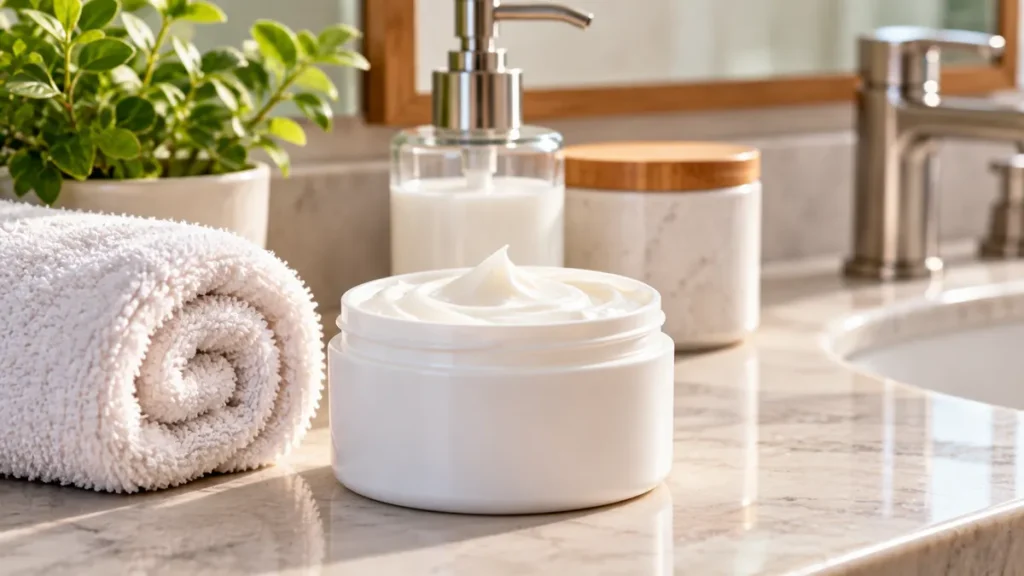
Check the container, not just the label. Lotions are lighter and contain more water, so they often don’t last as long on very dry skin.
- Go thicker when skin is very dry. The AAD says an ointment holds water in better than a cream does.
- Look for the tub or tube. Thick products usually come in jars or tubes rather than pump bottles.
- Read the ingredients. Glycerin and hyaluronic acid draw water in. Ceramides help support the skin barrier. Petrolatum forms a plain, non-irritating seal.
5. Check Your Laundry for Hidden Fragrance
Your sheets and clothes touch your skin all day and all night. If you’ve already gone fragrance-free on skin products and still itch, laundry is a reasonable next thing to try.
- Try “free & clear” detergent. It’s an easy swap, though results vary from person to person.
- Skip scented fabric softener and dryer sheets. Wool dryer balls are a simple alternative.
- Use the extra rinse. It’s a good idea for sheets and towels.
6. Add a Cool-Mist Humidifier to the Bedroom

Dry air pulls moisture from your skin while you sleep. A humidifier on the nightstand can take the edge off.
- Aim for 45% to 60% humidity. That’s the range the AAD gives for reducing dry, itchy skin. A small hygrometer from a hardware store tells you where your room actually is.
- Keep it clean. Empty the tank daily and wipe it down weekly.
- Expect a bonus. Many people notice fewer dry nasal passages in the morning too.
Also Read: How to Reduce Screen Eye Strain for Seniors: 6 Easy Everyday Adjustments
Two Quick Safety Notes
- Skip bath oil. It sounds soothing, but the AAD warns it raises the risk of slips and falls in the tub.
- Don’t forget sunscreen. Sun protection still matters after 60. The AAD recommends a broad-spectrum, water-resistant sunscreen with SPF 30 or higher on any skin clothing doesn’t cover. Gloves for gardening and housework help too.
Quick Skin Comfort Guide
| Step | What to Avoid | What to Do Instead |
|---|---|---|
| Bathing | Hot, 20-minute showers | Lukewarm water, 5–10 minutes |
| Cleanser | Strongly scented, harsh soaps | Gentle, fragrance-free cleanser |
| Drying off | Rubbing with a rough towel | Pat gently, leave skin slightly damp |
| Moisturizing | Waiting until skin is dry, or using thin lotion | Thick cream or ointment within 3 minutes |
| Home air | Dry air from heating or A/C | Humidifier, 45%–60% humidity |
“Natural” Doesn’t Always Mean Gentle
Products labeled “natural,” “botanical,” or “aromatherapy” can feel like the safer choice. Not always. Plant oils and added scents can irritate thin, sensitive skin just as easily as synthetic ones.
Look for the words “fragrance-free” on the package. “Unscented” isn’t the same thing. The AAD notes that unscented products often contain a chemical that masks other smells, and that can still irritate dry skin.
Common everyday options include CeraVe, Cetaphil, Vanicream, or plain white petrolatum (Vaseline).
Frequently Asked Questions
Is dry skin just part of getting older?
Some dryness is normal with age. But constant itching, tightness, and flaking don’t have to be your everyday reality. Lukewarm showers, a thick moisturizer, and fragrance-free products often help skin feel more comfortable over time.
What’s the difference between dry skin and thin skin?
Dry skin is about moisture. Thin skin is about structure: over the years the skin loses some of its thickness and elasticity, so it bruises and tears more easily. Keeping thin skin moisturized helps it stay more supple and less prone to small tears.
Could my itching be caused by something else?
Yes. Persistent itching is sometimes linked to an underlying health condition, and some medicines can make skin itchy too. If moisturizing doesn’t help, mention it at your next appointment.
When should I see a doctor about dry skin?
Book a visit if the itching keeps you awake, if you get deep cracks that bleed, if a new rash appears suddenly, or if a spot doesn’t improve after a couple of weeks of steady moisturizing. Also see a dermatologist about any spot that changes, itches, or bleeds.
Sources
American Academy of Dermatology — Skin care in your 60s and 70s
National Institute on Aging — Skin care and aging
A Note on Your Health
The tips in this article are for general education. Dry, itchy skin is very common with age, but non-healing sores, sudden rashes, cracked skin that bleeds, or moles that change deserve a proper exam from a board-certified dermatologist or your doctor.




Gaurav Sharma is the founder and lead writer of After60Guide. He writes practical, source-cited guides on movement, nutrition, home safety, and everyday living after 60. He is not a doctor, physical therapist, or financial adviser. Health and money articles are general education, checked against official public sources where relevant — not personal advice. Corrections: contact@after60guide.com