
By Gaurav Sharma | Founder & Lead Writer
Last Updated: October 2026. Educational only — not a personal exercise plan.
Medical Disclaimer: The seated movements in this guide are provided strictly for general educational and flexibility purposes. Always listen to your body and avoid forcing any movement. Individuals recovering from recent spinal surgery, joint replacement, or severe joint conditions should consult their physical therapist or physician before beginning new stretches.
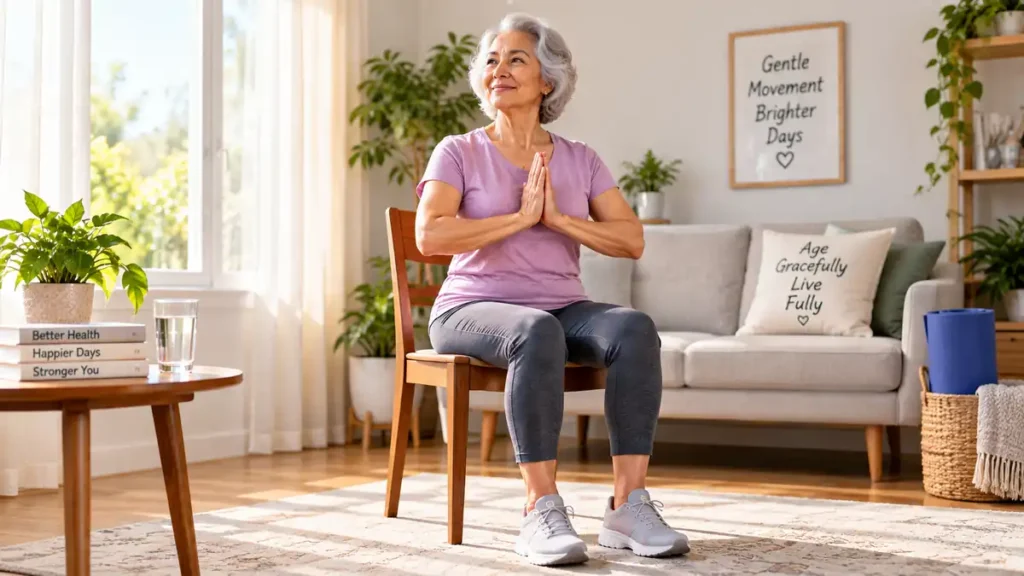
Practicing gentle chair yoga poses for seniors is a simple, comforting way to ease morning stiffness and keep your body moving smoothly. If you have ever stood up from your favorite armchair and felt that familiar ache in your hips or lower back, you know how frustrating it can be. After age 60, just sitting quietly with a book or watching TV can leave your joints feeling tight and slow to get going.
When many people hear the word “yoga,” they immediately think of twisting into knots or getting down onto a hard floor. The truth is, getting down onto the carpet—and trying to get back up—just isn’t practical or comfortable for a lot of us, and that is completely okay.
You do not need a floor mat, fancy gear, or difficult balance routines to feel good again. A sturdy, everyday chair gives you all the support you need to loosen up tight areas, sit a little taller, and enjoy moving around your home with confidence.
Setting Up Your Space Safely
Before you start, a few simple safety habits will make your stretches much more comfortable:
- Use a Solid Chair: Pick a plain, armless dining chair or a solid folding chair with a firm seat. Avoid chairs with wheels, swivel seats, or deep, spongy recliners that make your lower back slump.
- Plant Your Feet: Sit forward toward the front edge of the seat so both feet rest flat on the floor, about hip-width apart. If your feet dangle or feel unsteady, place a flat book or a folded bath towel beneath them.
- Sit Up Without Straining: Imagine a gentle lift through the top of your head. Keep your shoulders relaxed away from your ears, and breathe easily through your nose. Never bounce or force yourself into a stretch.
- Keep Water Close By: Have a glass of water nearby to sip after your routine.
5 Simple Chair Yoga Poses for Seniors
Take your time with these movements. Move at your own relaxed pace and pause whenever you need to.
1. Seated Cat-Cow
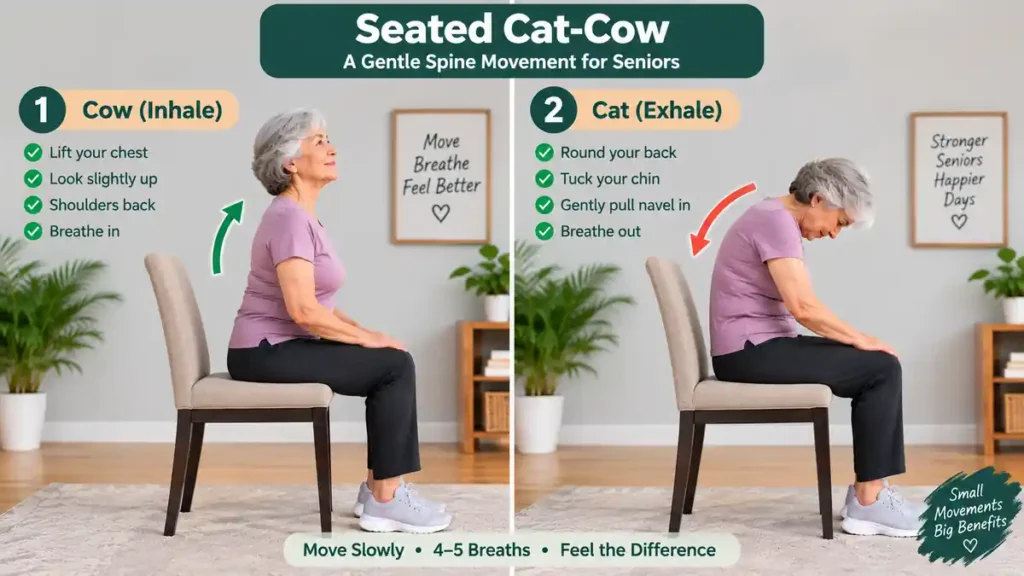
Good for: Gentle spinal movement and easing mid-back stiffness.
Why it works: This slow rocking movement guides your spine through a natural range of motion. It is one of the easiest ways to start your routine and shake off morning rigidity.
How to do it:
- Sit upright with your hands resting on your knees or thighs.
- As you breathe in: Gently draw your chest forward and look straight ahead, letting your shoulder blades draw lightly toward each other.
- As you breathe out: Slowly round your upper back, letting your chin tuck down toward your chest and drawing your belly gently in.
- Flow between these two positions 4 or 5 times, matching the movement to your normal breath.
2. Seated Forward Fold
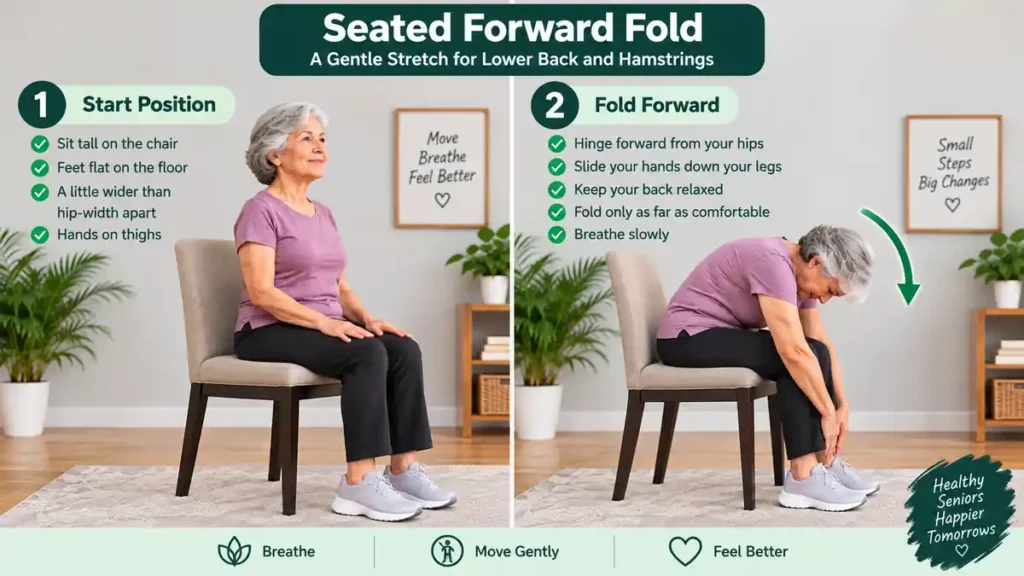
Good for: Easing lower back tension and gently stretching the backs of your legs.
Why it works: This fold lets the muscles along your spine release while your hips stay supported by the chair.
How to do it:
- Sit with your feet set slightly wider than your hips so you feel completely stable.
- Place your palms firmly on your thighs.
- Take a breath in to sit tall, and as you breathe out, slowly lean forward from your hips. Slide your hands down toward your shins, or just rest your forearms across your thighs.
- Only fold as far as feels natural. Keep your head slightly elevated if dipping your head gives you lightheadedness.
- Rest here for 3 or 4 steady breaths, then gently press your hands into your thighs to bring your torso back up.
3. Seated Figure Four (Seated Hip Stretch)
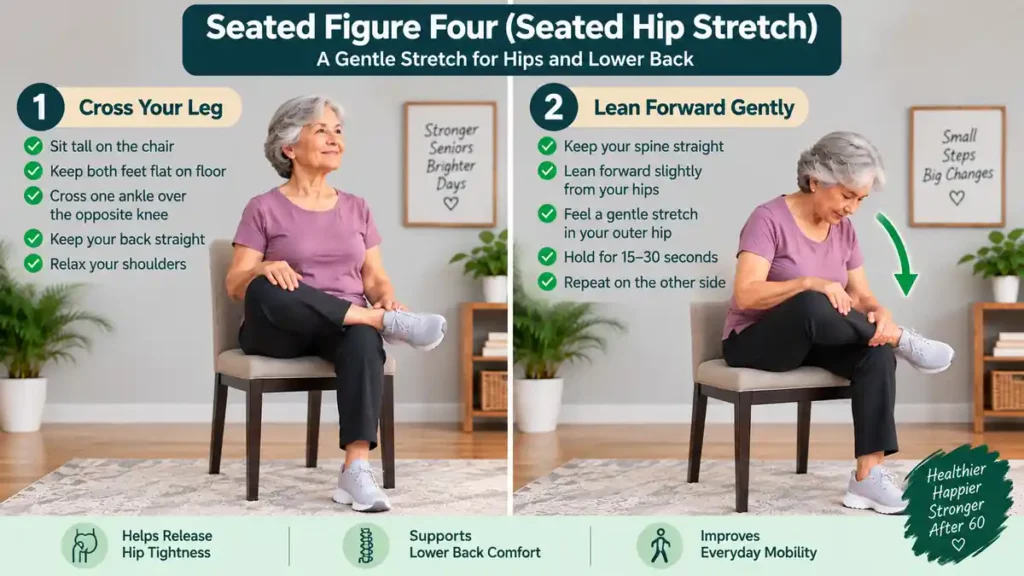
Good for: Tight hips and glutes.
Why it works: Limited hip mobility can make everyday actions feel stiff. This seated stretch gives your outer hips attention without putting pressure on your knees.
How to do it:
- Sit tall with both feet flat on the floor.
- Lift your right leg and rest your right ankle across your left thigh, just above your knee. (If that feels too tight on your hip or knee, cross your right ankle over your left shin instead—both give a great stretch).
- Keep your right foot lightly flexed.
- If you already feel a comfortable stretch along the side of your hip, stay right there. If you need a bit more, lean your chest forward an inch or two while keeping your back straight.
- Take 3 to 4 easy breaths, uncross carefully, and repeat on the other side.
4. Seated Side Stretch
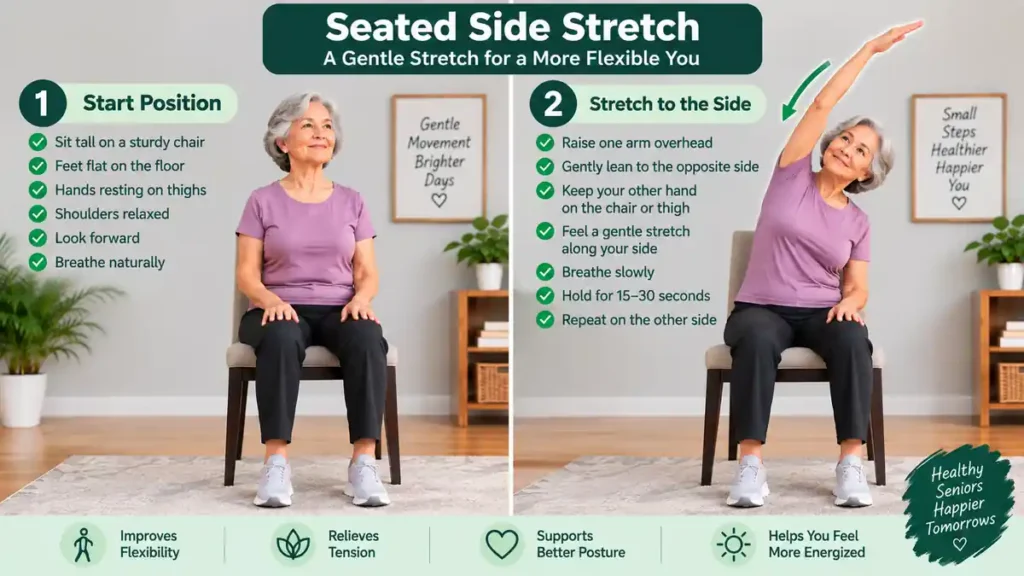
Good for: Easing tightness along the sides of your torso.
Why it works: Sitting for long periods can leave your upper body feeling cramped. This movement gently stretches the sides of your waist and gives your lungs room for comfortable, relaxed breathing.
How to do it:
- Sit upright with both sitting bones resting evenly on your chair.
- Hold the side of your chair seat with your left hand for support.
- As you breathe in, lift your right arm up toward the ceiling. (If your shoulder feels tight or sore, just rest your right fingertips on your right shoulder).
- As you breathe out, lean your torso slightly to the left until you feel a gentle stretch along your right side.
- Keep your right hip resting down on the chair so you stay grounded.
- Hold for 3 breaths, lower your arm, and switch sides.
5. Gentle Seated Twist
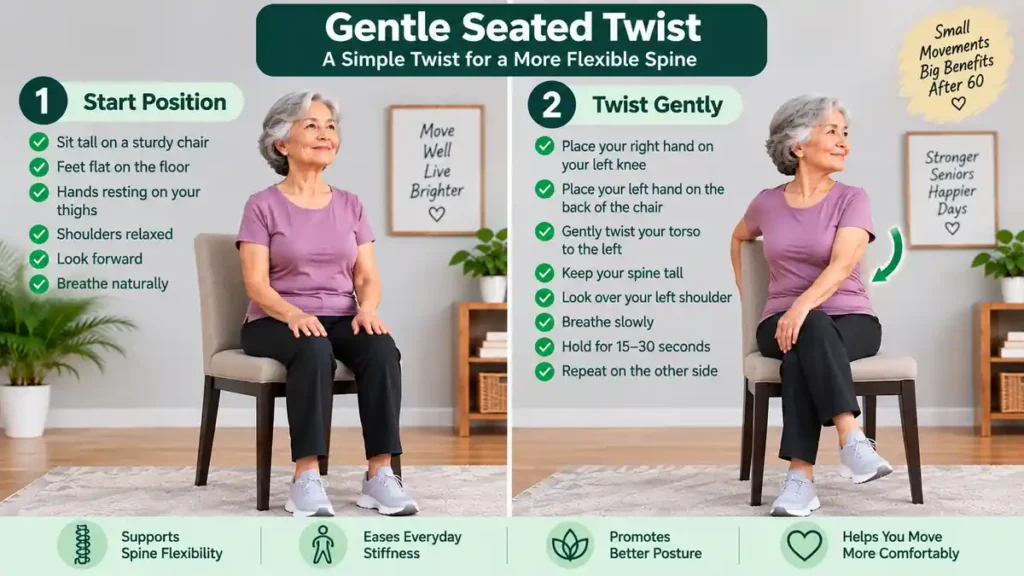
Good for: Gentle rotation and posture awareness.
Why it works: Everyday life requires turning—like glancing over your shoulder or reaching across a table. This seated twist keeps that rotational movement comfortable. For individuals interested in standing balance and slow coordination alongside seated work, check out our beginner’s guide on Tai Chi for Seniors.
How to do it:
- Sit tall with your feet flat and your knees pointing straight ahead.
- Take a breath in to lengthen your back.
- As you breathe out, gently turn your upper torso toward the right.
- Rest your left hand on the outside of your right knee, and place your right hand on the chair seat beside you for light support.
- Keep your neck relaxed, turning your head only as far as is comfortable.
- Hold for 3 to 4 breaths, turn slowly back to the center on an inhale, and repeat to the left.
Quick Movement Guide
| Movement | Main Focus | Simple Tip |
| Seated Cat-Cow | Spine & Mid-Back | Move with gentle breaths; don’t strain your neck. |
| Seated Forward Fold | Lower Back & Legs | Rest forearms on thighs if reaching down feels far. |
| Seated Figure Four | Hips & Glutes | Cross ankle over shin if your knee feels tight. |
| Seated Side Stretch | Sides of Torso | Keep hand on shoulder if raising your arm pinches. |
| Seated Twist | Posture & Rotation | Keep knees pointing forward as you turn gently. |
3 Tips for a Comfortable Daily Routine
- Stay in Your Comfort Zone: A good stretch should feel like gentle tension or warmth—never a sharp pinch, ache, or joint pain. If something hurts, stop right away.
- A Little Every Day Goes a Long Way: Spending 5 to 10 minutes on these chair yoga poses for seniors a few mornings a week is often easier to stick with than trying to do a long, tiring session. Staying mobile also goes hand-in-hand with safety around the house; if you are evaluating hazards in high-risk areas like the bathroom, explore our review of Walk-In Showers for Seniors.
- Keep Breathing Naturally: If you notice yourself holding your breath, your body is probably working too hard. Keep your breathing soft and steady through your nose.
Frequently Asked Questions
Can chair yoga help improve balance for seniors?
Chair yoga supports flexibility, posture, and body awareness, which are all helpful for daily movement. However, chair yoga by itself should not be viewed as a full fall-prevention plan. A well-rounded routine usually includes walking, functional strength habits, and standing balance practice.
How often should an older adult do chair yoga?
Because these are gentle seated stretches, many people find them easy to do several times a week. How often you practice depends entirely on your own energy, comfort, and any guidance from your doctor.
Do I need any special equipment to get started?
Not at all. You just need a sturdy, armless chair placed on a non-slip floor or rug, comfortable clothing that does not restrict your breathing, and either flat shoes or bare feet.
Sources
These poses are general movement ideas for adults over 60, not a treatment. Public guidance on activity and yoga safety:
- National Institute on Aging — Exercise and physical activity
- National Center for Complementary and Integrative Health — Yoga: Effectiveness and safety
- CDC — Physical activity for older adults
Stop if you feel pain, dizziness, or shortness of breath. People with a recent surgery, joint replacement, or balance problem should ask a clinician or physical therapist before starting.
Educational only — not medical, legal, or financial advice. Talk to a qualified professional before changing exercise, diet, medication, or making a major purchase. After60Guide is not a medical practice.



Gaurav Sharma is the founder and lead writer of After60Guide. He writes practical, source-cited guides on movement, nutrition, home safety, and everyday living after 60. He is not a doctor, physical therapist, or financial adviser. Health and money articles are general education, checked against official public sources where relevant — not personal advice. Corrections: contact@after60guide.com