

By Gaurav Sharma | Founder & Lead Writer
Last Updated: September 16, 2026
A quick note: This article is for general educational purposes and shares everyday nutrition tips. It is not a substitute for personalized medical advice — always check with a doctor before making major changes to fluid intake, especially if you take medications like diuretics.
Getting an older adult to consume enough fluids throughout the day is often easier said than done. It is rarely a matter of stubbornness. As we age, our natural sense of thirst tends to become less sharp, meaning the body does not always signal when it needs moisture. This is why incorporating hydrating foods for seniors who forget to drink water or dislike plain glasses is an essential strategy for maintaining healthy everyday fluid balance.
For many seniors, other everyday hurdles get in the way too—like avoiding frequent trips to the bathroom, sensitive teeth when drinking chilled fluids, or simply finding plain water unappealing.
Fortunately, a drinking glass is not the only way to support daily hydration. Roughly 20% of everyday fluid intake typically comes from the foods we eat. Adding moisture-rich, nutrient-dense fruits, vegetables, and warm broths to everyday meals makes meeting fluid needs feel far more natural—no forced chugging required.
Why Fluid Intake Can Feel Harder With Age
Understanding why fluid routines become difficult helps in choosing the right mealtime adjustments:
- Less Sensitive Thirst Cues: Sensory receptors responsible for signaling thirst become less responsive over time, meaning an older adult might not actively crave a drink even on warm or dry days.
- Changes in Body Composition: As natural lean muscle mass decreases over time, the body’s overall fluid reserve is slightly smaller than in younger years.
- Routine Medications: Common prescriptions, including certain blood pressure medications (such as diuretics), increase everyday fluid loss through urine.
Also Read:6 Soft High-Protein Foods for Seniors With Sensitive Teeth
7 Delicious, Water-Rich Foods for Everyday Meals
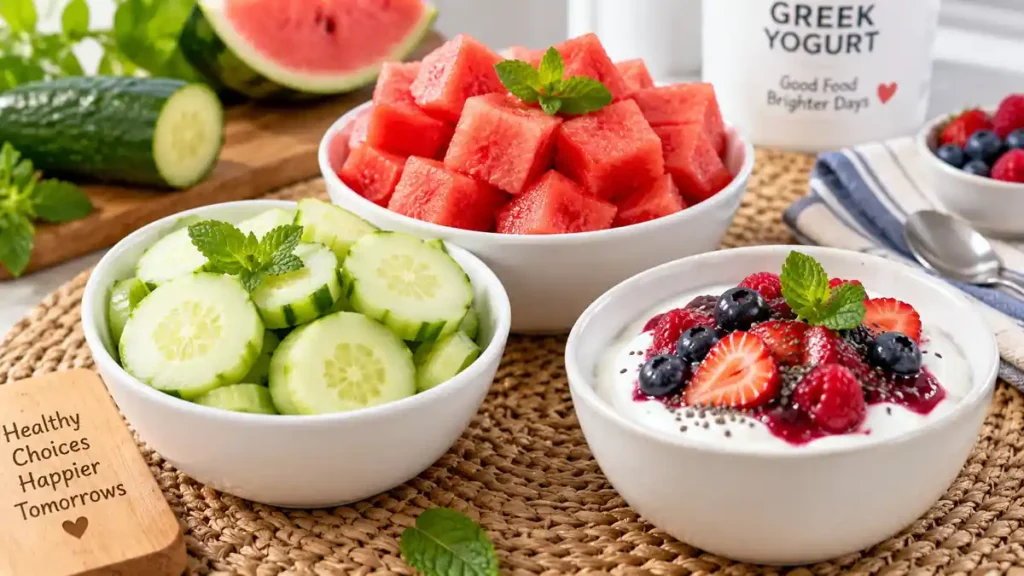
These whole foods bring natural moisture along with vitamins, minerals, and gentle fiber.
1. Cucumbers (~95% Water)
Crunchy and refreshing, cucumbers sit near the top of the moisture chart among everyday produce.
Nutrients: Potassium, vitamin K, and magnesium, with practically no natural sugars.
💡 Serving idea: Peel the skin if it’s tough on dentures, slice thin, and toss with olive oil, a pinch of salt, and fresh lemon juice.
2. Watermelon & Cantaloupe (90–92% Water)
Naturally sweet melons are often appealing even when taste sensitivity has dulled with age.
Nutrients: Watermelon brings lycopene; cantaloupe adds vitamins A and C.
💡 Serving idea: Cut into small, bite-sized cubes, or blend into a chilled melon soup for an easy afternoon snack.
3. Warm, Low-Sodium Broths & Light Vegetable Soups (~90% Water)
Warm liquids are often gentler on a sensitive stomach than ice-cold water, especially in the morning or cooler weather.
Nutrients: Clear vegetable or chicken broths offer small amounts of sodium and potassium that support everyday electrolyte balance.
💡 Serving idea: Sip 4–6 ounces of warm, low-sodium broth from an easy-grip ceramic mug as a mid-morning comfort drink.
4. Plain Greek Yogurt or Cottage Cheese (75–80% Water)
Dairy isn’t the first thing people think of for hydration, but both carry real moisture alongside protein.
Nutrients: Easily digestible protein for muscle maintenance, plus calcium.
💡 Serving idea: Top plain Greek yogurt with soft mashed berries and a light drizzle of honey for a nutrient-dense breakfast.
5. Zucchini & Yellow Squash (~94% Water)
Firm when raw, these summer squashes soften quickly with gentle steaming while holding onto their moisture.
Nutrients: Soluble fiber, vitamin B6, and potassium.
💡 Serving idea: Grate raw zucchini into morning scrambled eggs, or simmer sliced yellow squash in vegetable stock until spoon-soft.
6. Strawberries, Raspberries & Blueberries (85–91% Water)
Berries bring moisture and fiber together — a great swap for processed, sugary fruit juices.
Nutrients: High in vitamin C and polyphenols.
💡 Serving idea: If seeds bother sensitive gums, simmer fresh or frozen berries for 5 minutes into a warm compote to spoon over oatmeal.
7. Cooked Tomatoes & Light Tomato Soup (~94% Water)
Fresh tomatoes carry plenty of moisture, and gentle cooking softens the skin while boosting beneficial compounds.
Nutrients: Cooking releases more lycopene, an antioxidant linked to cardiovascular health.
💡 Serving idea: Warm a cup of smooth, low-sodium tomato soup and serve with whole-grain toast points for dipping
Also Read:Can’t Drink Milk? 7 Calcium-Rich Foods Seniors Can Eat for Bones
Food Moisture Comparison
| Food Item | Estimated Moisture | Key Nutrients | Practical Kitchen Preparation |
|---|---|---|---|
| Cucumbers | ~95% | Vitamin K, Potassium | Peeled, thinly sliced in light olive oil |
| Zucchini | ~94% | Soluble Fiber, Potassium | Steamed or grated into warm scrambled eggs |
| Watermelon | ~92% | Lycopene, Vitamin A | Soft, bite-sized seedless cubes |
| Clear Broth | ~90% | Gentle Minerals | Served warm in an easy-grip ceramic mug |
| Strawberries | ~91% | Vitamin C, Dietary Fiber | Sliced fresh or gently stewed into compote |
| Greek Yogurt | ~75–80% | Protein, Calcium | Layered with soft, mashed ripe berries |
Subtle Signs You May Need More Fluids
Because thirst is not always a dependable cue, keeping an eye on everyday signals can help identify when fluid intake is running low:
- Dark-Colored Urine: Healthy, well-hydrated urine is usually light straw or pale yellow. Consistently dark amber urine often indicates the kidneys are conserving fluid.
- Dry Lips or Dry Mouth: A feeling of stickiness along the gums or chapped lips can be an early sign that your body needs fluids.
- Unusual Afternoon Sluggishness: While occasional fatigue is normal, a noticeable dip in daily energy or mild dizziness when standing up can sometimes be related to low fluid volume.
Also Read:Blood Sugar-Friendly Foods for Seniors: A Practical Everyday Guide
Simple Kitchen Habits to Make Fluid Intake Easier
Beyond water-rich foods, a few small adjustments around the kitchen can make everyday sipping more comfortable:
- Keep an Easy-Grip Tumbler with a Straw Nearby: Tilting regular heavy glasses can feel awkward or strain the neck. An insulated tumbler with a soft silicone straw keeps fluids at a pleasant room temperature and allows easy sipping from a favorite chair.
- Add Natural Fruit Slices: If plain water tastes flat, float a couple of cucumber slices, orange wedges, or clean mint leaves in a counter pitcher for light, natural aroma without added refined sugars.
- Connect Sips to Existing Habits: Build fluid moments into your daily rhythm—such as having a small cup of warm broth after checking the morning mail or enjoying a small bowl of melon slices during the afternoon news.
Frequently Asked Questions
Can soup completely replace drinking water?
No. While broth-based soups contribute meaningfully to total daily fluid volume, they should complement—not completely replace—drinking water throughout the day. Choosing low-sodium varieties helps ensure you stay within heart-healthy sodium limits.
Do coffee and tea count toward daily fluids?
Yes. While caffeinated drinks have a mild diuretic effect, moderate amounts (such as 1 to 2 cups of tea or coffee) still contribute positively to overall fluid intake. It is still a good practice to balance them with glasses of plain water or water-rich snacks during the day.
What is the easiest hydrating snack for someone with dentures?
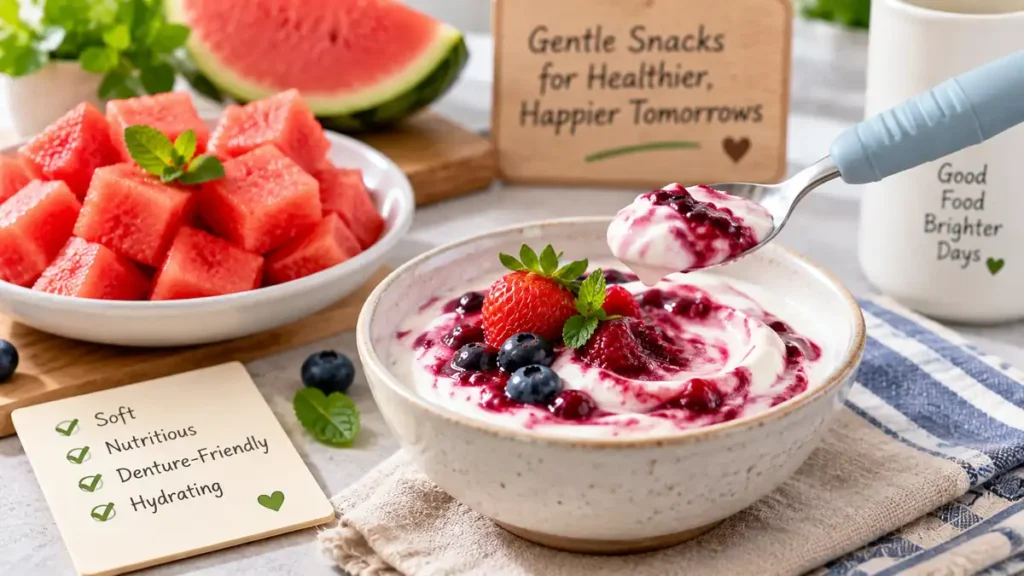
Seedless watermelon cut into small, soft pieces, smooth plain Greek yogurt, and warm fruit compotes are all gentle on sensitive gums and dentures while providing abundant moisture.
Sources & References
- National Council on Aging (NCOA): How to Stay Hydrated for Better Health — Guidance on dehydration signs, urine color check, and senior-specific fluid needs.
- USDA FoodData Central — Official food composition database confirming moisture percentages for cucumbers, melons, squash, and berries.
- Centers for Disease Control and Prevention (CDC): Water and Healthier Drinks — Nutritional guidance on daily fluid consumption and healthy dietary hydration sources.
- Mayo Clinic: Water — How much should you drink every day? — Reference on hydration balance, caffeine’s effect on fluid intake, and dietary sources.
- NIH News in Health: H2O for Healthy Aging — NIH-backed research on hydration and healthy aging in older adults.
Educational only — not medical, legal, or financial advice. Talk to a qualified professional before changing exercise, diet, medication, or making a major purchase. After60Guide is not a medical practice.




Gaurav Sharma is the founder and lead writer of After60Guide. He writes practical, source-cited guides on movement, nutrition, home safety, and everyday living after 60. He is not a doctor, physical therapist, or financial adviser. Health and money articles are general education, checked against official public sources where relevant — not personal advice. Corrections: contact@after60guide.com