
By Gaurav Sharma | Founder & Lead Writer, After60Guide
Updated: October 2026. Educational only — not a diet plan or financial advice.
When you live on a fixed retirement income, the grocery receipt is often where the month’s budget quietly slips away. Food is one of the biggest bills most of us have, and one of the hardest to predict.
When prices go up, it’s easy to assume that eating well means expensive organic labels or a trip to a high-end health food store. It doesn’t.
Grocery shopping on a budget for seniors comes down to a few steady habits: knowing your store’s discount days, keeping frozen staples on hand, comparing unit prices, and planning simple meals. Make a plan before you pick up the cart, and you can protect your savings while keeping your kitchen stocked with food that’s good for you and easy to cook.
A quick note: the programs and agencies mentioned here (SNAP, Meals on Wheels, Area Agencies on Aging) are for readers in the United States.
The Reality of Shopping on a Fixed Income
Cooking changes after 60. Many of us are cooking for one or two people now, and family-size packages tend to spoil before we can finish them. That means wasted food and wasted money.
Then there’s the physical side. Sore joints and tired hands make a pile of chopping feel like a chore. The ready-made meals in the center aisles are the easy way out, but they usually cost more and come loaded with sodium.
The National Institute on Aging (NIA) suggests planning ahead, choosing versatile staples, and keeping waste low. Frozen basics and flexible pantry foods fit that advice well. They keep prep light, go easy on your wrists, and make your register total a lot more predictable.
7 Practical Supermarket Habits to Stretch Your Food Budget
1. Ask About Senior Discount Days
Many regional chains, neighborhood markets, and pharmacies set aside certain days or hours for older adults. Policies vary a lot from store to store.
- Check the local rules. Some stores pick a weekday morning, often Tuesday or Wednesday. Others choose one day a month. Age cutoffs are usually 60, 62, or 65.
- Ask at customer service. These discounts are rarely applied automatically. Ask the cashier or stop by the service desk, and make sure it’s applied before you pay.
- Enjoy the quieter trip. Mid-week mornings usually mean shorter lines and emptier aisles, which helps if you use a cane or walker.
2. Lean on Plain Frozen Produce
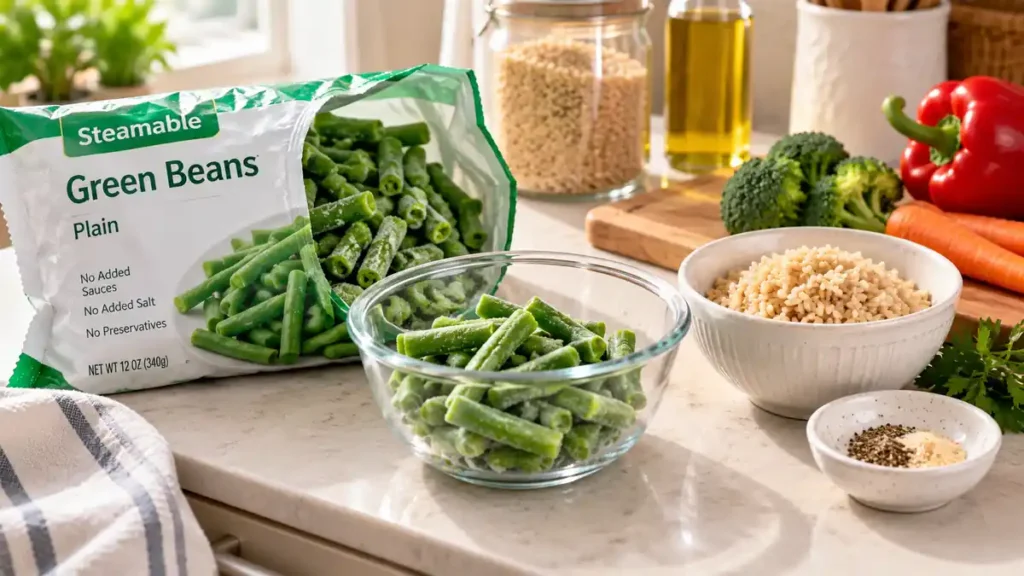
Fresh greens look lovely on display, but if you live alone they can turn limp in the crisper drawer within a few days.
- The nutrition holds up. The U.S. Department of Agriculture (USDA) notes that plain frozen fruits and vegetables are frozen soon after harvest, which makes them a practical, nutritious alternative to fresh.
- Easier on your hands. Broccoli florets, green beans, and peas come washed and cut. If holding a chef’s knife is uncomfortable, that’s a real relief.
- Nothing goes to waste. Pour out one cup for tonight’s dinner and put the bag straight back in the freezer. Just read the label and pick plain vegetables or unsweetened fruit, not bags with heavy sauces or added sugar.
3. Compare Unit Prices, Not Just Shelf Tags
Look closely at a shelf tag and you’ll see two numbers. The big one is what you pay at the register. The small one is the unit price, which is the cost per ounce, pound, or count.
- Look beyond eye level. Brands pay for those prime middle shelves. Generic and bulk options are often higher up or lower down.
- Trust the unit price. A smaller jar can look cheaper but cost more per ounce. The unit price tells you the real value in a second.
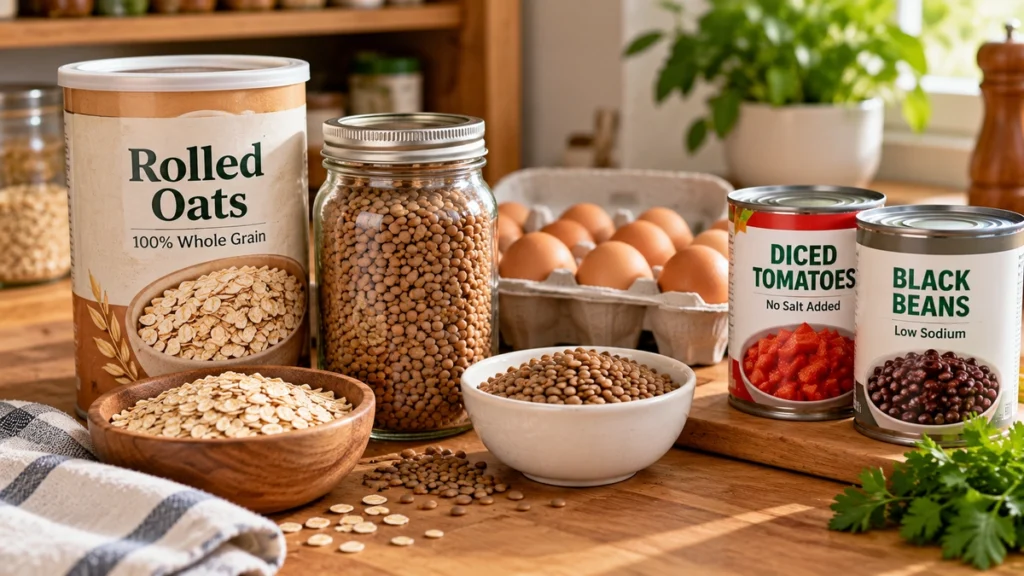
- Give store brands a fair try. Rolled oats, brown rice, canned beans, and milk are often cheaper under the store label. Compare unit prices and see for yourself.
4. Build Meals Around Affordable Proteins
Beef, pork, and poultry are usually the fastest way to push a grocery bill up.
- Reliable staples. Eggs, plain Greek yogurt, canned tuna, and cottage cheese give you good protein without butcher-counter prices.
- Pantry legumes. Dry or low-sodium canned lentils, black beans, and chickpeas are often affordable per serving, especially when bought dried or in larger packages. They add substance to soups and stews and stay soft and easy to chew.
- Stretch your ground meat. For chili, meatloaf, or pasta sauce, try mixing ground turkey or lean beef with cooked brown lentils or finely diced vegetables. It can noticeably cut your meat cost and adds a little gentle fiber.
Also Read: High-Fiber Foods for Seniors: 6 Easy Kitchen Staples for Everyday Meals
5. Rinse Canned Goods to Keep Sodium in Check
Canned beans, vegetables, and broths are some of the cheapest staples you can keep in the pantry. The catch is that regular cans usually contain added salt.
- Go low-sodium when it fits your budget. Look for “no salt added” or “low sodium” on the label.
- Rinse what you have. If regular cans are on sale, tip the beans or vegetables into a strainer and rinse them under cool water for about 15 seconds. It washes away a good share of the salty liquid.
- Inspect before you buy. The U.S. Food and Drug Administration (FDA) advises against cans with deep dents, damaged seams, bulging, or rust, since these can compromise food safety.
6. Shop With a Realistic 7-Day Menu
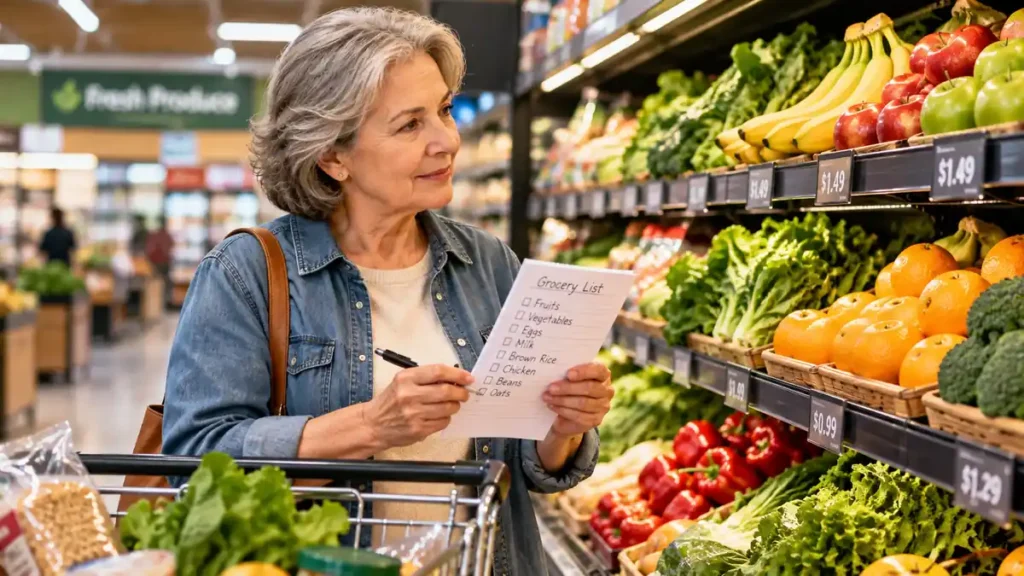
Walking into a supermarket without a list is the easiest way to come home with duplicates, impulse buys, and ingredients that spoil before you use them.
- Check your cupboards first. Before you write anything down, look through the fridge and pantry. Plan a few meals around what you already have.
- Don’t shop hungry. Everything looks tempting on an empty stomach, especially the pricey snacks. Have a light meal or a glass of water before you leave.
- Start at the store’s edges. Produce, dairy, eggs, and lean proteins are often along the outer walls, while the middle aisles hold more of the costly packaged goods.
7. Make Loyalty Programs and Clubs Work for You
Most grocery loyalty accounts are free and open the door to weekly sales and digital coupons. For supermarket savings after 60, they’re one of the easiest wins.
- Use your phone number. Many stores let you enter your number at the register to unlock member prices and coupons. Ask customer service to link your account, so you don’t have to juggle an app.
- Be realistic about warehouse clubs. Bulk stores can save real money on paper goods, pantry staples, and over-the-counter items, but only if you’ll use everything before it expires or can split packs with a friend or neighbor.
Also Read: 7 Costco Perks for Seniors Over 60 You May Not Be Using
A Sample Budget Grocery Framework for 1 to 2 People
Here’s one simple way to combine pantry staples with fresh and frozen basics for a week of wholesome meals. Prices will vary by store and season.
| Kitchen Category | Recommended Staples | Everyday Meal Idea |
|---|---|---|
| Grains & Breakfast | Rolled oats, brown rice, whole-wheat bread | Warm oatmeal with cinnamon; simple brown rice bowls |
| Proteins | Dozen eggs, canned light tuna, dry brown lentils | Vegetable scramble; tuna salad; easy lentil soup |
| Produce (Frozen & Fresh) | Frozen mixed vegetables, frozen berries, bananas, carrots | Steamed vegetables as a dinner side; sliced banana in oatmeal |
| Dairy / Plant Dairy | Low-fat milk or fortified soy milk, plain yogurt | Morning smoothie; plain yogurt topped with berries |
| Pantry Basics | Low-sodium canned tomatoes, peanut butter, canned black beans | Quick black bean chili; peanut butter on whole-wheat toast |
Smart Budget Grocery Swaps
| Instead of Buying… | Try This… | Why It Helps |
|---|---|---|
| Fresh pre-cut bagged fruit | Plain frozen unsweetened fruit | Often cheaper per ounce, no waste, keeps for months |
| Name-brand rolled oats | Store-brand rolled oats in a canister | Similar texture at a lower unit price |
| Butcher meats every day | Canned tuna, eggs, and cooked lentils | Affordable proteins that are easy to chew |
| Single-serve snack packs | Larger packages portioned at home | Much lower cost per ounce |
| Heavily salted canned soup | Low-sodium broth with canned beans and frozen vegetables | More control over sodium and cost |
Food Assistance Programs Worth Checking
If money is still tight after careful budgeting, there are programs built for older adults:
- SNAP (Supplemental Nutrition Assistance Program): Many older adults qualify without realizing it. Several states offer simpler application forms for seniors on fixed incomes.
- Senior Farmers’ Market Nutrition Program (SFMNP): This federally funded program gives eligible low-income seniors coupons for fresh fruits, vegetables, and herbs at farmers’ markets and farm stands.
- Community dining and home delivery: Your local Area Agency on Aging and organizations like Meals on Wheels offer community lunches and home-delivered meals for qualifying seniors.
Frequently Asked Questions
Are frozen vegetables as healthy as fresh produce for older adults?
Yes. Plain frozen vegetables are picked ripe and frozen quickly, which helps lock in their vitamins and minerals. They’re also pre-washed and chopped, so there’s less prep and less spoilage.
How can someone living alone shop economically without food going bad?
Lean on shelf-stable foods like dry lentils, rolled oats, brown rice, and canned beans, and pair them with plain frozen vegetables. If you buy fresh meat, poultry, or bread, divide it into single portions right away and freeze whatever you won’t use within two days.
Is it safe to buy dented cans from the clearance bin?
The FDA advises avoiding cans with deep dents, dents along the side or top seams, bulging, or rust. A small surface scuff that doesn’t bend the seam is usually fine, but seam-damaged cans should stay on the shelf.
What is the best way to find out if my store has a senior discount?
Ask at the customer service desk or speak to a store manager on your next visit. Policies, discount amounts, eligible days, and age requirements change over time, so confirming in person gives you the right local information.
Final Thoughts
You don’t need a complicated system to eat well on a fixed income. Pick one or two habits from this list and try them on your next trip. Maybe that’s asking about a discount day, or swapping one fresh item for its frozen version. Small changes add up over a month, and the savings are real.
Once the routine feels natural, add another habit. Over time, grocery shopping on a budget for seniors stops feeling like a chore and starts feeling like a plan that works.
Sources
FDA — Food safety for older adults
MyPlate — Healthy eating on a budget
National Institute on Aging — Smart food choices for healthy aging
USDA — Senior Farmers’ Market Nutrition Program
Editorial Note: This article is for consumer education and household budgeting only. It does not provide medical, nutritional, or financial advice.
Educational only — not medical, legal, or financial advice. Talk to a qualified professional before changing exercise, diet, medication, or making a major purchase. After60Guide is not a medical practice.




Gaurav Sharma is the founder and lead writer of After60Guide. He writes practical, source-cited guides on movement, nutrition, home safety, and everyday living after 60. He is not a doctor, physical therapist, or financial adviser. Health and money articles are general education, checked against official public sources where relevant — not personal advice. Corrections: contact@after60guide.com