
By Gaurav Sharma | Founder & Lead Writer
Last Updated: September 18, 2026
Consumer Notice: Wireless plans, carrier promotions, equipment pricing, and warehouse incentives change frequently. Always confirm specific rates, taxes, auto-pay terms, and line requirements directly with each provider before making a purchase.
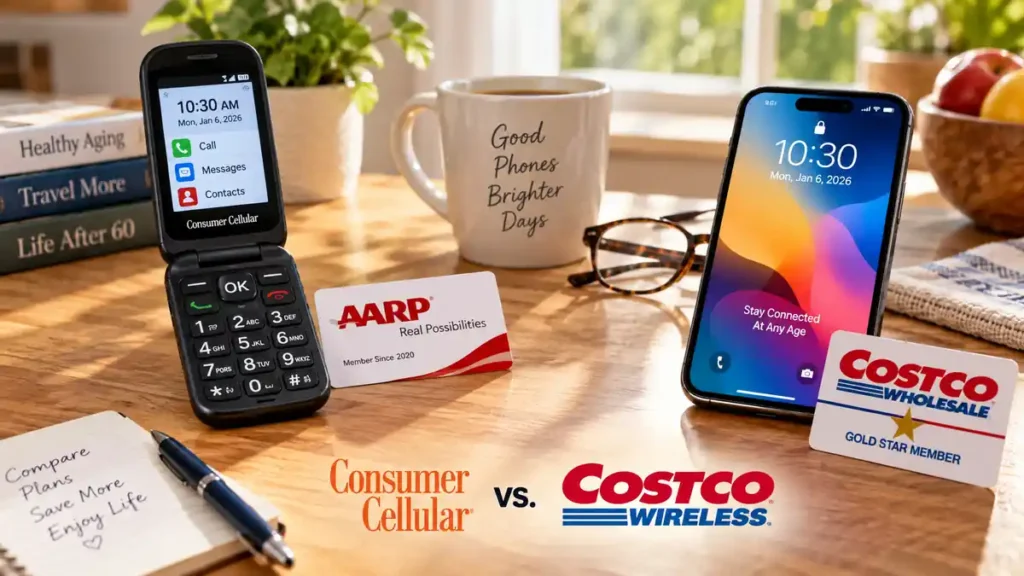
Choosing the right mobile provider after retirement often comes down to balancing monthly savings with customer support. When evaluating consumer cellular vs costco wireless for seniors, it helps to understand that one is a direct low-cost service provider while the other operates as a retail purchasing channel for major network carriers.
When evaluating consumer cellular vs costco wireless for seniors, it helps to understand that you are not comparing two identical service providers. Consumer Cellular is a direct wireless service provider, whereas Costco Wireless is a retail purchasing channel offering mobile plans and hardware promotions through participating third-party carrier partners.
Deciding which route makes sense for your household depends on your monthly data consumption, whether you need multi-line discounts, and whether you prefer patient phone-based customer support or in-person shopping incentives.
Understanding the Costco Wireless Model
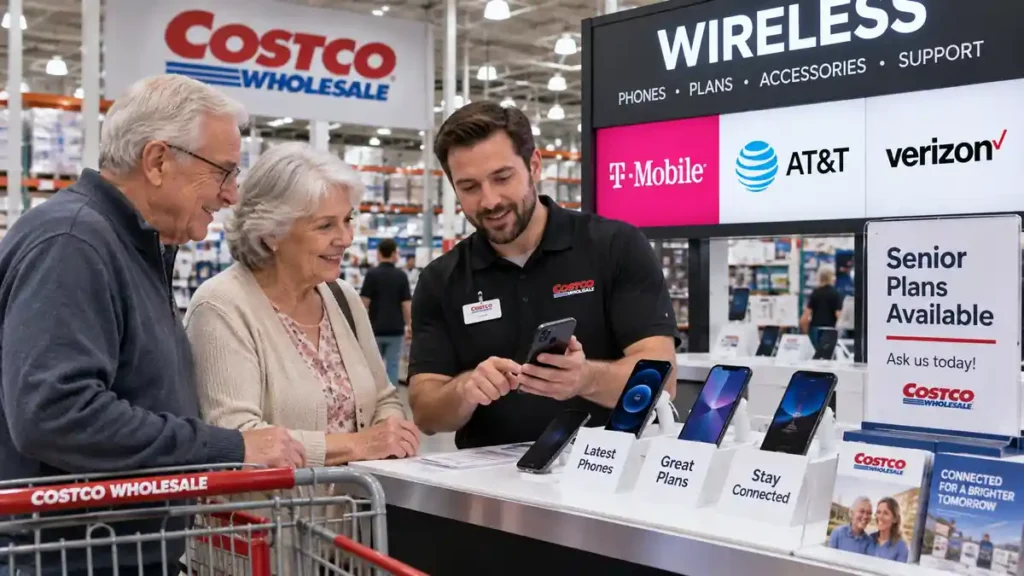
Costco does not build or operate its own cellular network. Instead, the warehouse club hosts dedicated wireless kiosks (managed through authorized third-party retail partners) that connect shoppers directly with nationwide carriers such as T-Mobile, AT&T, or Verizon, depending on location.
Signing up for wireless service through Costco means your actual account is held with the underlying carrier, but with warehouse-specific incentives:
- Retail Gift Cards: Participating carriers frequently bundle promotional digital Costco Shop Cards for activating new lines or purchasing qualified devices.
- Waived Administrative Fees: Standard carrier activation or device upgrade fees are often credited back or waived during warehouse promotional periods.
- Senior Tier Availability: Warehouse kiosks can enroll qualifying adults (age 55 and older) into carrier-specific senior offerings, such as T-Mobile 55+ plan tiers, where available.
- Membership Terms: Access to warehouse-exclusive promotions generally requires an active Costco membership. Terms vary by participating carrier and current warehouse agreements.
Understanding the Consumer Cellular Model
Consumer Cellular operates as a Mobile Virtual Network Operator (MVNO). Rather than constructing its own transmission towers, the company leases network capacity from major nationwide carrier infrastructure (primarily utilizing the AT&T network), allowing it to offer no-contract service with flexible monthly tiers.
Key characteristics of Consumer Cellular include:
- Flexible Month-to-Month Service: Plans do not require long-term service contracts, allowing users to switch tiers or cancel without early termination penalties.
- Tiered Data Allowances: Instead of requiring every subscriber to pay for unlimited data, users can choose lower data buckets (such as 1GB or 5GB) tailored to light mobile usage.
- AARP Member Savings: Current AARP members save 5% on monthly talk, text, and data service, along with a 30% discount on select accessories.
- Dedicated Domestic Support: Consumer Cellular emphasizes responsive, domestic phone-based customer assistance geared toward helping seniors set up devices, configure text sizing, and understand monthly bills.
Also Read: [How to Get Cheap Internet for Seniors on a Fixed Income (5 Real Programs)]
Head-to-Head Comparison: Plans, Costs & Service Features
Note: The pricing ranges below reflect estimated 2026 figures based on common promotional structures. Actual monthly charges depend on location, applicable taxes and regulatory fees, AutoPay enrollment, and active carrier promotions.
| Feature / Metric | Consumer Cellular | Purchasing Through Costco Kiosks |
|---|---|---|
| Business Model | Independent MVNO Service Provider | Retail partner channel for major carriers |
| Underlying Network Access | Major nationwide carrier networks (primarily AT&T) | Depends on chosen carrier partner (T-Mobile, AT&T, Verizon) |
| Starting Single-Line Estimate | ~$20 – $25/month (Talk, Text + 1GB before discounts) | ~$45 – $50/month (e.g., T-Mobile Essentials Choice 55, single line) |
| Two-Line Plan Estimate | ~$55 – $65/month (Tier-dependent, plus 5% AARP savings) | ~$60/month with AutoPay (e.g., T-Mobile Essentials Choice 55, 2 lines); ~$70/month without AutoPay |
| Membership Required? | No (Optional AARP membership gives 5% discount) | Typically requires active Costco membership for perks |
| Device Incentives | Straightforward pricing on simple & flip phones | Substantial trade-in credits & digital Shop Cards |
| Primary Support Channel | Dedicated phone and online support centers | Carrier retail kiosks and carrier customer care lines |
Also Read: Costco Internet for Seniors (2026): Is It Really the Cheapest Option?
Comparing Monthly Costs: Which Option Fits Your Budget?
For Light to Moderate Data Users (Consumer Cellular)
If your daily smartphone routine consists primarily of checking text messages, answering calls from family, reading email, and connecting to home Wi-Fi:
- Paying for high-tier unlimited data is often an unnecessary monthly expense.
- Consumer Cellular allows single users to maintain active cellular service with modest data allowances starting at approximately $20 per month before taxes and fees.
- If you rarely stream video outside your home, these low-tier allocations keep monthly living costs predictable.
For Couples Wanting Unlimited Data & New Phones (Costco Kiosks)
If you frequently travel, stream videos on road trips, or are planning to upgrade to the latest flagship smartphone:
- Major carrier 55+ plans (such as T-Mobile Essentials Choice 55) offered through Costco kiosks provide two lines of unlimited talk, text, and data starting at roughly $60 per month with eligible AutoPay discounts (approximately $70/month without AutoPay enrollment).
- When paired with promotional device trade-in credits and warehouse digital Shop Cards, the initial equipment savings can offset a higher monthly service bill over an extended period.
- Costco’s offers vary by participating carrier, promotion, location, and membership eligibility, so entry-level pricing and incentives may differ from one warehouse to another.
Coverage: What Seniors Should Actually Check
A common belief is that two services sharing the same underlying cell towers will deliver an identical everyday experience. In practice, several technical factors influence mobile performance:
- Signal Availability vs. Network Management: While an MVNO customer accesses the same physical cellular towers as a direct carrier customer, major network operators may prioritize their direct post-paid subscribers during times of heavy local network congestion.
- Geographic Reality: Local terrain, distance from towers, building materials, and handset technology determine actual reception. Before switching to any provider, check the detailed coverage map for your specific residential address and frequently traveled routes.
- Domestic Roaming: Major direct carriers often have extensive secondary roaming agreements in rural areas, while MVNO data access in remote regions may depend on specific partner agreements.
Device Compatibility & Everyday Usability
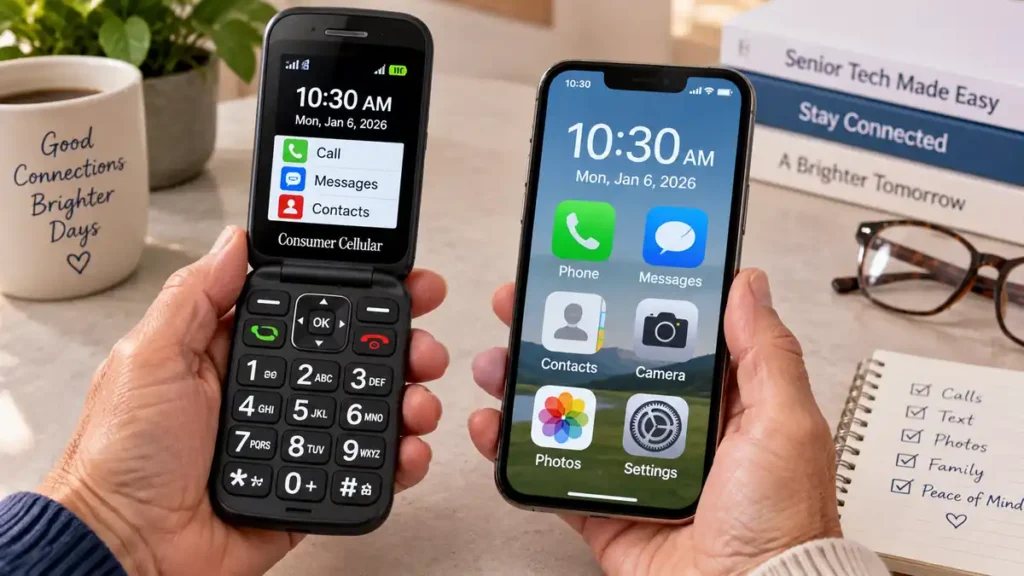
Both pathways accommodate modern mobile preferences:
- Bring Your Own Device (BYOD): If your current smartphone is fully paid off and unlocked, both Consumer Cellular and Costco’s carrier partners allow you to keep your phone by activating an eSIM or inserting a physical SIM card.
- Senior-Specific Hardware: Consumer Cellular offers simple, large-button flip phones designed specifically for seniors who prefer physical keypads, tactile navigation, and simplified menus.
- High-End Smartphones: Costco kiosks focus heavily on newer generation touchscreen smartphones, supported by multi-month financing promotions and equipment trade-in allowances.
Also Read: [Costco Hearing Aids for Seniors: What to Know Before You Book a Hearing Test]
Consumer Guide: Which Option Suits You Best?
Consumer Cellular may suit you if: You prioritize a modest monthly bill, use your phone mostly on home Wi-Fi, hold an AARP membership for the 5% service savings, and value patient, accessible phone-based customer service over promotional retail gift cards.
Costco’s carrier offers may suit you if: You are already an active Costco warehouse member, want unlimited high-speed data for multiple lines, plan to trade in an older smartphone for a new device, and want to take advantage of warehouse promotional gift cards.
Frequently Asked Questions
Can I keep my current phone number if I switch?
In most cases, you can transfer your existing mobile number to a new carrier if the number is eligible for porting under federal guidelines. Always keep your current service active until the transfer process is fully confirmed and completed on your new device.
What happens if I exceed my monthly data limit on Consumer Cellular?
Consumer Cellular does not cut off your service. Instead, their billing system automatically adjusts your account to the next available data tier for the remainder of your current billing cycle, resetting back to your chosen baseline tier on the following month.
Do I have to visit a Costco store in person to get their wireless offers?
While in-warehouse kiosks provide in-person representative assistance, participating carriers also maintain dedicated online portals for Costco members, subject to member verification and current online availability.
Sources & References
- Federal Communications Commission (FCC): Porting — Keeping Your Phone Number When You Change Providers
- AARP Member Benefits: Consumer Cellular Discount for AARP Members
- Consumer Cellular Official Site: Plans & Rates
- T-Mobile Official Site: 55+ Unlimited Plans
- Costco Official Site: Costco Wireless
Educational only — not medical, legal, or financial advice. Talk to a qualified professional before changing exercise, diet, medication, or making a major purchase. After60Guide is not a medical practice.




Gaurav Sharma is the founder and lead writer of After60Guide. He writes practical, source-cited guides on movement, nutrition, home safety, and everyday living after 60. He is not a doctor, physical therapist, or financial adviser. Health and money articles are general education, checked against official public sources where relevant — not personal advice. Corrections: contact@after60guide.com