

By Gaurav Sharma | Founder & Lead Writer
Last Updated: September 9, 2026
For many older adults, senior apartment living is one of the most practical lifestyle transitions available today. A well-designed, age-friendly apartment significantly reduces heavy home maintenance, improves physical accessibility, can reduce common household safety hazards, and provides built-in community connection. However, whether it is the right move depends on your current mobility, budget, proximity to emergency healthcare, and the level of daily independence you want to maintain.
Retirement should ideally be a phase of relaxation, personal hobbies, and unhurried mornings. Yet, for many older adults, remaining in a large, decades-old family home brings the opposite: relentless plumbing issues, steep staircases, yard upkeep, security worries, and quiet isolation once children have moved out.
Transitioning to an age-friendly apartment has become one of the most sensible, liberating lifestyle decisions for modern retirees. Whether you are an active senior looking to simplify daily routines or an adult child helping aging parents find a secure environment, here is a grounded look at how senior apartment living works—covering universal safety architecture, verified cost benchmarks, care tiers, and essential due diligence.
Why Consider Downsizing to an Apartment After 60?
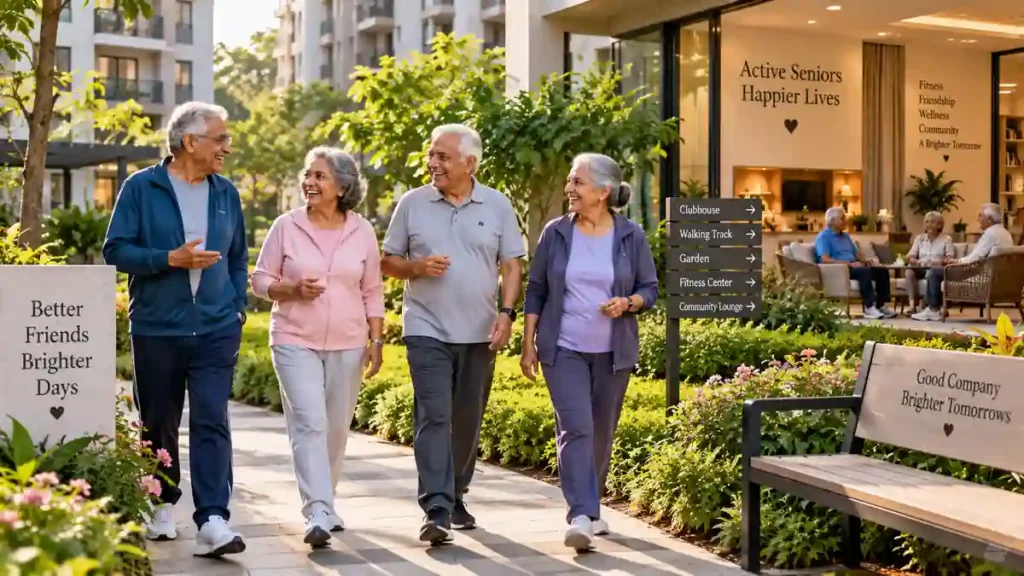
Downsizing is not about shrinking your lifestyle—it is about shedding maintenance burdens to protect your time, energy, and physical well-being.
- Freedom from Demanding Upkeep: In a managed community, one call to property maintenance resolves dripping faucets, electrical repairs, and exterior building upkeep. There are no gutters to clean, lawns to mow, or empty bedrooms to vacuum.
- Proactive Hazard & Fall Reduction: According to the CDC STEADI Initiative (Older Adult Fall Prevention), falls represent the leading cause of injury among adults aged 65 and older. Dedicated senior apartments eliminate standard residential hazards like sunken living rooms, steep entryway stairs, and high bathtub thresholds. (If you are evaluating your current home first, see our guide on essential home safety modifications for aging in place.)
- Daily Social Connection: Research highlighted by the National Institute on Aging (NIA) emphasizes that prolonged social isolation and loneliness are tied to higher risks of cardiovascular issues, cognitive decline, and depression. Living among peers makes morning strolls, communal activities, and casual conversations a natural part of the day rather than an isolated effort.
- Predictable Living Expenses: Replacing erratic emergency home repairs—such as emergency furnace replacements or roof leaks—with a structured monthly payment makes fixed retirement budgeting much easier to manage.
📖 Also Read:How to Choose an In-Home Caregiver for Seniors
What Makes an Apartment Truly “Senior-Friendly”?
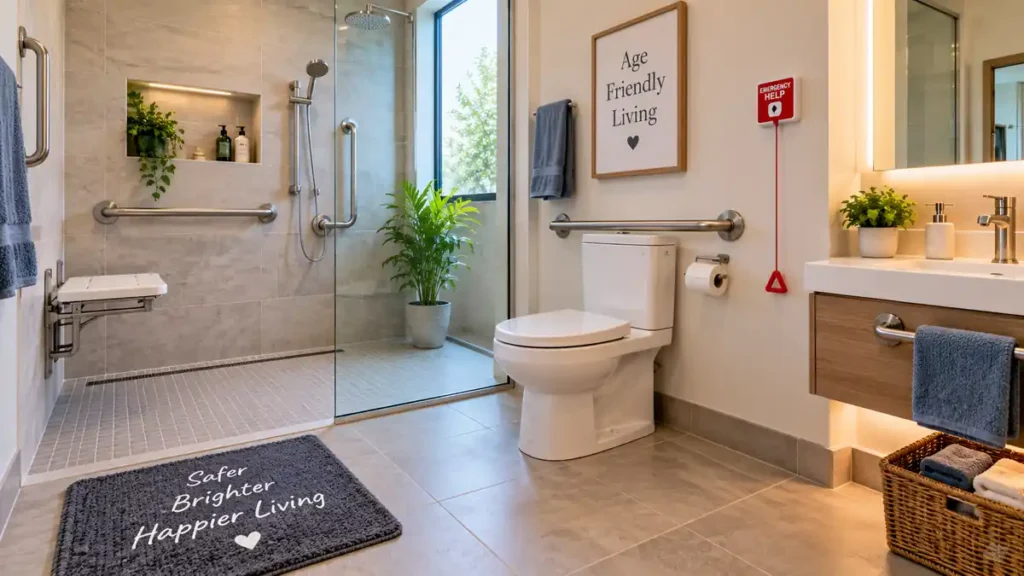
Not every ground-floor unit or elevator building suits an aging adult. Genuine senior living incorporates universal design—architectural choices that remain safe and practical even if personal mobility changes over time.
Essential Universal Design Features to Verify
- Zero-Threshold Entryways: Door transitions that sit flush with the flooring to eliminate trip points and allow smooth navigation for canes, walkers, or wheelchairs.
- Firmly Anchored Bathroom Grab Bars: Heavy-duty, ADA-compliant grab rails beside toilets and inside shower stalls. (Standard towel bars should never be used as balance supports).
- Slip-Resistant Flooring: Textured matte flooring with high wet-friction ratings in bathrooms, kitchens, and entryways.
- Wide Interior Clearances: Doorways and hallways measuring at least 32 to 36 inches to comfortably accommodate assistive devices.
- Accessible Hardware: Lever-style door handles and rocker light switches, which operate with a gentle push and do not require tight gripping or wrist twisting.
- Emergency Pull Cords / Intercoms: Rapid-response pull cords or call buttons placed low on the wall in bathrooms and bedrooms, connecting directly to front desk personnel or 24-hour monitoring desks.
📖 Also Read:Cost of In-Home Care for Seniors: A Clear 2026 Guide
Independent Living vs. Assisted Living Apartments
Choosing the right housing model requires matching your current physical independence with your anticipated health needs.
| Parameter | Independent Senior Living (55+ / 62+) | Assisted Living Communities |
|---|---|---|
| Typical Resident | Active retirees capable of managing daily personal care unassisted. | Seniors who require regular assistance with Activities of Daily Living (ADLs). |
| Care & Medical Support | Independent self-management; routine wellness visits or emergency staff access. | Assistance with bathing, dressing, mobility, and medication scheduling (services vary by facility and state licensing). |
| Kitchen & Meals | Full private kitchen; community dining room packages are optional. | Kitchenettes (mini-fridge/microwave); meal plans may include daily meals, depending on the community. |
| Focus | Lifestyle, travel freedom, peer social clubs, and hobby spaces. | Supervised safety, personal support routines, and care coordination. |
| Financial Structure | Standard monthly rent or buy-in + regular amenity fee. | Base room rate plus tiered monthly care charges based on individual care needs. |
What Does Senior Apartment Living Actually Cost? (Verified Benchmarks)
Senior housing costs vary significantly based on geographic region, community tier, and whether the facility is rental or purchase-based.
To help evaluate your budget, costs generally fall into these ranges:
- Independent Senior Apartments (Market-Rate 55+): Typically range from $1,500 to $3,800+ per month across most U.S. suburban markets, largely mirroring local market rents with an added community amenity fee.
- Assisted Living Communities: According to the 2025 CareScout Cost of Care Survey, the national annual median cost for an assisted living facility is approximately $74,400 per year (roughly $6,200 per month), a modest 5% rise over 2024 as cost growth stabilized. Rates can climb higher depending on individual care tiers. (See our companion piece on hidden in-home caregiving expenses vs. senior community costs for an itemized comparison.)
- Community & Amenity Fees: Usually covers 24/7 security personnel, common area maintenance, trash pickup, landscaping, and elevator backup systems.
- Meal Plans & Care Add-ons: Dining packages can range from a minimal dining credit to full monthly plans ($300–$800/month). In supportive environments, medication reminders or mobility escorts are billed via flat tiers or assessed point systems ($500–$1,800/month additional).
Budgeting Tip: Always request an itemized “Schedule of Fees” from the community director before signing, explicitly detailing which services are included in the base rate versus what carries separate a la carte billing.
Practical Checklist Before Signing a Lease
- Hospital & Emergency Reachability: Consider how quickly emergency medical services and a hospital with full emergency facilities can reach the property, particularly during peak morning and evening traffic hours.
- Elevator Backup Generators: Confirm whether on-site backup generators keep at least one passenger elevator operational during power outages. An electrical interruption should never leave an older adult stranded on upper floors.
- Acoustic Insulation: Check if windows are double-glazed and check wall sound insulation. Undisturbed, restful sleep is fundamental to long-term health.
- Guest & Family Stay Policies: Review community bylaws regarding how often children and grandchildren can visit or stay overnight, and whether guest suites are available on-site for visiting family.
- Real Resident Feedback: Visit unaccompanied by sales staff during lunch or early evening walking hours. Speak directly with two or three residents about response times for maintenance tickets and emergency alerts.
📖 Also Read:7 Daily Habits That Help Seniors Maintain Independent Living After 60
Frequently Asked Questions
Can adult children or family members live permanently in a 55+ senior apartment?
Age-restricted senior housing operates under the federal Housing for Older Persons Act (HOPA). Under statutory HOPA provisions administered under the Fair Housing Act, at least 80% of occupied units must have at least one resident aged 55 or older. While minor children are generally restricted from permanent residency, whether adult children (aged 18 or older) or younger spouses can live in the unit depends entirely on the specific community’s recorded governing bylaws and covenants.
What happens if health or mobility declines after moving into an independent unit?
Many modern developments operate under a Continuing Care Retirement Community (CCRC) model or partner with licensed home-health agencies. This allows residents to arrange private-duty care in their existing apartment or transfer into an on-campus assisted living suite without relocating to a completely different neighborhood.
Is apartment living better than staying home with visiting caregivers?
While visiting in-home caregivers address immediate physical care, they do not resolve structural home maintenance burdens or the social isolation common in single-family residential suburbs. Senior living communities provide a balance of peer interaction, maintenance-free housing, and passive emergency safety.
Authoritative References & Further Reading
- U.S. Centers for Disease Control and Prevention (CDC): STEADI – Older Adult Fall Prevention and Clinical Guidelines
- National Institute on Aging (NIA): Aging in Place – Housing Transitions and Safe Home Environments
- Fair Housing & Senior Communities: Housing for Older Persons Act (HOPA) Statutory Framework
- CareScout / Genworth Financial: 2025 Cost of Care Survey Results – National Median Costs for Senior Long-Term Care
Editorial & Medical Disclaimer
The material published on After60Guide.com is provided strictly for educational and informational purposes. It should not be construed as individualized medical, financial, or legal counsel. Housing regulations, care tiers, and expenses vary widely across state jurisdictions and individual communities. Always consult with a licensed physician, certified financial advisor, or elder law attorney before executing major housing contracts or healthcare transitions.
Educational only — not medical, legal, or financial advice. Talk to a qualified professional before changing exercise, diet, medication, or making a major purchase. After60Guide is not a medical practice.



Gaurav Sharma is the founder and lead writer of After60Guide. He writes practical, source-cited guides on movement, nutrition, home safety, and everyday living after 60. He is not a doctor, physical therapist, or financial adviser. Health and money articles are general education, checked against official public sources where relevant — not personal advice. Corrections: contact@after60guide.com