

Written By Gaurav Sharma | Fact-checked against CDC, NIA, NCOA, and FDA guidance | Last updated: August 2026
Getting older comes with many big changes. Kids move out, retirement gives you more free time, and sometimes, a large family house simply becomes too big to manage. Over 30, 40, or even 50 years in the same home, it is natural to collect a lot of things. Clothes you do not wear anymore, old kitchen gadgets, boxes of paperwork, and drawers full of keepsakes fill up rooms before you know it.
Clearing out this extra stuff — what we call decluttering — is about much more than just throwing away old items. It is about making your living space safer, easier to clean, and far less overwhelming. Whether you are planning to move to a smaller apartment, setting up your home so it is safer as you age, or simply wanting a fresher living room, this practical guide will walk you through the process step by step, room by room.
Table of Contents
- Why Decluttering Matters
- Safety First: Why Clutter and Falls Are Connected
- Mental Prep: Dealing with Feelings and Memories
- The 5-Box Rule: A Simple Sorting Method
- A Simple Way to Start: One Drawer at a Time
- Room-by-Room Decluttering Plan
- How Family Members and Caregivers Can Help
- Where Do Your Items Go? (Ethical Donating and Disposal)
- Printable Decluttering Checklist
- Frequently Asked Questions
- Final Thoughts: Enjoy Your Refreshing New Space
- Sources and Reviewed By
Why Decluttering Matters
Before opening the first closet or sorting through the first cardboard box, it helps to understand why doing this is worth your time and energy.
- Better Physical Safety: Falls are the leading cause of injury among adults age 65 and older, and more than one in four older adults falls each year, according to the CDC. Cluttered walkways and loose items on the floor are among the tripping hazards that home safety experts consistently flag as preventable.
- A Calmer Daily Routine: Many people find that clear counters and tables make a room feel less chaotic and easier to relax in.
- Easier Housekeeping: Cleaning around fewer items typically takes less time and less physical effort.
- Emergency Readiness: If paramedics or family members ever need to enter your home quickly, wide and clear hallways make their job much easier.
- Passing On Memories with Joy: Sorting through your belongings gives you the chance to gift meaningful family heirlooms directly to your children or grandchildren, seeing them smile in person.
Safety First: Why Clutter and Falls Are Connected
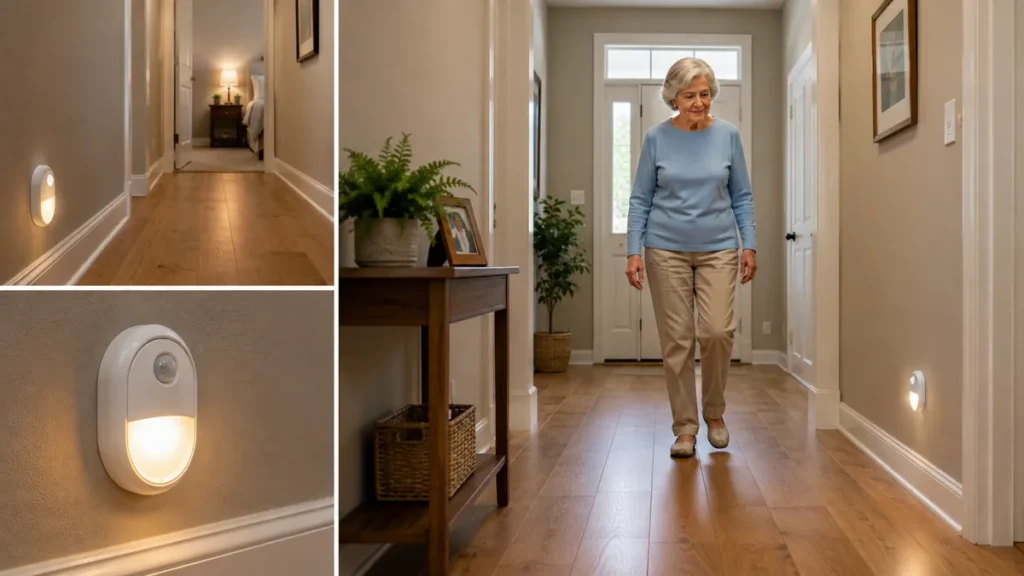
Decluttering is not just about tidiness — it is one of the most practical, low-cost steps you can take to reduce fall risk at home. The National Institute on Aging (NIA) and the National Council on Aging (NCOA) both identify clutter, loose rugs, poor lighting, and unsecured cords as common, fixable hazards in older-adult homes.
As you clear away extra items, use the opportunity to check these areas. For a deeper walkthrough of fall-proofing beyond decluttering, see our full guide to home safety for seniors:
| Safety Area | What to Look For | Action Needed |
|---|---|---|
| Floors & Rugs | Loose throw rugs and exposed cords | Remove unanchored rugs or fix them firmly to the floor; tuck cords safely behind furniture. |
| Lighting | Dim hallways and dark corners | Add bright or motion-activated lights in hallways, bathrooms, and staircases. |
| Stairs | Items resting on steps | Keep steps completely clear of shoes, books, and home decor at all times. |
| Handrails | Loose wall mounts | Ensure grab bars near toilets, showers, and stairways are firmly attached and installed on both sides where possible. |
| Storage Height | Items on high or low shelves | Keep frequently used items between waist and shoulder height, per NCOA guidance, so you avoid climbing or bending. |
Mental Prep: Dealing with Feelings and Memories
The hardest part of decluttering is not physical work — it is the emotional connection to your possessions. Every item in your closet or basement carries a memory. A coat reminds you of a family vacation from twenty years ago; a set of plates reminds you of holiday dinners with relatives who have passed away.
Feeling sad, anxious, or overwhelmed during this process is completely normal. Here are a few ways to protect your peace of mind while sorting through emotional items:
Take Photos of Sentimental Belongings If you have a large heirloom or keepsake that takes up space but holds sentimental value, take a clear, well-lit photo of it. You can print these pictures into a small photo album or keep them on a digital frame. You keep the memory forever, even if the physical object leaves your home.
- Set Realistic Intentions: You do not have to clear out a house in a single weekend. Give yourself weeks or even months to complete the project.
- Do Not Feel Guilty: Giving away a gift that someone gave you years ago does not mean you do not appreciate that person. Its purpose was served when they gave it to you.
- Focus on What You Keep, Not What You Lose: Remind yourself that you are keeping your most cherished treasures and only letting go of extra physical weight. A calmer, less cluttered space can also support the kind of daily routines covered in our guide to brain health habits.
The 5-Box Rule: A Simple Sorting Method
Whenever you tackle a drawer, a closet, or an entire room, bring five containers or boxes with you. Label them clearly so you stay organized:
| Box | What Goes In It |
|---|---|
| 1. Keep | Items you use every week or truly love. |
| 2. Donate | Good condition items that someone else can use. |
| 3. Gift | Special keepsakes saved for family or friends. |
| 4. Trash | Broken, stained, expired, or unusable items. |
| 5. Maybe | Items you are not ready to decide on yet. |
The Maybe box is meant to be temporary, not permanent. Seal the box, write a review date on it (30 to 60 days later), and store it out of the way. When the review date arrives, open the box and decide again — you can make the decision with a little more distance.
How to Decide Quickly
Ask yourself three simple questions when holding an item:
- Have I used this in the past 12 months?
- Would I buy this again today if I saw it in a store?
- Is this item making my daily life easier, or is it just sitting here collecting dust?
If the answer to all three is “no,” it belongs in the Donate, Gift, or Trash box. If you are still unsure, that is exactly what the Maybe box is for.
A Simple Way to Start: One Drawer at a Time

A common reason decluttering projects stall is that people try to empty an entire room in one sitting. A more manageable approach used by professional organizers is to start with one drawer, one shelf, or one small corner, and finish that area completely before moving to the next one.
This gives you a small, visible win early on, which makes the next area feel less daunting. There is no need to finish a whole room in one day — a single finished drawer is still real progress.
Room-by-Room Decluttering Plan
Trying to sort the whole house at once leads to exhaustion and unfinished piles. Instead, focus on one area at a time using this practical room guide.
1. The Bedroom and Wardrobe
Start here, because a less cluttered bedroom can make your daily routine feel easier and give you a calmer space to rest.
- Sort Clothes by Season: Move out-of-season clothing to secondary storage so your main closet stays spacious.
- Test for Comfort: Keep clothes that fit comfortably right now. Clothes that are too small or uncomfortable to put on only create frustration. If reaching into closets or bending to sort feels physically tiring, our guides to easy exercises for seniors and chair yoga for seniors offer gentle ways to build strength and flexibility for everyday tasks like this one.
- Shoes and Footwear: Donate shoes with worn-out grips or uncomfortable heels. NIA guidance favors supportive, non-slip footwear over loose slippers or socks on smooth flooring, since unstable footwear is a known contributor to falls.
“For more government-backed and low-income options, check out our full breakdown of cheap internet programs for seniors on a fixed income.”
2. The Kitchen and Pantry
Kitchens collect endless gadgets, extra mugs, and expired food hidden at the back of shelves.
- Check Expiration Dates: Throw away old canned goods, expired spices, and stale pantry items immediately.
- Duplicate Utensils: You rarely need five wooden spoons, three can openers, or dozens of plastic food containers without matching lids. Keep your top two favorites and donate the rest.
- Heavy Appliances: Move heavy mixers or large pots off high shelves. Keep everyday cookware between waist and shoulder height so you do not have to stretch, climb, or strain your back.
3. The Bathroom and Medicine Cabinet
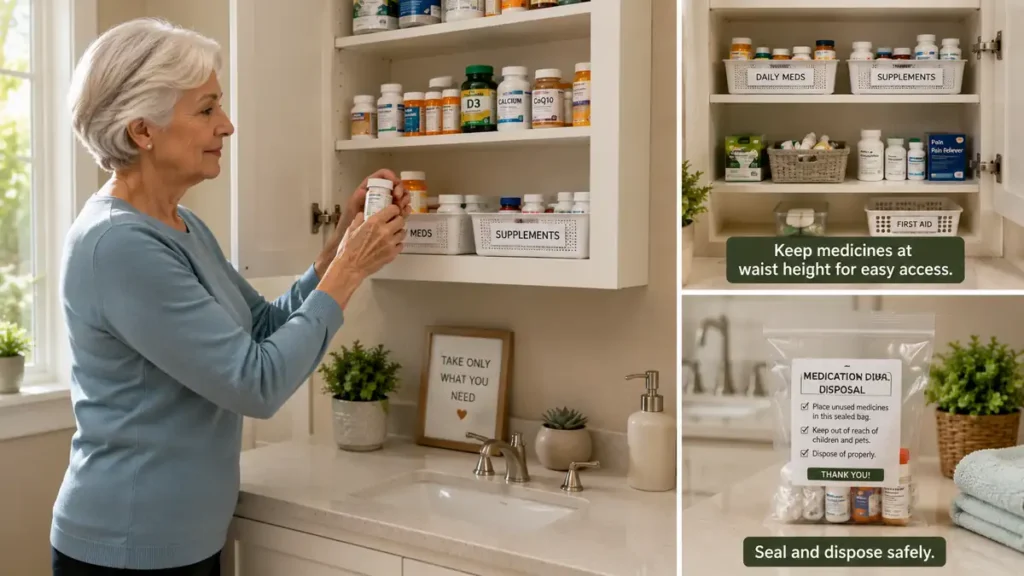
Bathrooms are usually small, making them quick and satisfying spaces to clear out.
- Safely Dispose of Old Medicines: The FDA recommends returning unused or expired medicine to a drug take-back location or mail-back program whenever one is available. If neither is available, and the medicine is not on the FDA’s flush list, mix pills or liquid medicine (uncrushed) with an unappealing substance such as used coffee grounds or dirt, seal it in a bag, and throw it in the household trash. Always check the medication label or package insert first, and follow your pharmacist’s instructions if they differ from general guidance, since some medicines have product-specific disposal steps.
- Thin Out Towels: Keep three or four good-quality towel sets per person. Old, frayed towels can be donated to local animal shelters.
- Sample Bottles: Throw out half-empty hotel shampoo bottles and cosmetic products you haven’t used in over six months.
4. The Living Room and Entryway
These are the spaces where guests gather and where pathways need to remain clear.
- Clear Walkways: Move plant stands, small side tables, and magazine racks away from main walking paths. NIA guidance specifically advises keeping walking areas free of books, papers, clothes, and shoes to reduce tripping hazards.
- Paperwork and Mail: Sort piles of mail into two simple stacks: Bills to Pay and Recycle. File important documents like insurance policies and health records in one safe binder.
- Books and Magazines: Keep your absolute favorite books. Pass the rest to your local library, community center, or senior neighborhood club.
How Family Members and Caregivers Can Help
If you are helping an older parent or relative clear out their home, remember that patience is essential. This is their life, their home, and their history. If you’re taking on a bigger caregiving role beyond this project, our in-home caregiver guide covers more on supporting a senior day to day.
- Let Them Stay in Control: Never throw things away behind their back. Ask questions like “Where would you like this to go?” instead of saying “You don’t need this.”
- Keep Sessions Short: Keep decluttering sessions short enough to avoid unnecessary fatigue, and take breaks for tea, water, or rest whenever needed — everyone’s stamina is different.
- Focus on Stories: Listen when they share a memory about an item. Acknowledging the story makes it much easier for them to let the physical item go.
- Handle Heavy Lifting: Let the senior make decisions while younger family members do the physical carrying, boxing, and driving to donation centers.
Where Do Your Items Go? (Ethical Donating and Disposal)
Throwing everything into the trash can feel wasteful. Giving your items a second life makes letting go feel rewarding and positive. A few practical steps make this smoother and safer:
- Local Thrift Stores and Charities: Clothes, furniture, and kitchen items in good working condition help low-income families in your community. Call ahead before dropping off furniture — many charities have limits on what they can accept, and some do not take used mattresses.
- Libraries and Schools: Gently read books, art supplies, and craft items are always appreciated by community centers.
- Animal Shelters: Used blankets, towels, and sheets make comfortable bedding for rescue dogs and cats.
- Family Hand-Me-Downs: Invite grandchildren to pick out kitchenware, photo frames, or tools they need for their first apartment.
- Documents and Paperwork: Shred or black out personal information such as account numbers and signatures before recycling old paperwork.
- Electronics and Batteries: Check your local recycling program’s rules before throwing out electronics or batteries — many areas require separate drop-off points.
- What Not to Donate: Avoid donating damaged, unsafe, expired, or recalled items, including expired food or medication — these should go through the disposal steps above instead.
Printable Decluttering Checklist
Use this quick checklist as you move through each room. Print it or keep it on your phone.
- [ ] Bring five labeled boxes: Keep, Donate, Gift, Trash, Maybe
- [ ] Start with one drawer, shelf, or corner — not a whole room
- [ ] Remove loose rugs or secure them to the floor
- [ ] Clear all items off staircases
- [ ] Add a light or nightlight to any dim hallway
- [ ] Move frequently used items to waist-to-shoulder height
- [ ] Set a review date on the Maybe box (30–60 days)
- [ ] Photograph sentimental items you plan to let go of
- [ ] Check expired medicines and food before disposing of them
- [ ] Call ahead before donating furniture or large items
- [ ] Shred documents with personal or account information
- [ ] Take breaks whenever you feel tired — don’t push through fatigue
Frequently Asked Questions
How long does decluttering a whole house usually take? There is no fixed timeline. Many people spread the process over several weeks or months, working room by room rather than trying to finish in a single weekend.
What should I do with items I’m not ready to part with? Place them in a sealed “Maybe” box with a review date written on it. Revisiting the decision later, after some time has passed, is often easier than deciding on the spot.
Is it safe to throw old medication in the household trash? Only for medicines not on the FDA’s flush list, and only after mixing them with an unappealing substance like coffee grounds and sealing them in a bag. A drug take-back location is the FDA’s preferred option when one is available. Always check the label or ask your pharmacist if you’re unsure.
How can family members help without taking over the process? Let the older adult make the final decision on each item. Family members can help most by doing the physical carrying, boxing, and driving to donation centers, while asking questions rather than making decisions for them.
Does decluttering actually help prevent falls? Clearing walkways, securing loose rugs, and keeping stairs free of items are among the specific home changes recommended by the National Institute on Aging and National Council on Aging to reduce fall risk, alongside improved lighting and secured handrails.
Final Thoughts: Enjoy Your Refreshing New Space
Decluttering is not about getting rid of your past; it is about making your present life simpler, safer, and far more peaceful.
By taking small steps — one drawer or one shelf at a time — using the five-box method, and prioritizing safety alongside tidiness, you can transform your house into an easy-to-manage space. Enjoy the extra room, the clearer pathways, and the calm feeling that comes with an organized home.
Sources and Reviewed By
- CDC — Facts About Falls, Older Adult Fall Prevention
- National Institute on Aging — Preventing Falls at Home: Room by Room
- National Institute on Aging — Home Safety Tips for Older Adults
- National Council on Aging — How to Prevent Falls with Home Safety Modifications
- FDA — Disposal of Unused Medicines: What You Should Know
Disclaimer: This article is for general informational purposes and is not a substitute for professional medical, legal, or safety advice. If you have concerns about fall risk or medication safety, speak with your doctor or pharmacist.
Educational only — not medical, legal, or financial advice. Talk to a qualified professional before changing exercise, diet, medication, or making a major purchase. After60Guide is not a medical practice.




Gaurav Sharma is the founder and lead writer of After60Guide. He writes practical, source-cited guides on movement, nutrition, home safety, and everyday living after 60. He is not a doctor, physical therapist, or financial adviser. Health and money articles are general education, checked against official public sources where relevant — not personal advice. Corrections: contact@after60guide.com